Medical Dermatology in Apgujeong, Gangnam Seoul
Board-Certified Dermatologist Top 2% in Korea 13+ Years
Medical Dermatology · quick answer
What medical dermatology covers, in one paragraph
Medical dermatology is the diagnosis and treatment of skin, hair and nail conditions as health problems rather than purely cosmetic concerns. It includes inflammatory diseases such as eczema and psoriasis, infections such as fungal rashes, growths such as moles and skin tags, and scars and keloids. At Ever Skin Clinic in Apgujeong, a board-certified dermatologist examines the skin, confirms the diagnosis, and explains treatment options, including prescriptions, procedures and lasers, in English.
Medically reviewed by Dr. Jieun Kim, M.D. Founder & Director, board-certified dermatologist. Dermatology residency at Hanyang University Hospital; adjunct professor, Hanyang University College of Medicine. Meet our dermatologists Last reviewed October 2026
- Conditions
- Eczema, psoriasis, fungal infections, allergies, moles, skin tags, scars, keloids, spots, broken vessels
- Doctors
- Board-certified dermatologists
- First visit
- History, skin examination and, if needed, tests
- Treatments
- Prescription creams and medicines, minor procedures, lasers
- Languages
- Consultations in English for international patients
Conditions
What we treat in medical dermatology
Many skin problems need a diagnosis before they need a treatment. A rash that looks like eczema can be a fungal infection, and a brown spot can be a freckle, an age spot or a mole that should be checked. Our dermatologists start by identifying the condition, then choose the least invasive treatment that is likely to work.
Medical and aesthetic care often overlap. A patient treated for eczema may later want help with marks it left behind, and scar treatment or age spot removal can follow once the skin is healthy.
Main areas of care
- Inflammatory skin: eczema, psoriasis and suspected contact or skin allergies
- Infections: athlete's foot, ringworm, fungal nails and yeast rashes
- Growths: moles, skin tags and seborrhoeic keratoses
- Scars: acne, surgical and injury scars, keloids and hypertrophic scars
- Spots and vessels: freckles, age spots, blackheads and broken capillaries
Who we help
Who comes to us for medical dermatology
We see residents of Seoul and international patients who need a dermatologist while living in or visiting Korea. Common reasons include a flare of a long-standing condition while travelling, a new rash after a change of climate, or a mole someone wants checked or removed.
If you already have a diagnosis from home, bring the name of your medicines and any previous test results. This helps us continue care safely and avoid repeating treatments that did not work.
Book a visit if you have
- An itchy, red or scaly rash that keeps returning
- A mole that is new, changing, bleeding or bothering you
- Thickened or discoloured nails, or a ring-shaped rash
- A raised, growing or painful scar
- Spots, blackheads or red veins you want assessed before treatment
Your visit
How a medical dermatology visit works
Most first visits are completed in one appointment, which suits patients on a short stay in Seoul.
- History We ask about your symptoms, how long you have had them, your medicines and any allergies.
- Examination A board-certified dermatologist examines the skin and, where helpful, uses magnification to look closely at spots or moles.
- Tests if needed Some conditions need a skin scraping, allergy test or a tissue sample sent for analysis before treatment is confirmed.
- Treatment plan We explain the diagnosis and options, start treatment the same day where appropriate and arrange follow-up.
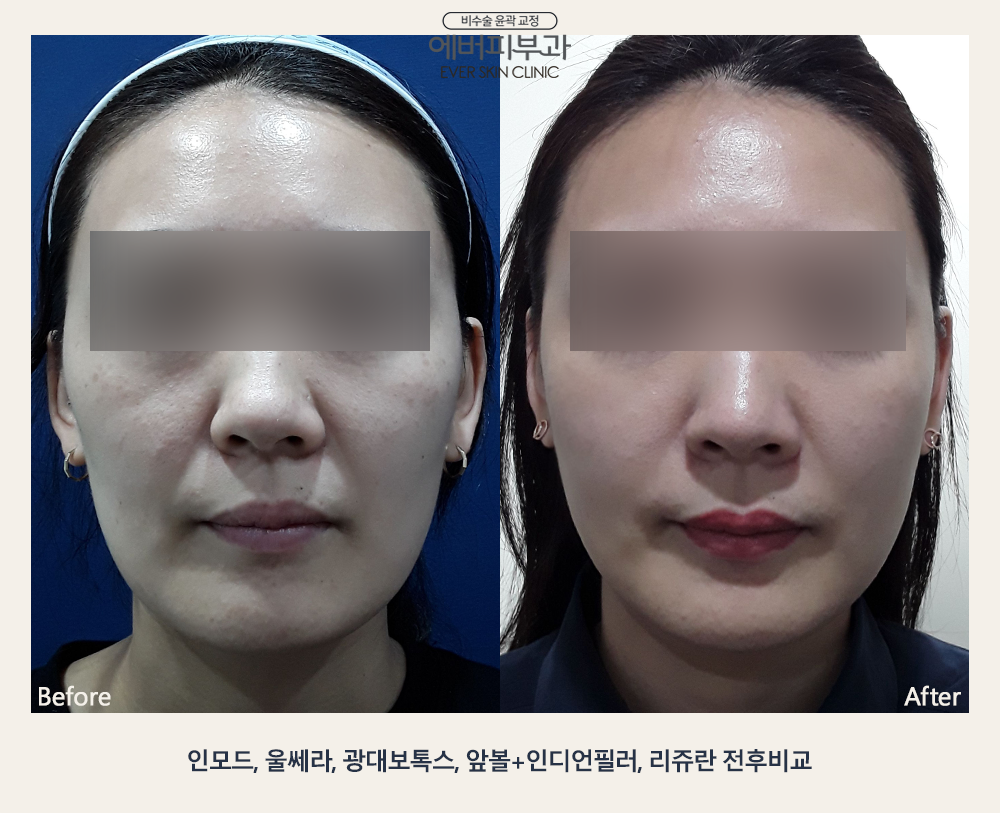
Real patient · before & after
An example of our clinic's results
This case shows a combined lifting, contouring and skin-quality program. It is shown as an example of our non-surgical work and is not a result of treatment for eczema, psoriasis, infections, moles or scars.
Results of medical treatment depend on the diagnosis and on each person's skin. Ask your dermatologist at consultation about realistic outcomes and examples relevant to your condition.
Photos are shared with the patient's consent and are not retouched apart from privacy blurring. Results differ from person to person and are not guaranteed.
See more before & after photosSafety & follow-up
Safety, follow-up and practical information
Prescription treatments such as steroid creams, antifungal medicines or systemic drugs can have side effects, so we explain how and how long to use them. Procedures such as mole or skin tag removal may leave a small mark, and lasers can cause temporary redness or pigment changes, especially in darker skin.
Tell your dermatologist if you are pregnant or breastfeeding, take blood thinners or immune-suppressing medicines, have a history of keloids, or have any drug allergies. A changing mole or a wound that will not heal always needs medical review rather than a cosmetic treatment.
Aftercare tips
- Use prescribed medicines exactly as directed, even after symptoms ease
- Keep a list of your medicines and bring it to each visit
- Protect treated or inflamed skin with daily sunscreen
- Photograph changing spots or rashes so progress can be compared
- Message the clinic on WhatsApp if a reaction or new symptom appears
Questions we hear every day
Medical Dermatology FAQ
Do you treat medical skin conditions as well as cosmetic concerns?
Yes. Our board-certified dermatologists diagnose and treat conditions such as eczema, psoriasis, fungal infections, moles, scars and keloids, as well as offering aesthetic treatments. A diagnosis comes first, so the plan matches the actual cause of your symptoms.
Can I see a dermatologist in English as a tourist?
Yes. Consultations are available in English, and many of our patients are visitors or foreign residents. Bring your medicine list and any previous records, and tell us how long you are staying so we can plan treatment and follow-up around your trip.
Can you prescribe medicines?
Where appropriate, our dermatologists prescribe creams, ointments and oral medicines available in Korea. Some products may differ from those at home, so we explain the equivalent and how to use it. Bring the names of your current medicines to the visit.
Will I need tests?
Not always. Many conditions can be diagnosed by examination. A skin scraping, allergy test or tissue sample may be suggested when the cause is unclear or a growth needs analysis. Your dermatologist will explain why a test is useful before doing it.
Should a changing mole be removed cosmetically?
A mole that is changing in size, shape or colour, bleeding or itching should be examined first rather than treated cosmetically. If removal is advised, the method is chosen so a sample can be sent for analysis when needed.
Talk to a board-certified dermatologist in Apgujeong
Send us your skin concern and photos on WhatsApp. An English-speaking team member will reply and arrange your consultation.
Mon & Thu 10:00–19:00 · Tue & Fri 10:00–20:00 · Sat 10:00–16:00 · Closed Wed, Sun & holidays