Cryotherapy in Apgujeong, Gangnam Seoul
Board-Certified Dermatologist Top 2% in Korea 13+ Years
Cryotherapy · quick answer
What facial cryotherapy does, in one paragraph
Facial cryotherapy is controlled cold applied to the skin with a cooling device to calm heat, flushing and inflammation. Cold temporarily narrows superficial blood vessels and soothes the skin, which can reduce the burning and redness of rosacea-prone or sensitised skin. It is a supportive treatment: it does not remove visible vessels or cure rosacea. At Ever Skin Clinic, a board-certified dermatologist diagnoses the cause of your redness and uses cryotherapy alongside medical skincare and vascular lasers such as V-beam or IPL.
Medically reviewed by Dr. Jieun Kim, M.D. Founder & Director, board-certified dermatologist. Dermatology residency at Hanyang University Hospital; adjunct professor, Hanyang University College of Medicine. Meet our dermatologists Last reviewed October 2026
- Method
- Controlled cold applied with a cooling device
- Best for
- Flushing, heat sensitivity, irritated or rosacea-prone skin
- Treatment time
- About 10 to 20 minutes
- Downtime
- None expected; brief redness or tingling
- Results
- Calming effect; best repeated as part of a redness plan
The treatment
What is facial cryotherapy?
Redness in rosacea and sensitive skin comes from reactive, dilated vessels and low-grade inflammation that flare with heat, alcohol, spicy food and stress. Cold does the opposite of these triggers: it briefly constricts superficial vessels and reduces the sensation of heat. Used regularly, it can help the skin feel calmer and make flare-ups easier to manage.
On this page, cryotherapy means gentle cooling for redness, not liquid-nitrogen freezing of lesions, which is a different procedure. Persistent redness and visible vessels respond better to vascular treatment such as V-beam laser or IPL therapy, and cryotherapy is often used after those sessions to soothe the skin.
What cryotherapy can and cannot do
- Can calm heat and flushing in sensitive or rosacea-prone skin
- Can soothe the skin after laser, peels or boosters
- Cannot remove broken capillaries or spider veins
- Cannot replace medical treatment for rosacea
- Is not suitable for people with cold-triggered conditions
Is it right for you?
Who is a good candidate?
Cryotherapy suits people whose skin flushes easily, feels hot or stings, or reacts after treatments. It is often part of a redness and rosacea plan that may include prescription creams or tablets and vascular lasers.
It is not recommended if you have cold urticaria, Raynaud's phenomenon, cryoglobulinaemia or reduced sensation on the face.
Cryotherapy may suit you if you
- Flush easily with heat, exercise or emotion
- Have sensitive skin that stings with skincare
- Have mild to moderate rosacea-type redness
- Want soothing after laser or other treatments
- Prefer a gentle, no-downtime add-on
Your visit
What happens during treatment
A session is short and comfortable, and you can wear make-up or go back to sightseeing straight afterwards.
- Assessment A board-certified dermatologist examines your redness and identifies triggers and any rosacea subtype.
- Cleansing Your skin is gently cleansed to remove make-up and sunscreen.
- Cooling The cooling head is moved steadily over the red areas for about 10 to 20 minutes, never held in one spot.
- Calm and protect A soothing moisturiser and sunscreen are applied, and we plan any laser or medical treatment.
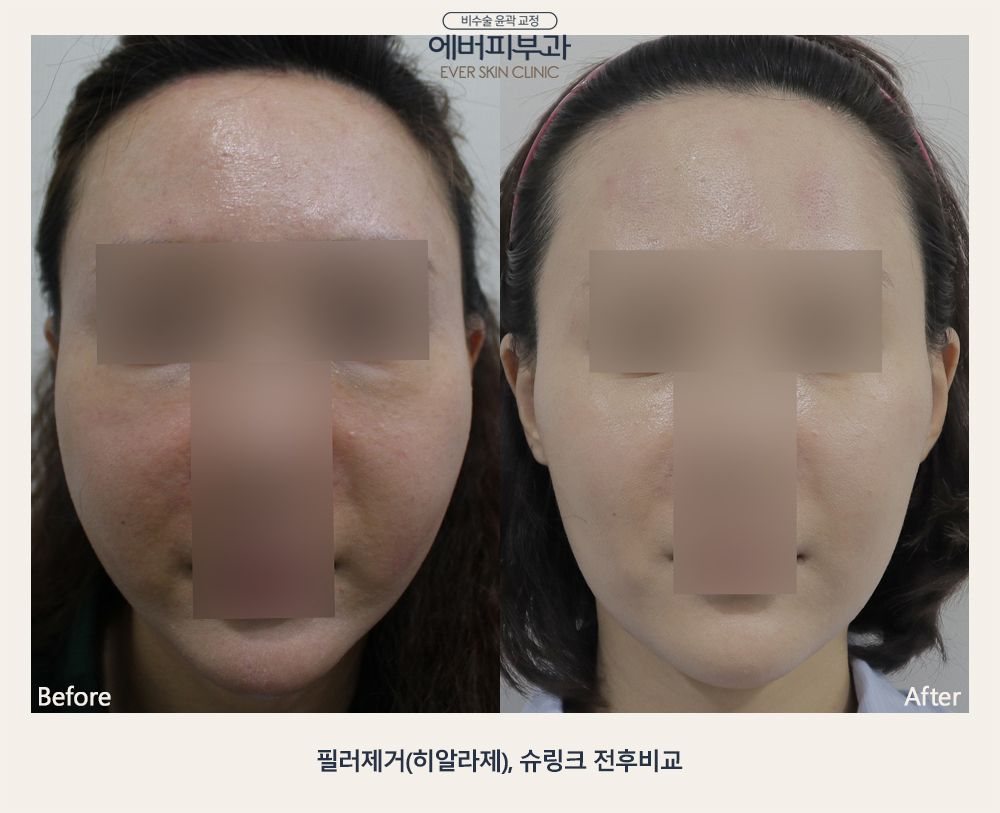
Real patient · before & after
Our non-surgical results
This case shows filler dissolving combined with HIFU lifting. It is shown as an example of our non-surgical work and is not a cryotherapy or redness treatment result.
Ask us at consultation for redness and rosacea cases similar to yours.
Photos are shared with the patient's consent and are not retouched apart from privacy blurring. Results differ from person to person and are not guaranteed.
See more before & after photosRecovery & safety
Recovery, side effects and safety
Most people feel a pleasant cold sensation, followed by brief tingling or a rebound pink tone that settles within minutes to hours. Uncommonly, over-cooling can irritate the skin or cause cold injury, so the device is kept moving and temperatures are controlled.
Tell your dermatologist if you have cold urticaria, Raynaud's phenomenon, cryoglobulinaemia, poor circulation, open wounds or active skin infection on the face, or if you have recently had a strong laser or peel.
Aftercare tips
- Use a gentle, fragrance-free moisturiser
- Apply mineral or gentle broad-spectrum sunscreen daily
- Avoid saunas, hot showers on the face and hot drinks for the rest of the day
- Keep a note of your flushing triggers
- Continue any prescription rosacea treatment as directed
Questions we hear every day
Cryotherapy FAQ
Can cryotherapy cure rosacea?
No. Rosacea is a long-term condition. Cryotherapy can calm heat and flushing for a while and make flare-ups easier to manage, but persistent redness and visible vessels usually need medical skincare and vascular laser or IPL treatment.
How many sessions will I need?
Cryotherapy is usually repeated as part of a redness plan, for example at each laser visit or every few weeks. Some patients use it mainly after treatments. Your dermatologist will suggest a schedule based on how reactive your skin is.
Does it hurt?
It feels very cold, and some people notice a brief tingling or prickling. The device is kept moving to avoid over-cooling. Tell the clinician if it becomes uncomfortable and the intensity can be adjusted.
Is this the same as freezing warts?
No. Freezing warts or spots uses liquid nitrogen at much lower temperatures to destroy tissue. Cryotherapy for redness uses gentle controlled cooling to soothe the skin and does not destroy tissue.
Can I combine it with V-beam or IPL?
Yes, and this is common. Cryotherapy is often used after a vascular laser or IPL session to calm heat and redness. Your dermatologist will plan the order and timing of treatments.
Talk to a board-certified dermatologist in Apgujeong
Send us your skin concern and photos on WhatsApp. An English-speaking team member will reply and arrange your consultation.
Mon & Thu 10:00–19:00 · Tue & Fri 10:00–20:00 · Sat 10:00–16:00 · Closed Wed, Sun & holidays