
LED Light Therapy in Apgujeong, Gangnam Seoul
Board-Certified Dermatologist Top 2% in Korea 13+ Years
LED Light Therapy · quick answer
What LED light therapy does, in one paragraph
LED light therapy exposes the skin to specific wavelengths of low-energy light without heating or injuring it. Blue light reduces the acne bacterium C. acnes and can calm mild inflammatory acne, while red and near-infrared light support healing and reduce inflammation. Its effects are gentle and cumulative, so it works best as a supporting treatment. At Ever Skin Clinic, a board-certified dermatologist decides whether LED suits your skin and how to combine it with peels, laser or medication.
Medically reviewed by Dr. Jieun Kim, M.D. Founder & Director, board-certified dermatologist. Dermatology residency at Hanyang University Hospital; adjunct professor, Hanyang University College of Medicine. Meet our dermatologists Last reviewed October 2026
- Technology
- Light-emitting diodes: blue (about 415 nm), red and near-infrared
- Best for
- Mild to moderate inflammatory acne, redness, recovery after procedures
- Sessions
- Often 1 to 2 per week for several weeks
- Treatment time
- About 15 to 20 minutes
- Downtime
- None expected; occasional mild dryness or redness
The treatment
What is LED light therapy?
Unlike a laser, an LED panel emits broad, low-intensity light that does not burn or wound the skin. Blue light activates natural compounds called porphyrins inside C. acnes, which helps reduce the bacteria. Red and near-infrared light reach slightly deeper and are used to calm inflammation and support repair.
Because LED is gentle, its effect on acne is modest on its own. We mostly use it to support acne facials, peels or laser acne treatment, and to soothe skin after procedures.
What each light is used for
- Blue light - reduces acne bacteria in mild inflammatory acne
- Red light - calms inflammation and supports healing
- Near-infrared - used for recovery after procedures
- Limited effect on blackheads, cysts or established scars
Is it right for you?
Who is a good candidate?
LED suits people with mild to moderate red, inflamed spots, sensitive skin that does not tolerate stronger treatments well, and patients who want a no-downtime add-on during a busy schedule or trip. It can also help some patients who prefer to avoid or reduce oral antibiotics, as part of a wider plan.
For severe or cystic acne, LED alone is not enough, and your dermatologist will discuss medication such as isotretinoin.
LED may help if you want to
- Calm mild inflammatory breakouts
- Add a gentle step to peels or extraction
- Soothe redness after lasers or other procedures
- Treat acne without downtime
- Support skin that is sensitive or easily irritated
Your visit
What happens during treatment
LED is quick and comfortable and is often added to the end of another acne treatment.
- Assessment A board-certified dermatologist checks your acne and skin and decides whether LED fits your plan.
- Cleansing The skin is cleansed, and any other planned treatment such as extraction is done first.
- Light session You lie under the LED panel with eye protection for about 15 to 20 minutes, feeling at most gentle warmth.
- Plan We agree how often to repeat sessions and what home care to use between visits.
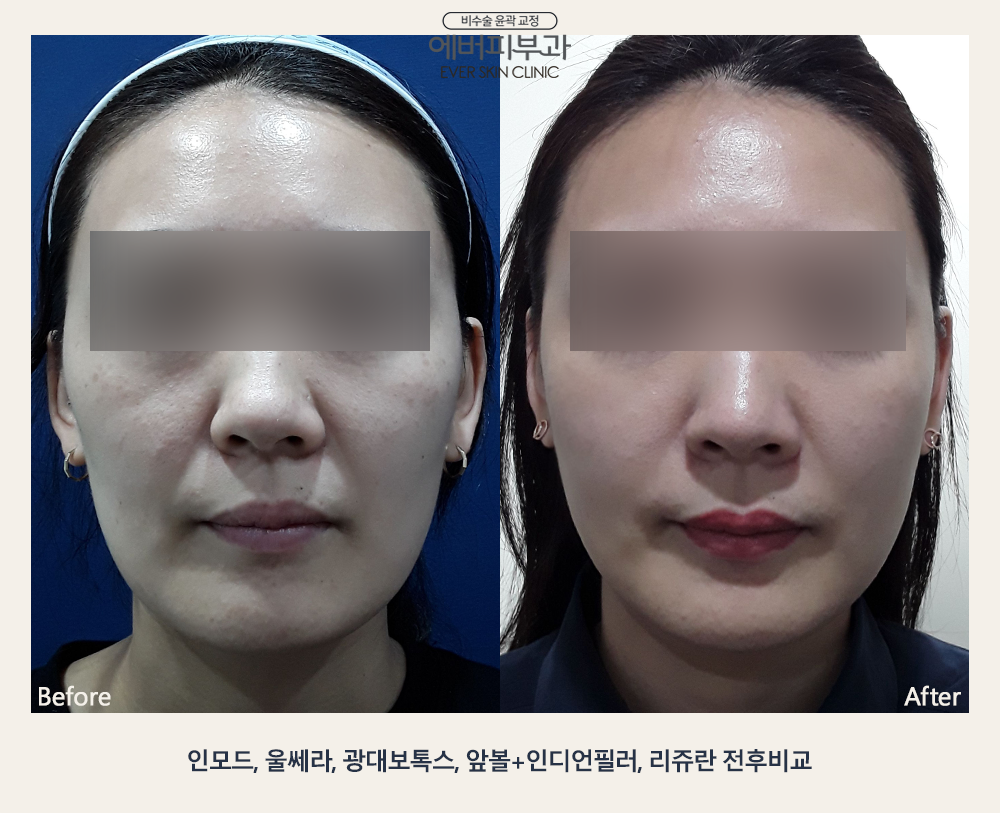
Real patient · before & after
Example of our non-surgical results
This case shows a combined lifting, contouring and skin-quality program, shared as an example of our non-surgical work. It is not an LED light therapy result.
Ask us for acne-specific cases at consultation, and your dermatologist will explain what LED can realistically add to your plan.
Photos are shared with the patient's consent and are not retouched apart from privacy blurring. Results differ from person to person and are not guaranteed.
See more before & after photosRecovery & safety
Recovery, side effects and aftercare
LED is low-risk. Some people notice mild dryness, warmth or temporary redness, and eye protection is used because bright light can strain the eyes. Results build gradually and fade if treatment stops, so it is usually combined with other care.
Tell your dermatologist if you take photosensitising medicines (some antibiotics, retinoids or herbal products), have a light-sensitive condition such as lupus or porphyria, a history of light-triggered migraines or seizures, eye disease, or are pregnant.
Aftercare tips
- Continue your prescribed acne routine
- Use a gentle moisturiser if skin feels dry
- Apply daily sunscreen
- Avoid picking spots between sessions
- Keep sessions regular for the best cumulative effect
Questions we hear every day
LED Light Therapy FAQ
Does LED light therapy hurt?
No needles or heat are involved. Most patients feel nothing or a gentle warmth and find the session relaxing. Eye protection is provided because the light is bright.
How many LED sessions do I need?
LED works cumulatively, so a series is usually recommended, often one or two sessions a week for several weeks. It is commonly combined with other acne treatments rather than used alone.
Can LED clear my acne on its own?
For mild inflammatory acne it may help noticeably, but on its own the effect is usually modest. Blackheads, cysts and scars need other treatments. Your dermatologist will build LED into a wider plan if it suits you.
Is LED safe for all skin tones?
LED does not heat the skin and has a low risk of pigment change, so it can be used across a wide range of skin tones. Certain medicines and light-sensitive conditions are exceptions, so tell your dermatologist about them.
Can I do LED during a short visit to Seoul?
Yes. There is no downtime, so a session can be added to a facial or peel on the same day. Because benefits build over repeated sessions, a single visit gives a short-term calming effect rather than lasting acne control.
Talk to a board-certified dermatologist in Apgujeong
Send us your skin concern and photos on WhatsApp. An English-speaking team member will reply and arrange your consultation.
Mon & Thu 10:00–19:00 · Tue & Fri 10:00–20:00 · Sat 10:00–16:00 · Closed Wed, Sun & holidays