Acne Treatments in Apgujeong, Gangnam Seoul
Board-Certified Dermatologist Top 2% in Korea 13+ Years
Acne Treatments · quick answer
How we treat acne, in one paragraph
Acne is a chronic inflammatory condition of the hair follicles and oil glands, driven by excess oil, blocked pores, the bacterium C. acnes and inflammation. At Ever Skin Clinic in Apgujeong, a board-certified dermatologist first identifies your acne type and severity, then combines in-clinic treatments such as acne facials, chemical peels, laser and LED with medical therapy like topical or oral medication, including isotretinoin where appropriate. Scars and marks left behind are planned for separately once acne is controlled.
Medically reviewed by Dr. Jieun Kim, M.D. Founder & Director, board-certified dermatologist. Dermatology residency at Hanyang University Hospital; adjunct professor, Hanyang University College of Medicine. Meet our dermatologists Last reviewed October 2026
- Treats
- Comedones, inflammatory and cystic acne, post-acne redness and marks
- Options
- Acne facials, peels, laser, LED, exosomes, microneedling, medication
- Approach
- Dermatologist diagnosis first, then a stepwise plan
- Typical course
- Several sessions over weeks to months; acne often needs maintenance
- Languages
- English-speaking consultations
The options
Acne treatments we offer
Acne rarely responds to one treatment alone. Our dermatologists match the method to what is driving your breakouts: clogged pores respond to extraction and chemical peels, active inflammation to laser and light therapy, and persistent or scarring acne may need prescription medication such as isotretinoin (Accutane).
Once breakouts are under control, remaining redness, brown marks and textured scars are treated as a separate stage, often with microneedling or other scar treatments.
Treatments in this category
- Acne facials - medical extraction and calming care for clogged pores
- Chemical peels - salicylic or other acids to clear pores and reduce oil
- Laser and LED - target oil glands, bacteria and redness
- Exosome therapy - supports recovery of inflamed, sensitised skin
- Medication - topical treatments, antibiotics or isotretinoin when indicated
Who we help
Who we help
We see teenagers, adults with hormonal or jawline acne, and patients whose skin has not improved with over-the-counter products. Many international patients visit while living or travelling in Seoul, so we plan treatments that fit around work and travel and explain how to continue care at home.
Book an assessment if you have
- Frequent blackheads, whiteheads or clogged pores
- Painful red papules, pustules or deep cysts
- Adult or hormonal breakouts around the jaw and chin
- Acne on the chest, shoulders or back
- Red or brown marks or early scarring after breakouts
Your visit
How an acne visit works
Your first visit focuses on diagnosis, so that treatment targets the real cause of your breakouts.
- Skin assessment A board-certified dermatologist examines your skin, asks about products, medication, cycles and diet, and grades the acne.
- Plan We agree a combination of in-clinic treatments and home care, and discuss prescription options if needed.
- Treatment In-clinic sessions such as extraction, peels, laser or LED usually take 20 to 60 minutes.
- Review We review progress every few weeks, adjust the plan and move on to marks and scars when acne settles.
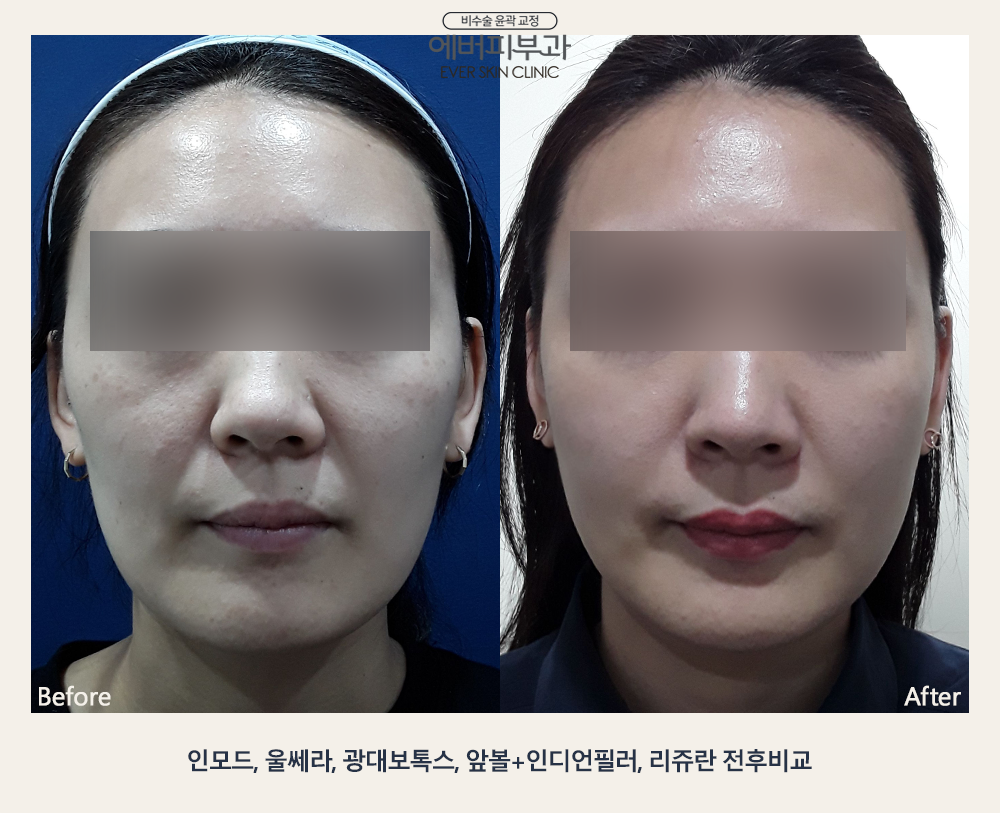
Real patient · before & after
Example of our non-surgical results
This case shows a combined lifting, contouring and skin-quality program, shared as an example of our non-surgical work. It is not an acne treatment result.
Acne responds differently in every patient, so ask us for acne-specific cases at consultation and your dermatologist will explain what is realistic for your skin.
Photos are shared with the patient's consent and are not retouched apart from privacy blurring. Results differ from person to person and are not guaranteed.
See more before & after photosSafety & practical info
Side effects, safety and practical tips
Most acne procedures cause temporary redness, dryness or mild peeling for a few hours to a few days. Acne can briefly flare after starting a new treatment. Oral medications have their own side effects, such as dryness with isotretinoin, which your dermatologist will explain and monitor.
Tell your dermatologist if you are pregnant or planning pregnancy, are breastfeeding, take other medicines or supplements, have recently used retinoids, or have a history of cold sores or keloid scarring.
Aftercare tips
- Use a gentle, non-comedogenic cleanser and moisturiser
- Apply sunscreen daily, especially after peels and lasers
- Avoid picking or squeezing spots to reduce scarring
- Keep phone screens, pillowcases and helmets clean
- Follow your home routine consistently between visits
Questions we hear every day
Acne Treatments FAQ
How many sessions will I need for my acne?
It depends on your acne type and severity. Many patients have several in-clinic sessions spaced two to four weeks apart alongside home care, and improvement is usually gradual over two to three months. Acne tends to recur, so most people benefit from some maintenance.
Is acne treatment painful?
Extraction and some peels can sting or feel uncomfortable, and lasers feel like warm snaps on the skin. Sessions are short and discomfort usually fades quickly. Tell your dermatologist if you are sensitive so we can adjust the settings or use cooling.
Can you treat acne scars at the same time?
We usually focus on controlling active acne first, because treating scars during heavy breakouts can worsen inflammation. Red and brown marks can be addressed early, while textured scars are treated once breakouts are under control.
Do I need medication or are in-clinic treatments enough?
Mild acne often improves with in-clinic treatments and a good routine. Moderate to severe, cystic or scarring acne usually needs prescription treatment as well. Your dermatologist will explain the options and the reasons for each recommendation.
I am only in Seoul for a short time. Can I still be treated?
Yes. We can start with an assessment, one or two in-clinic sessions and a clear home plan. If medication is prescribed, discuss follow-up, as some drugs need monitoring that should continue with a doctor where you live.
Talk to a board-certified dermatologist in Apgujeong
Send us your skin concern and photos on WhatsApp. An English-speaking team member will reply and arrange your consultation.
Mon & Thu 10:00–19:00 · Tue & Fri 10:00–20:00 · Sat 10:00–16:00 · Closed Wed, Sun & holidays