Laser Acne Treatment in Apgujeong, Gangnam Seoul
Board-Certified Dermatologist Top 2% in Korea 13+ Years
Laser Acne Treatment · quick answer
What laser acne treatment does, in one paragraph
Laser acne treatment uses light energy to act on the causes of breakouts: some devices target the oil glands to reduce sebum, others calm inflammation and the redness left by spots, and blue light reduces acne bacteria. It is used for active inflammatory acne and red post-acne marks, usually as part of a plan with skincare or medication. At Ever Skin Clinic, a board-certified dermatologist grades your acne and skin type and chooses the device, settings and number of sessions.
Medically reviewed by Dr. Jieun Kim, M.D. Founder & Director, board-certified dermatologist. Dermatology residency at Hanyang University Hospital; adjunct professor, Hanyang University College of Medicine. Meet our dermatologists Last reviewed October 2026
- Technology
- Acne lasers targeting oil glands, vascular laser (V-beam) and blue light
- Best for
- Inflammatory acne, oily skin, red post-acne marks
- Sessions
- Typically several, about 2 to 4 weeks apart
- Downtime
- Mild redness for hours to a day or two
- Results
- Gradual reduction in breakouts and redness over weeks
The treatment
What is laser acne treatment?
Acne starts when excess oil and dead skin cells block a pore and the acne bacterium C. acnes triggers inflammation. Different lights act at different points: lasers designed for acne heat the sebaceous glands to reduce oil, a pulsed-dye V-beam laser targets blood vessels to calm redness and inflamed spots, and blue light reduces bacteria on the skin.
Laser is rarely used alone. Our dermatologists combine it with peels, extraction, topical treatment or, for severe acne, oral medication.
What the different lights do
- Acne laser - targets oil glands to reduce sebum and breakouts
- V-beam (pulsed-dye) laser - reduces redness and inflamed papules
- Blue light - reduces acne-causing bacteria
- Not a cure for blackheads alone or deep cysts; these need other methods
Is it right for you?
Who is a good candidate?
Laser treatment suits teenagers and adults with mild to moderate inflammatory acne, oily skin or lingering red marks, and patients who prefer to limit oral medication. It can also be an option for some people who cannot take isotretinoin.
Severe nodular or scarring acne usually needs isotretinoin or other medication as well. Your dermatologist will explain where laser fits in your plan.
Laser may help if you have
- Recurrent red, inflamed spots
- Very oily skin that breaks out easily
- Red marks that linger after spots heal
- Acne that has not responded to skincare alone
- Breakouts on the chest or back as well as the face
Your visit
What happens during treatment
Most sessions take about 20 to 40 minutes, so they fit easily into a working day.
- Assessment A board-certified dermatologist grades your acne and skin type and chooses the laser or light.
- Preparation The skin is cleansed; numbing cream may be applied for some lasers and eye protection is worn.
- Treatment Laser pulses or light are delivered across the area, felt as warm snaps or mild heat.
- Aftercare The skin is soothed, sunscreen applied, and the next session and home care are planned.
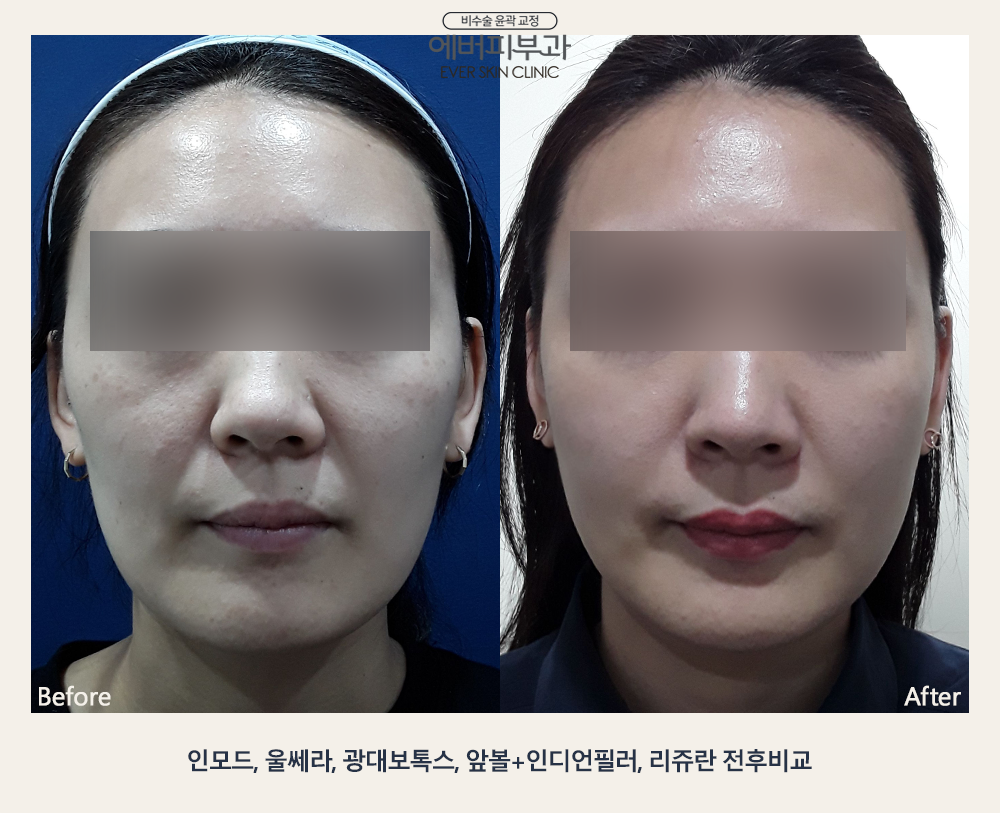
Real patient · before & after
Example of our non-surgical results
This case shows a combined lifting, contouring and skin-quality program, shared as an example of our non-surgical work. It is not a laser acne treatment result.
Acne responds differently in every patient, so ask us for acne-specific cases at consultation.
Photos are shared with the patient's consent and are not retouched apart from privacy blurring. Results differ from person to person and are not guaranteed.
See more before & after photosRecovery & safety
Recovery, side effects and aftercare
Mild redness, warmth or slight swelling are common and usually settle within hours to a day or two. Some lasers can cause small bruises or a temporary acne flare. Rarely, burns, blistering or pigment changes occur, particularly in darker or tanned skin, which is why settings are adjusted for each patient.
Tell your dermatologist if you take isotretinoin or photosensitising medicines, have a recent tan, are pregnant or breastfeeding, or have a history of cold sores, light-triggered conditions or keloids.
Aftercare tips
- Use a gentle cleanser and non-comedogenic moisturiser
- Apply sunscreen daily
- Avoid scrubs, retinoids and strong acids for a few days
- Do not pick or squeeze spots
- Keep up the home routine your dermatologist prescribes
Questions we hear every day
Laser Acne Treatment FAQ
Does laser acne treatment hurt?
Most patients feel warm snaps like a rubber band or mild heat. Numbing cream and cooling are used where needed, and sessions are short. Discomfort usually fades within minutes.
How many sessions will I need?
Many patients need several sessions spaced about two to four weeks apart, depending on the device and acne severity. Improvement is gradual, and maintenance may be useful because acne tends to recur.
Is there downtime?
Usually very little. Mild redness for a few hours to a day or two is common, and most people return to normal activities straight away. Some lasers can leave small bruises that fade over about a week.
Can laser replace acne medication?
For mild to moderate acne, laser plus good skincare can be enough for some patients. Severe, cystic or scarring acne usually still needs medication. Your dermatologist will advise what combination suits you.
Will laser treat my acne scars too?
Acne lasers mainly target active breakouts and redness. Textured scars need resurfacing or collagen-building treatments such as Fraxel or microneedling, usually once acne is controlled.
Talk to a board-certified dermatologist in Apgujeong
Send us your skin concern and photos on WhatsApp. An English-speaking team member will reply and arrange your consultation.
Mon & Thu 10:00–19:00 · Tue & Fri 10:00–20:00 · Sat 10:00–16:00 · Closed Wed, Sun & holidays