Facial Redness Treatment in Apgujeong, Gangnam Seoul
Board-Certified Dermatologist Top 2% in Korea 13+ Years
Facial Redness & Vascular Lesions · quick answer
How we treat facial redness, in one paragraph
Facial redness can come from rosacea, broken capillaries (telangiectasia), sun damage, red marks after acne, sensitive or irritated skin, or medical conditions such as dermatitis. Because the cause decides the treatment, diagnosis comes first. At Ever Skin Clinic, a board-certified dermatologist examines your skin, then combines medical care, such as prescription creams or tablets, with vascular devices such as V-beam pulsed dye laser and IPL, and soothing treatments like cryotherapy, to reduce redness and help keep it under control.
Medically reviewed by Dr. Jieun Kim, M.D. Founder & Director, board-certified dermatologist. Dermatology residency at Hanyang University Hospital; adjunct professor, Hanyang University College of Medicine. Meet our dermatologists Last reviewed October 2026
- Conditions
- Rosacea, flushing, broken capillaries, red acne marks, red scars
- Main tools
- V-beam laser, IPL, cryotherapy, prescription treatment
- Course
- Often 2 to 5 laser or IPL sessions, plus maintenance
- Downtime
- From none to a few days of redness or swelling
- Approach
- Diagnosis first; English-speaking consultations
Overview
Causes of redness we treat
Redness that comes and goes with heat, alcohol or stress often points to rosacea. Fixed red lines on the nose and cheeks are dilated capillaries. Patchy redness with itching or scaling may be dermatitis, and red marks after spots are post-inflammatory erythema. Each needs a different plan.
For vessels and persistent redness, our main devices are V-beam laser and IPL therapy. Cryotherapy helps calm heat and flushing, and medical treatment controls inflammatory rosacea. Thickened skin on the nose in advanced rosacea (rhinophyma) may be reshaped with ablative CO2 laser after assessment.
Treatments in this group
- V-beam laser : pulsed dye laser for vessels, rosacea redness and red scars
- IPL therapy : filtered light for diffuse redness and mixed sun damage
- Cryotherapy : controlled cooling to soothe flushing and sensitive skin
- Medical rosacea care : prescription creams or tablets for bumps and inflammation
- CO2 laser : for thickened skin in selected cases of rhinophyma
Who we help
Who we help
We see patients with long-standing rosacea, people who flush easily, those with visible vessels from sun or genetics, and patients with red marks after acne. Many are visitors who want a diagnosis and a plan they can continue at home.
Redness that is new, spreading, scaly, itchy or associated with joint pain or other symptoms may need medical investigation, and we will advise if further tests are needed.
You may benefit if you have
- Persistent redness on the cheeks, nose or chin
- Visible red lines or spider veins on the face
- Flushing triggered by heat, alcohol or spicy food
- Red marks that linger after acne
- Sensitive skin that stings or burns with products
Your visit
How a redness visit works
Most first visits include diagnosis and, where suitable, a first treatment the same day.
- Diagnosis A board-certified dermatologist examines your skin, asks about triggers and medicines and identifies the type of redness.
- Plan We combine medical care with V-beam, IPL or cryotherapy as needed, and plan sessions around your travel dates.
- Treatment Devices are set for your skin type and target, with cooling to protect the skin.
- Home care You receive a gentle skincare and trigger-avoidance plan and any prescriptions to continue at home.
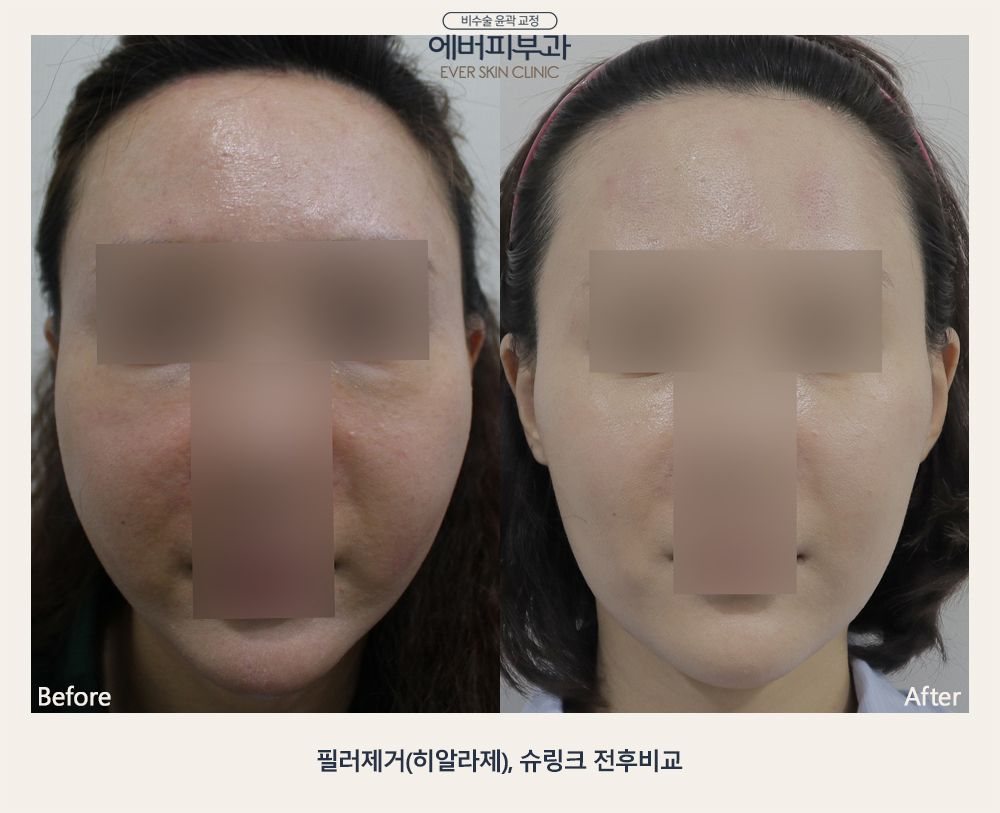
Real patient · before & after
Our non-surgical results
This case shows filler dissolving combined with HIFU lifting. It is shown as an example of our non-surgical work and is not a redness or rosacea treatment result.
Ask us at consultation for redness, rosacea and vessel cases similar to yours.
Photos are shared with the patient's consent and are not retouched apart from privacy blurring. Results differ from person to person and are not guaranteed.
See more before & after photosSafety
Safety and aftercare
After V-beam or IPL, redness and swelling usually last one to three days; stronger V-beam settings can cause bruising for one to two weeks. Less common risks include blistering, temporary pigment change and, rarely, scarring. Cryotherapy usually causes only brief tingling.
Tell your dermatologist if you have a tan, darker skin, cold sores, take isotretinoin, blood thinners or photosensitising medicines, or are pregnant. Rosacea is long-term, so maintenance and trigger control are part of every plan.
Aftercare tips
- Avoid alcohol, saunas and hot showers on the face for 48 hours after laser
- Use gentle, fragrance-free cleansers and moisturisers
- Apply broad-spectrum, ideally mineral, sunscreen daily
- Keep a diary of flushing triggers
- Continue prescribed treatment even when redness improves
Questions we hear every day
Facial Redness & Vascular Lesions FAQ
What causes facial redness?
Common causes include rosacea, broken capillaries from sun or genetics, red marks after acne, sensitive or irritated skin and dermatitis. Less often, redness signals another medical condition. A dermatologist's examination is the best way to find the cause and choose treatment.
Can rosacea be cured?
Rosacea cannot be cured, but it can usually be well controlled. Prescription treatment calms inflammation, vascular lasers and IPL reduce persistent redness and vessels, and avoiding triggers helps prevent flares.
V-beam or IPL: which is right for me?
V-beam is a laser aimed specifically at blood vessels and is often better for stubborn redness and visible vessels. IPL treats redness and brown sun spots together. Your dermatologist may recommend one or combine them.
How many sessions will I need?
Many patients need about two to five sessions spaced several weeks apart, followed by maintenance once or twice a year. Fine vessels can respond quickly, while rosacea redness often needs ongoing care.
Can I start treatment while visiting Seoul?
Yes. We can diagnose your redness, begin laser or IPL and prescribe treatment to continue at home. Allow a few days of possible redness or swelling after laser and avoid strong sun or heat.
Talk to a board-certified dermatologist in Apgujeong
Send us your skin concern and photos on WhatsApp. An English-speaking team member will reply and arrange your consultation.
Mon & Thu 10:00–19:00 · Tue & Fri 10:00–20:00 · Sat 10:00–16:00 · Closed Wed, Sun & holidays