
Psoriasis Treatment in Apgujeong, Gangnam Seoul
Board-Certified Dermatologist Top 2% in Korea 13+ Years
Psoriasis Treatment · quick answer
What psoriasis treatment involves, in one paragraph
Psoriasis is a long-term immune-related skin condition that causes thick, red, scaly plaques, most often on the elbows, knees, scalp and lower back. Treatment controls plaques rather than curing the condition: topical steroids and vitamin D creams for mild disease, phototherapy for more widespread plaques, and systemic or biologic medicines for moderate to severe psoriasis. At Ever Skin Clinic in Apgujeong, a board-certified dermatologist assesses severity and joint symptoms and builds a long-term plan.
Medically reviewed by Dr. Jieun Kim, M.D. Founder & Director, board-certified dermatologist. Dermatology residency at Hanyang University Hospital; adjunct professor, Hanyang University College of Medicine. Meet our dermatologists Last reviewed October 2026
- Condition
- Chronic immune-mediated skin disease
- Treatments
- Topical steroids, vitamin D analogues, phototherapy, systemic and biologic options
- Best for
- Plaque, scalp, nail and limited-area psoriasis
- Downtime
- None
- Outlook
- Clearer skin is often achievable; flares can recur
The condition
What is psoriasis?
In psoriasis, an overactive immune response speeds up skin cell turnover, so cells build up into raised, scaly plaques. It is not contagious. Stress, infections, cold dry weather, alcohol, smoking and some medicines can trigger flares. Psoriasis is also linked to joint inflammation (psoriatic arthritis) and to metabolic health, so care looks beyond the skin.
Scalp psoriasis can resemble seborrhoeic dermatitis, and nail psoriasis can look like a fungal nail infection. Itchy patches can also be eczema, so diagnosis comes first.
Treatment options
- Topical treatments: steroids, vitamin D creams and scalp solutions
- Phototherapy: narrowband UVB or targeted excimer light for plaques
- Systemic medicines: oral treatments for more extensive disease, with monitoring
- Biologic therapy: injectable treatments for moderate to severe psoriasis, where appropriate
- Lifestyle support: trigger control and skin care routines
Is it right for you?
Who should see a dermatologist?
See a dermatologist if you have scaly patches that do not settle with moisturisers, psoriasis affecting your scalp, nails, face or genitals, or plaques that disturb sleep or confidence. Joint pain or morning stiffness alongside skin symptoms should also be mentioned.
If you are already on treatment at home, bring the names of your medicines so we can continue care safely while you are in Korea.
Book a visit if you have
- Red, thick, scaly plaques on elbows, knees or back
- Persistent scalp scaling or itching
- Pitted, thickened or lifting nails
- A flare during travel or a stressful period
- Joint pain together with skin symptoms
Your visit
How psoriasis care works
The first visit sets out a plan that fits the severity and your schedule in Seoul.
- Assessment A board-certified dermatologist examines skin, scalp and nails and asks about joints, triggers and past treatments.
- Severity and tests We estimate how much skin is involved and arrange tests if systemic treatment is being considered.
- Treatment plan Topical treatment is started for most patients; phototherapy or systemic options are discussed for wider disease.
- Follow-up We review response and side effects and adjust treatment over time.
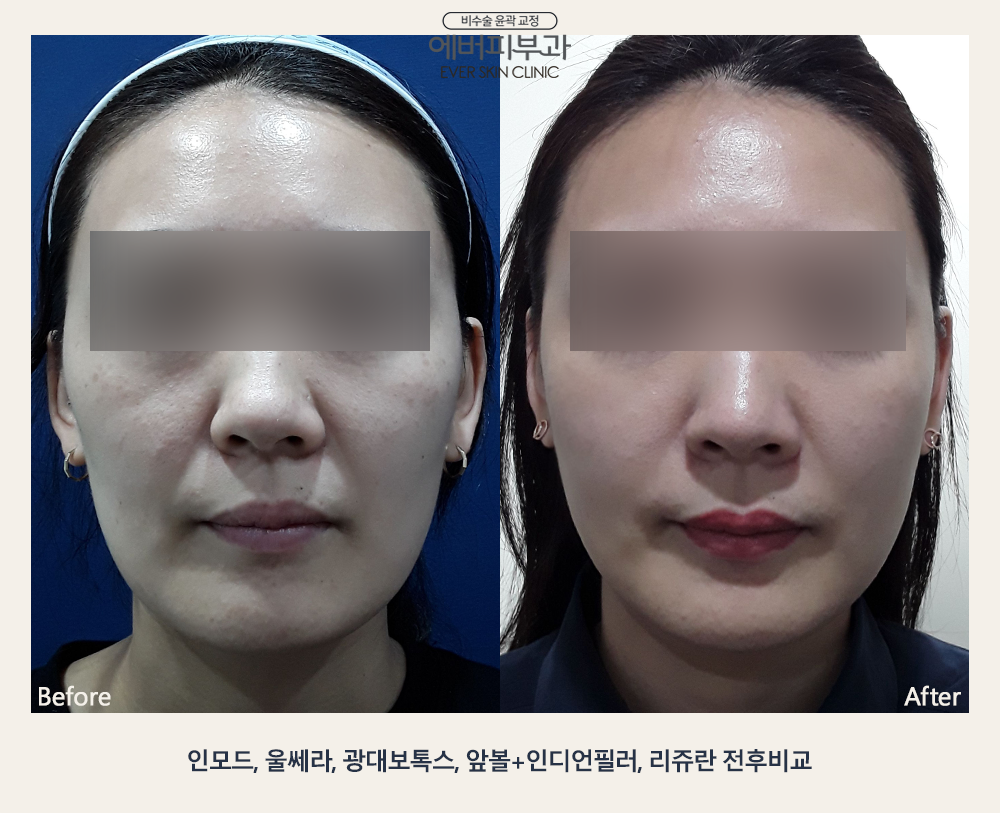
Real patient · before & after
An example of our clinic's results
This case shows a combined lifting, contouring and skin-quality program, shown as an example of our non-surgical results. It is not a psoriasis treatment result.
Outcomes of psoriasis treatment depend on the condition and on each person's skin. Ask us for psoriasis treatment-specific examples and a realistic outlook at consultation.
Photos are shared with the patient's consent and are not retouched apart from privacy blurring. Results differ from person to person and are not guaranteed.
See more before & after photosSafety
Side effects and safety
Topical steroids can thin skin if overused, and vitamin D creams can irritate. Phototherapy may cause redness like sunburn and requires several sessions a week. Systemic and biologic medicines need screening and regular monitoring for infection, liver and blood effects.
Tell your dermatologist if you are pregnant or planning pregnancy, have liver or kidney disease, tuberculosis exposure, recurrent infections, or take other immune-affecting medicines. Avoid stopping strong steroid treatment suddenly without advice, as psoriasis can rebound.
Aftercare tips
- Moisturise daily to reduce scaling and itch
- Use treatments consistently, not only during flares
- Get small amounts of sensible sun but avoid sunburn
- Limit alcohol and smoking, which can worsen flares
- Note joint symptoms and report them at follow-up
Questions we hear every day
Psoriasis Treatment FAQ
Can psoriasis be cured?
There is currently no cure, but many people achieve clear or nearly clear skin with the right treatment. Psoriasis tends to come and go, so the aim is long-term control with the least treatment needed.
Is psoriasis contagious?
No. Psoriasis is caused by the immune system and cannot be passed to others by touch, sharing towels or swimming. Explaining this to family and colleagues can help reduce stigma.
Which treatment will I need?
Mild psoriasis is usually treated with creams and scalp solutions. More widespread or stubborn plaques may need phototherapy, and moderate to severe disease may need oral or biologic medicines. Your dermatologist matches treatment to severity and lifestyle.
Can I continue my biologic or systemic treatment in Seoul?
Bring your prescriptions and recent blood test results. Our dermatologists can review your treatment and advise how to continue it safely while in Korea, or refer to a hospital service where needed.
Does weather affect psoriasis?
Many people find psoriasis worse in cold, dry winters and better with some sunlight in summer. Seoul's dry winter air can trigger flares, so extra moisturising and keeping treatment going helps.
Talk to a board-certified dermatologist in Apgujeong
Send us your skin concern and photos on WhatsApp. An English-speaking team member will reply and arrange your consultation.
Mon & Thu 10:00–19:00 · Tue & Fri 10:00–20:00 · Sat 10:00–16:00 · Closed Wed, Sun & holidays