
Scar Treatments in Apgujeong, Gangnam Seoul
Board-Certified Dermatologist Top 2% in Korea 13+ Years
Scar Removal · quick answer
How we treat scars, in one paragraph
Scars form when the skin repairs deeper damage from acne, injury or surgery with disorganised collagen, leaving the surface depressed, raised or uneven in colour. Treatment aims to remodel that collagen and even out texture rather than erase the scar. At Ever Skin Clinic in Apgujeong, a board-certified dermatologist identifies each scar type, such as icepick, boxcar or rolling, then combines methods like Fraxel laser, TCA Cross, subcision, PRP and microneedling over a planned course.
Medically reviewed by Dr. Jieun Kim, M.D. Founder & Director, board-certified dermatologist. Dermatology residency at Hanyang University Hospital; adjunct professor, Hanyang University College of Medicine. Meet our dermatologists Last reviewed October 2026
- Treats
- Acne scars (icepick, boxcar, rolling), surgical and injury scars, stretch marks
- Options
- Fraxel laser, TCA Cross, subcision, PRP, microneedling
- Approach
- Scar type assessed first; usually a combination of methods
- Course
- Typically several sessions, about 4 to 6 weeks apart
- Results
- Gradual improvement over months; scars soften, not disappear
The options
Scar treatments we offer
Different scars need different tools. Narrow, deep icepick scars respond best to TCA Cross, tethered rolling scars to subcision, and overall uneven texture to fractional resurfacing such as Fraxel laser. Most faces have a mix of scar types, so a plan usually combines two or more methods.
Regenerative treatments such as PRP can support healing and collagen building between sessions. Raised keloid or hypertrophic scars are handled differently, with injections and laser, through our medical dermatology service.
Treatments in this category
- Fraxel laser - fractional laser resurfacing for texture and shallow scars
- TCA Cross - focused acid application for deep icepick scars
- Subcision - releases fibrous bands that pull rolling scars down
- PRP for scars - growth factors from your own blood to support repair
- Microneedling - controlled micro-injury to stimulate new collagen
Who we help
Who we help
We help patients with acne scars, chickenpox scars, minor surgical or injury scars, and stretch marks. Treatment works best once active acne is controlled, so if you still have breakouts we may start with acne treatment first.
International patients often plan scar treatment around a stay in Seoul; because several sessions are usually needed, we can help you schedule them or suggest the most useful single-visit option.
Scar treatment may suit you if you have
- Depressed acne scars that catch shadows in overhead light
- Uneven skin texture after past breakouts
- Flat, discoloured or slightly indented surgical or injury scars
- Stretch marks on the body
- Realistic expectations of gradual improvement over several sessions
Your visit
How a scar treatment visit works
Each visit is built around your scar map, so the right method is used in the right place.
- Scar assessment A board-certified dermatologist examines your scars under different lighting and identifies each type.
- Plan We agree which methods to combine, the order of treatment and the expected number of sessions.
- Treatment After numbing, the session typically takes 30 to 60 minutes depending on the methods used.
- Review Progress is reviewed every 4 to 6 weeks and the plan is adjusted as scars change.
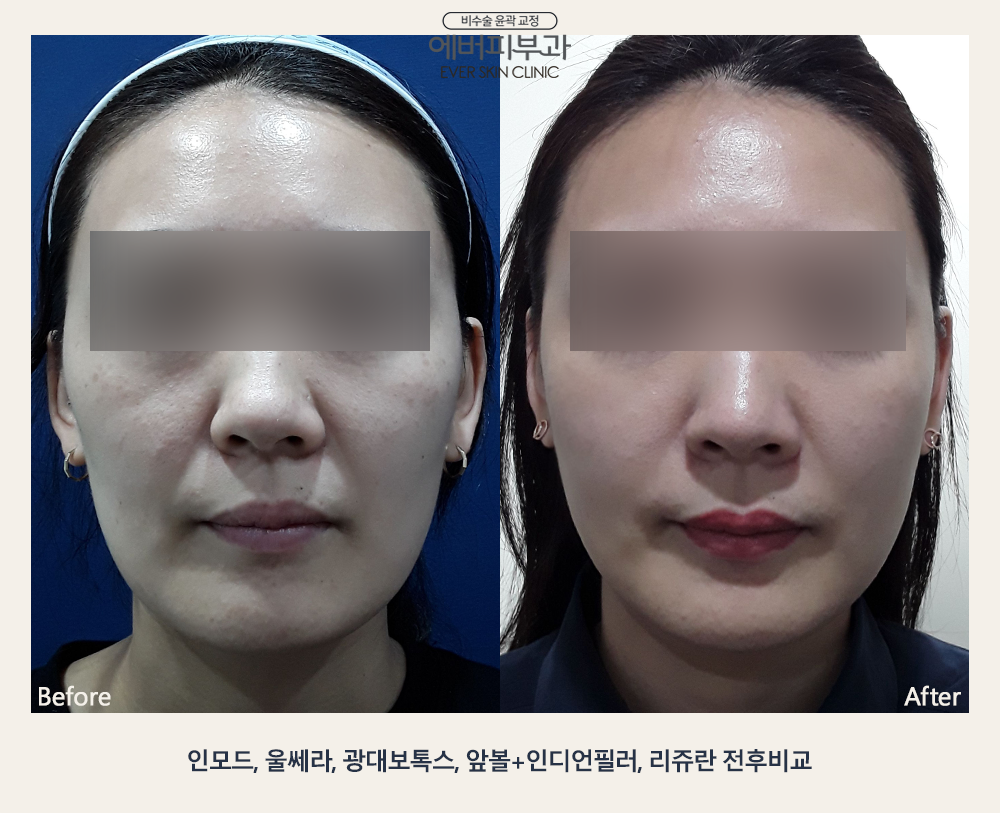
Real patient · before & after
Example of our non-surgical results
This case shows a combined lifting, contouring and skin-quality program, shared as an example of our non-surgical work. It is not a scar treatment result.
Scar results depend heavily on scar type and depth, so ask us for scar-specific cases at consultation and your dermatologist will explain what is realistic for you.
Photos are shared with the patient's consent and are not retouched apart from privacy blurring. Results differ from person to person and are not guaranteed.
See more before & after photosRecovery & safety
Recovery, side effects and aftercare
Downtime depends on the method. Microneedling and PRP usually cause redness for one to two days, while Fraxel, TCA Cross and subcision can cause redness, crusting, swelling or bruising for several days to about a week. Temporary darkening of the skin (post-inflammatory hyperpigmentation) can occur, especially in darker skin types, which is why settings are chosen carefully.
Tell your dermatologist if you have taken isotretinoin in the past months, have active acne or infection, a history of keloids or cold sores, a bleeding disorder, or if you are pregnant or breastfeeding.
Aftercare tips
- Keep the skin clean and use the soothing products recommended
- Apply sunscreen daily and avoid strong sun exposure
- Do not pick crusts or scabs
- Avoid saunas, swimming and intense exercise for a few days
- Pause retinoids and exfoliating acids until your dermatologist advises
Questions we hear every day
Scar Removal FAQ
Can acne scars be removed completely?
Scars can usually be made noticeably softer and less visible, but complete removal is rarely realistic. The degree of improvement depends on scar type, depth and your skin. Your dermatologist will give you an honest estimate at consultation.
How many sessions will I need?
Most patients need several sessions, often three to five or more, spaced about four to six weeks apart. Deeper or mixed scars generally need more. Collagen keeps remodelling for months, so results continue to improve after the last session.
Is scar treatment painful?
Numbing cream is used for most procedures, and local anaesthetic for subcision. You may feel heat, pressure or stinging during treatment and some tenderness afterwards. Discomfort is usually manageable and short-lived.
How much downtime should I plan for?
It ranges from one to two days of redness after microneedling or PRP to about a week of redness, crusting or bruising after Fraxel, TCA Cross or subcision. If you are travelling, tell us your dates so we can choose methods that fit.
Can I have scar treatment while I still have acne?
It is usually better to control active acne first, because treating scars during breakouts can increase inflammation and new scarring. We can treat acne and plan scar work in stages.
Talk to a board-certified dermatologist in Apgujeong
Send us your skin concern and photos on WhatsApp. An English-speaking team member will reply and arrange your consultation.
Mon & Thu 10:00–19:00 · Tue & Fri 10:00–20:00 · Sat 10:00–16:00 · Closed Wed, Sun & holidays