
Fraxel Laser in Apgujeong, Gangnam Seoul
Board-Certified Dermatologist Top 2% in Korea 13+ Years
Fraxel Laser · quick answer
What Fraxel does, in one paragraph
Fraxel is a non-ablative fractional laser: it delivers thousands of microscopic columns of laser heat into the skin while leaving the surrounding skin intact, so it heals quickly from the untreated areas. This controlled injury triggers new collagen and gradual resurfacing, which can soften acne scars and improve texture, pores, fine lines and sun damage. At Ever Skin Clinic, a board-certified dermatologist assesses your scar type and skin tone first and sets the energy and number of sessions accordingly.
Medically reviewed by Dr. Jieun Kim, M.D. Founder & Director, board-certified dermatologist. Dermatology residency at Hanyang University Hospital; adjunct professor, Hanyang University College of Medicine. Meet our dermatologists Last reviewed October 2026
- Technology
- Non-ablative fractional laser (erbium-glass wavelength)
- Best for
- Shallow acne scars, rough texture, enlarged pores, fine lines, sun damage
- Sessions
- Usually 3 to 5, about 4 weeks apart
- Downtime
- Redness and swelling for 2 to 3 days; light flaking for about a week
- Results
- Gradual improvement over 2 to 3 months as collagen remodels
The treatment
What is Fraxel laser?
Fractional lasers treat only a fraction of the skin in each pass, in a fine grid of tiny treatment zones. Fraxel is non-ablative, meaning it heats the deeper layers without removing the skin surface. This gives less downtime than ablative resurfacing such as fractional CO2 laser, with results that build over a series of sessions rather than one.
For acne scars, Fraxel improves overall texture and shallow scars. Deep icepick or tethered scars usually need targeted methods first, such as TCA Cross or subcision, with Fraxel used to blend the surface.
What Fraxel can help with
- Acne scars - softens shallow boxcar and rolling scars and uneven texture
- Pores and texture - refines rough, uneven skin
- Fine lines - gradual improvement through collagen remodelling
- Sun damage - helps fade some sun spots and photo-ageing
- Not ideal alone for deep icepick scars or significant sagging
Is it right for you?
Who is a good candidate?
Fraxel suits adults with settled acne, textural scarring, enlarged pores or early signs of photo-ageing who can allow a few days of social downtime per session. It can be used in a range of skin tones, but darker skin carries a higher risk of temporary darkening, so our dermatologists adjust density and energy and may recommend pre-treatment skincare.
If acne is still active, we usually treat it first through our acne programme.
Fraxel may suit you if you want to
- Smooth shallow acne scars and uneven texture
- Refine enlarged pores
- Soften fine lines without injectables
- Improve sun-damaged, dull skin
- Choose a lower-downtime alternative to ablative resurfacing
Your visit
What happens during treatment
A full-face session usually takes about an hour including numbing.
- Consultation A board-certified dermatologist examines your scars and skin type and agrees the plan and number of sessions.
- Numbing Numbing cream is applied for about 40 to 60 minutes to reduce discomfort.
- Laser treatment The handpiece is passed over the skin in a grid pattern, taking about 15 to 30 minutes; it feels hot and prickly.
- Cooling and aftercare The skin is cooled and soothed, and we explain aftercare and book your next session.
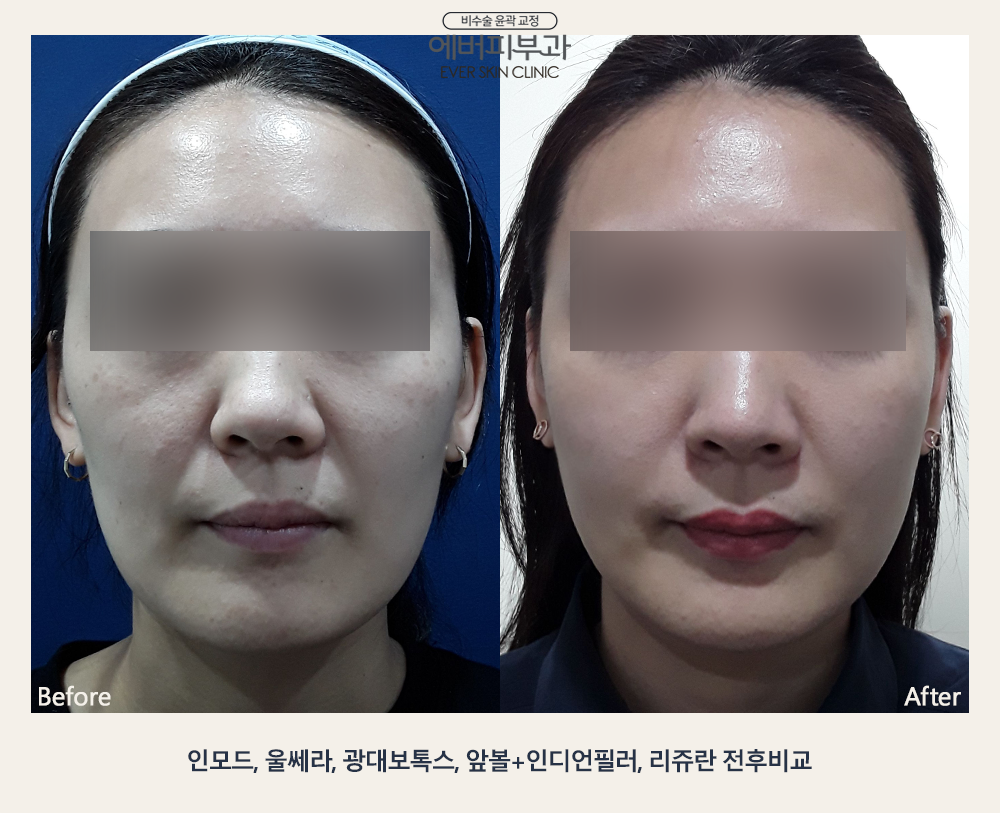
Real patient · before & after
Example of our non-surgical results
This case shows a combined lifting, contouring and skin-quality program, shared as an example of our non-surgical work. It is not a Fraxel laser result.
Fraxel results depend on scar type, skin tone and the number of sessions, so ask us for Fraxel-specific cases at consultation.
Photos are shared with the patient's consent and are not retouched apart from privacy blurring. Results differ from person to person and are not guaranteed.
See more before & after photosRecovery & safety
Recovery, side effects and aftercare
Expect sunburn-like redness and swelling for two to three days, followed by a bronzed, sandpaper-like texture and light flaking for about a week. Temporary darkening (post-inflammatory hyperpigmentation), acne flares and, rarely, cold sore reactivation or infection can occur.
Tell your dermatologist if you have taken isotretinoin in the past several months, have active acne or infection, a history of cold sores, keloids or melasma, have recently tanned, or are pregnant or breastfeeding.
Aftercare tips
- Moisturise generously and use only gentle products
- Apply sunscreen daily and avoid sun exposure
- Let flaking skin shed naturally; do not scrub or pick
- Avoid saunas, swimming and heavy exercise for a few days
- Pause retinoids and acids for about a week or as advised
Questions we hear every day
Fraxel Laser FAQ
Does Fraxel hurt?
Fraxel feels hot and prickly, and the skin feels like a sunburn for a few hours afterwards. Numbing cream is applied beforehand and cooling is used during treatment to keep it tolerable. Tell your dermatologist if you are sensitive so settings can be adjusted.
How many Fraxel sessions will I need?
Most patients have three to five sessions about four weeks apart for acne scars or texture. Deeper scars may need more sessions or additional methods. Your dermatologist will suggest a course after examining your skin.
How much downtime is there?
Redness and swelling usually last two to three days, then the skin looks bronzed and flakes for about a week. Many people return to work after a few days with make-up once the skin has settled, as advised by the clinic.
Fraxel or fractional CO2: which is better for acne scars?
Fractional CO2 is ablative and can achieve more per session for deeper scars, but with longer downtime and higher pigmentation risk. Fraxel is gentler and needs more sessions. The choice depends on scar depth, skin tone and how much downtime you can take.
Can I have Fraxel during a short trip to Seoul?
Yes, if you can allow about a week for redness and flaking and avoid strong sun afterwards. A single session gives a modest improvement; a full course works best if you can return. Tell us your travel dates when booking.
Talk to a board-certified dermatologist in Apgujeong
Send us your skin concern and photos on WhatsApp. An English-speaking team member will reply and arrange your consultation.
Mon & Thu 10:00–19:00 · Tue & Fri 10:00–20:00 · Sat 10:00–16:00 · Closed Wed, Sun & holidays