
Scar Removal in Apgujeong, Gangnam Seoul
Board-Certified Dermatologist Top 2% in Korea 13+ Years
Scar Removal · quick answer
What scar removal treatment does, in one paragraph
Scar removal treatment reduces how visible a scar is by changing its texture, colour or height; no method fully erases a scar. Depressed acne scars respond to collagen-building treatments such as fractional laser, RF microneedling and subcision, while red or raised scars need vascular lasers or injections. At Ever Skin Clinic in Apgujeong, a board-certified dermatologist identifies each scar type first, then plans a combination and course suited to your skin tone and schedule.
Medically reviewed by Dr. Jieun Kim, M.D. Founder & Director, board-certified dermatologist. Dermatology residency at Hanyang University Hospital; adjunct professor, Hanyang University College of Medicine. Meet our dermatologists Last reviewed October 2026
- Scar types
- Acne scars (rolling, boxcar, ice pick), surgical and injury scars, red or dark marks
- Methods
- Fractional laser, RF microneedling, subcision, TCA CROSS, boosters, fillers
- Sessions
- Usually a course of 3 to 5 sessions, about 4 weeks apart
- Downtime
- From 1 to 2 days to about a week, depending on the method
- Results
- Gradual improvement over months; scars soften but do not disappear
The treatment
How scar removal works
A scar forms when the skin repairs a deep injury, such as inflamed acne, surgery or a cut, with collagen that is arranged differently from normal skin. Depressed (atrophic) scars lack tissue, raised scars have too much, and flat scars may stay red or brown. Each type needs a different approach, which is why most plans combine several methods.
For depressed scars we often use fractional laser, RF microneedling and subcision to release tethered scars. Thick or growing scars are covered on our keloid page.
Matching treatment to scar type
- Rolling scars: subcision, sometimes with filler or boosters
- Boxcar scars: fractional laser and RF microneedling
- Ice pick scars: TCA CROSS, a focal chemical treatment
- Red marks: vascular laser such as V-beam
- Brown marks: pigment lasers and topical brighteners
Is it right for you?
Who is a good candidate?
Scar treatment works best on scars that are stable, usually at least several months after acne is controlled or a wound has healed. If acne is still active, we treat it first so new scars do not form.
Darker skin tones can be treated, but with lower-heat settings and methods that carry less risk of pigment change. For older surgical or injury scars with a poor shape, see scar revision.
Scar treatment may suit you if you
- Have depressed acne scars that make texture uneven
- Have a surgical or injury scar that is uneven or discoloured
- Have red or brown marks left after acne
- Can commit to a course of treatments over several months
- Have realistic expectations of improvement rather than removal
Your visit
What happens during treatment
Sessions usually take 30 to 60 minutes including numbing, depending on the methods combined.
- Scar mapping A board-certified dermatologist examines the scars under good lighting and identifies each type.
- Numbing Numbing cream or local anaesthetic is applied for comfort.
- Treatment The chosen methods, such as subcision followed by fractional laser, are performed in one session where appropriate.
- Plan and review We explain aftercare, the expected downtime and the timing of the next session.
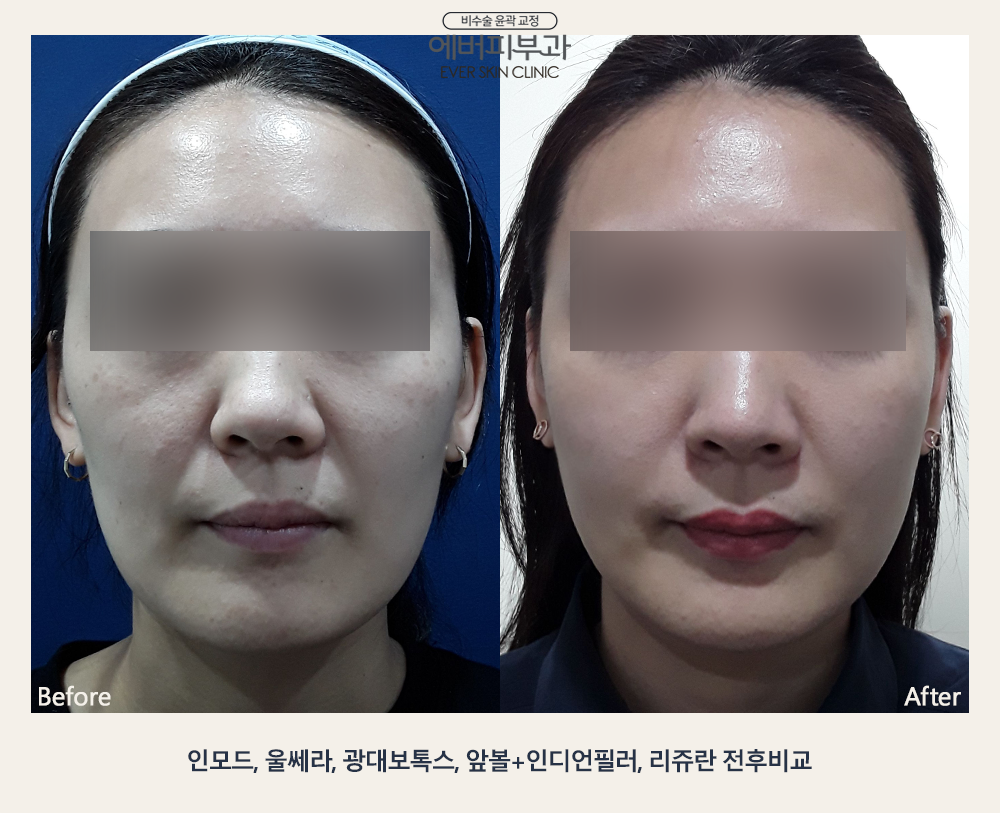
Real patient · before & after
An example of our clinic's results
This case shows a combined lifting, contouring and skin-quality program, shown as an example of our non-surgical results. It is not a scar treatment result.
Outcomes of scar treatment depend on the condition and on each person's skin. Ask us for scar treatment-specific examples and a realistic outlook at consultation.
Photos are shared with the patient's consent and are not retouched apart from privacy blurring. Results differ from person to person and are not guaranteed.
See more before & after photosRecovery & safety
Recovery, side effects and aftercare
Expect redness, swelling and pinpoint marks for a few days after laser or microneedling, and bruising after subcision for about one to two weeks. Temporary darkening of the skin is a risk, particularly in darker skin, and infection is uncommon but possible.
Tell your dermatologist if you have taken isotretinoin recently, have active acne or cold sores, a history of keloids, a bleeding disorder or blood thinners, or are pregnant. International patients should plan more intensive sessions at the start of a stay rather than the day before flying.
Aftercare tips
- Keep the skin clean and moisturised with gentle products
- Use SPF 50 sunscreen daily and avoid direct sun
- Do not pick at crusts or scabs
- Avoid make-up for about 24 hours or as advised
- Pause retinoids and exfoliants until your dermatologist says
Questions we hear every day
Scar Removal FAQ
Can scars be completely removed?
No treatment fully erases a scar, but many scars can be made noticeably smoother, flatter or less red. The degree of improvement depends on the scar type, its age and your skin, and your dermatologist will explain what is realistic at consultation.
How many sessions will I need?
Most acne scar plans involve about three to five sessions spaced around four weeks apart, and some patients continue further. Simple red or brown marks may need fewer. Collagen remodelling continues for months after the last session.
Is scar treatment painful?
Numbing cream or local anaesthetic is used, so most patients feel heat, pressure or pricking rather than sharp pain. Subcision and deeper laser settings are more uncomfortable than gentle lasers, and your dermatologist can adjust the plan to your comfort.
When should I start treating a new scar?
Red marks can often be treated early, and some scars benefit from early laser. For depressed acne scars, active acne should be controlled first. Fresh surgical scars are usually given a few weeks to heal before procedures.
Can I treat acne scars during a holiday in Seoul?
Yes, but choose the timing. Fractional laser and microneedling cause redness and fine crusts for several days, and subcision can bruise. Booking early in your stay allows a follow-up and time for the skin to settle before travel.
Talk to a board-certified dermatologist in Apgujeong
Send us your skin concern and photos on WhatsApp. An English-speaking team member will reply and arrange your consultation.
Mon & Thu 10:00–19:00 · Tue & Fri 10:00–20:00 · Sat 10:00–16:00 · Closed Wed, Sun & holidays