
Subcision in Apgujeong, Gangnam Seoul
Board-Certified Dermatologist Top 2% in Korea 13+ Years
Subcision · quick answer
What subcision does, in one paragraph
Subcision is a minimally invasive procedure for depressed acne scars, especially rolling scars, that are pulled down by fibrous bands beneath the skin. Under local anaesthetic, a fine needle or blunt cannula is passed under the scar to cut these bands, letting the skin lift; the controlled healing that follows also builds new collagen. At Ever Skin Clinic, a board-certified dermatologist maps which scars are tethered and plans subcision alone or with other scar treatments.
Medically reviewed by Dr. Jieun Kim, M.D. Founder & Director, board-certified dermatologist. Dermatology residency at Hanyang University Hospital; adjunct professor, Hanyang University College of Medicine. Meet our dermatologists Last reviewed October 2026
- Method
- Needle or cannula release of fibrous bands under the scar
- Best for
- Rolling and some tethered boxcar acne scars
- Sessions
- Often 1 to 3, about 4 to 8 weeks apart
- Downtime
- Bruising and swelling for about 5 to 10 days
- Results
- Gradual lift over weeks to months as collagen forms
The treatment
What is subcision?
Some acne scars are not just a dent in the surface: scar tissue forms fibrous strands that anchor the skin to deeper layers and pull it down, creating soft, wave-like rolling scars. Surface treatments cannot release these tethers, which is why subcision is often the key first step for this scar type.
After release, a small pocket of blood forms under the scar and stimulates new collagen. To improve and maintain the lift, our dermatologists may combine subcision with a skin booster, filler or PRP, and later blend texture with Fraxel or microneedling.
What subcision can and cannot do
- Can lift rolling scars that are tethered by fibrous bands
- Can improve some broad boxcar scars with a tethered base
- Cannot fix narrow icepick scars; TCA Cross suits these better
- Cannot smooth surface texture alone; laser or needling is added for that
Is it right for you?
Who is a good candidate?
Good candidates have soft, rolling depressions that improve when the skin is gently stretched, and whose acne is controlled. Your dermatologist will examine the scars in angled light and test whether they are tethered.
Subcision is usually not done during active breakouts, soon after isotretinoin without your dermatologist's advice, or in people prone to keloids.
Subcision may suit you if you have
- Rolling acne scars that cast shadows in overhead light
- Scars that flatten when you stretch the skin
- Scars that have not improved with laser alone
- Controlled acne and no active infection
- Time for about a week of possible bruising
Your visit
What happens during treatment
The procedure usually takes about 30 to 60 minutes depending on the number of scars.
- Scar mapping A board-certified dermatologist marks each tethered scar under angled lighting.
- Anaesthesia Numbing cream and local anaesthetic injections keep the area comfortable.
- Release A fine needle or cannula is inserted under each scar and moved to cut the fibrous bands.
- Aftercare Pressure is applied to limit bruising, and aftercare and any combined treatment are planned.
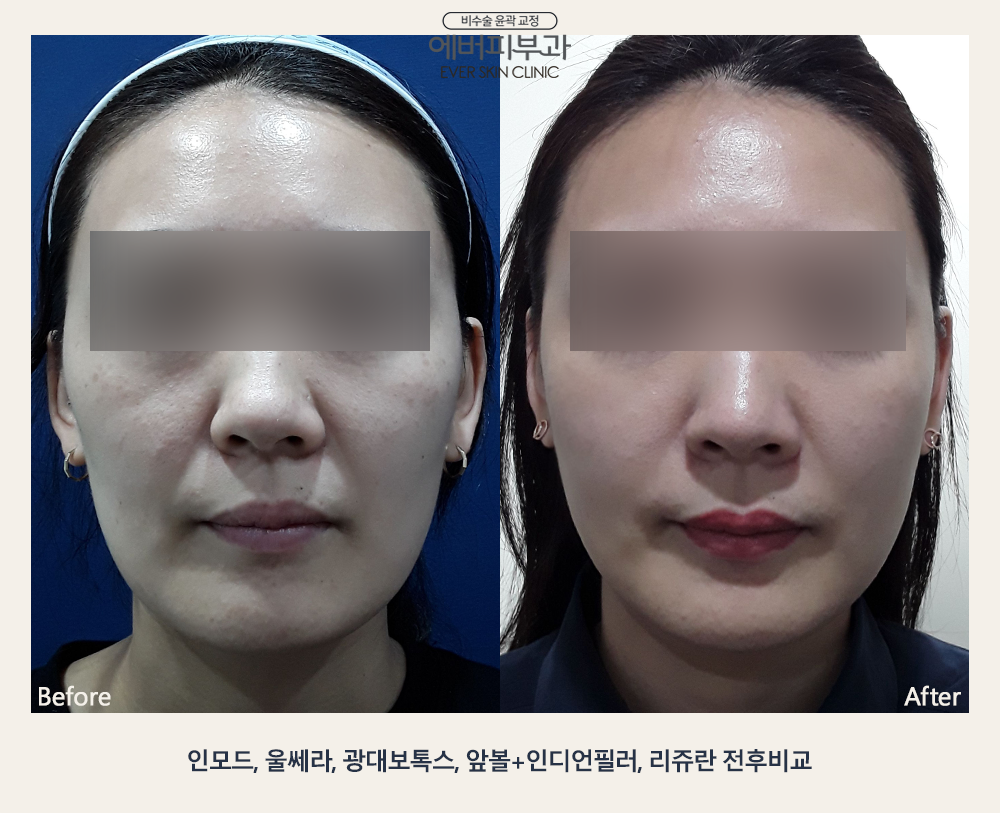
Real patient · before & after
Example of our non-surgical results
This case shows a combined lifting, contouring and skin-quality program, shared as an example of our non-surgical work. It is not a subcision or acne scar result.
Scar results vary with scar type and depth, so ask us for scar-specific cases at consultation.
Photos are shared with the patient's consent and are not retouched apart from privacy blurring. Results differ from person to person and are not guaranteed.
See more before & after photosRecovery & safety
Recovery, side effects and aftercare
Bruising, swelling and tenderness are expected and typically last about five to ten days. Small lumps under the skin can be felt for a few weeks as healing occurs. Less commonly, infection, prolonged firmness, pigment change or over-correction can occur.
Tell your dermatologist if you take blood thinners, aspirin or supplements such as fish oil, have a bleeding disorder, keloid tendency, active acne or infection, a history of cold sores, have recently taken isotretinoin, or are pregnant or breastfeeding.
Aftercare tips
- Use cold compresses on the first day to reduce swelling
- Avoid alcohol, saunas and intense exercise for several days
- Do not massage the area unless advised
- Keep the skin clean and use sunscreen
- Plan important events at least 1 to 2 weeks after treatment
Questions we hear every day
Subcision FAQ
Does subcision hurt?
Local anaesthetic is used, so most patients feel pressure and a scraping sensation rather than sharp pain. The injection of anaesthetic stings briefly. The area is tender for a few days afterwards.
How many subcision sessions will I need?
Some scars improve noticeably after one session, but many patients need two or three sessions about four to eight weeks apart, often with other scar treatments. Your dermatologist will reassess after each session.
How long is the downtime?
Bruising and swelling usually last about five to ten days and can be covered with make-up after a few days. Plan important events or photos at least one to two weeks after treatment.
Are the results permanent?
Released bands can sometimes reform, which is why subcision is often repeated or combined with boosters, filler or PRP. Much of the improvement is long-lasting once new collagen forms, but ageing skin will continue to change.
Can I have subcision while visiting Seoul?
Yes, if you can allow about a week of bruising and avoid flying immediately if swelling is significant. If you plan multiple sessions or combined treatments, let us know your travel dates so we can schedule them.
Talk to a board-certified dermatologist in Apgujeong
Send us your skin concern and photos on WhatsApp. An English-speaking team member will reply and arrange your consultation.
Mon & Thu 10:00–19:00 · Tue & Fri 10:00–20:00 · Sat 10:00–16:00 · Closed Wed, Sun & holidays