Pico Laser in Apgujeong, Gangnam Seoul
Board-Certified Dermatologist Top 2% in Korea 13+ Years
Pico Laser · quick answer
What Pico laser does, in one paragraph
A Pico laser delivers pulses lasting picoseconds, trillionths of a second, which shatter pigment particles mainly through a pressure (photoacoustic) effect rather than heat. Smaller fragments are cleared more easily by the body, so sun spots, freckles, stubborn pigment and tattoo ink can respond in fewer sessions with less heat injury. Used at low energy, it also works as Pico toning. At Ever Skin Clinic, a board-certified dermatologist diagnoses your pigment first and chooses spot treatment, toning or both.
Medically reviewed by Dr. Jieun Kim, M.D. Founder & Director, board-certified dermatologist. Dermatology residency at Hanyang University Hospital; adjunct professor, Hanyang University College of Medicine. Meet our dermatologists Last reviewed October 2026
- Technology
- Picosecond laser (commonly 1064 nm and 532 nm)
- Best for
- Sun spots, freckles, stubborn pigment, tattoos; toning for uneven tone
- Sessions
- Spots often 1 to 3; toning or tattoos usually more
- Downtime
- Spots crust and flake over about 5 to 10 days; toning minimal
- Treatment time
- About 10 to 30 minutes
The treatment
What is a Pico laser?
Older nanosecond lasers rely more on heat to break up pigment. Picosecond pulses are about a thousand times shorter, so the pigment is fractured before much heat spreads to surrounding skin. This can mean fewer sessions for some spots and a lower risk of heat-related darkening, although no laser is risk-free.
Pico lasers are used in two main ways: higher-energy spot treatment for defined lesions, and low-energy Pico toning across the face, which is an alternative to conventional laser toning in melasma plans. With fractional handpieces, some Pico devices are also used for fine texture and shallow scars. For tattoos, see tattoo removal.
What Pico laser can treat
- Sun spots and age spots on the face and hands
- Freckles and some flat pigmented birthmarks
- Stubborn or deeper pigment , assessed case by case
- Tattoos , especially dark ink, over several sessions
- Uneven tone with low-energy Pico toning
Is it right for you?
Who is a good candidate?
Pico laser suits people with defined brown spots or freckles, those whose pigment has not responded well to other treatments, and patients wanting tattoo removal. Pico toning can suit melasma-prone and medium to darker skin when energy is kept low.
Any new, changing or irregular spot should be checked to exclude skin cancer before laser. Your dermatologist may use a skin imaging device to separate melasma, sun spots and deeper pigment such as Hori's naevus.
Pico laser may suit you if you
- Have sun spots or freckles you want lightened
- Have pigment that did not respond to other treatments
- Want fewer sessions for defined spots
- Are considering removal of a tattoo
- Can avoid tanning before and after treatment
Your visit
What happens during treatment
Most face sessions take 10 to 30 minutes, depending on whether you have spot treatment, toning or both.
- Diagnosis A board-certified dermatologist examines each spot, confirms it is suitable for laser and agrees the plan with you.
- Preparation Your skin is cleansed, eyes are protected and numbing cream is applied for spot treatment if needed.
- Laser Pulses are delivered to each spot or passed evenly across the face for toning; spots briefly turn white or grey.
- Aftercare A soothing product, protective patches if needed and sunscreen are applied, and we explain how spots will heal.
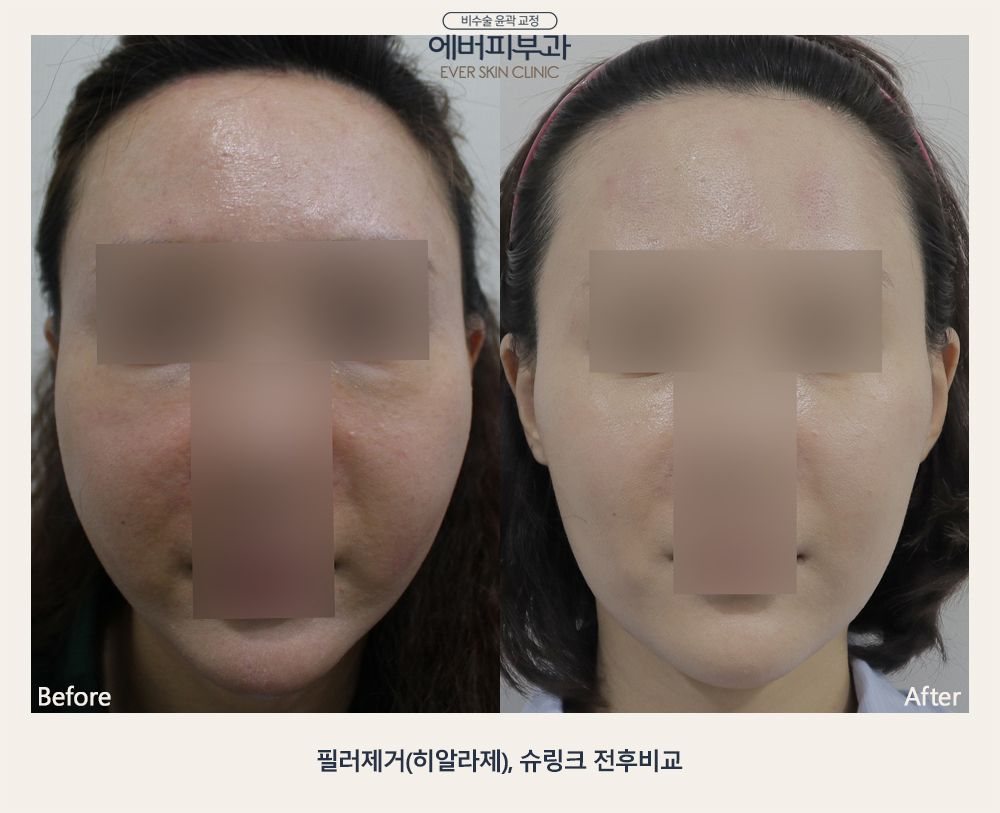
Real patient · before & after
Our non-surgical results
This case shows filler dissolving combined with HIFU lifting. It is shown as an example of our non-surgical work and is not a Pico laser result.
Ask us at consultation for Pico laser cases with similar pigment and skin tone to yours.
Photos are shared with the patient's consent and are not retouched apart from privacy blurring. Results differ from person to person and are not guaranteed.
See more before & after photosRecovery & safety
Recovery, side effects and aftercare
After spot treatment, spots darken and form thin crusts that flake off in about five to ten days; some patients wear small protective patches. Redness and mild swelling are common for a day or two. Pico toning usually causes only brief redness. Risks include temporary darkening (more likely in darker skin), lightening, blistering and, rarely, scarring.
Tell your dermatologist if you have a tan, melasma, a history of cold sores or keloids, take isotretinoin or photosensitising medicines, or are pregnant.
Aftercare tips
- Let crusts fall off naturally; do not pick or scrub
- Keep treated spots moisturised and use patches if given
- Apply broad-spectrum SPF 50 daily
- Avoid saunas, swimming pools and intense exercise for a few days
- Skip retinoids and exfoliating acids for about a week
Questions we hear every day
Pico Laser FAQ
Does Pico laser hurt?
Spot treatment feels like sharp snaps against the skin, and numbing cream is often used. Pico toning feels lighter, like warm flicks. Sessions are short, and the discomfort stops quickly afterwards.
How many sessions will I need?
Many sun spots and freckles improve after one to three sessions, spaced about four weeks apart. Pico toning for uneven tone or melasma usually needs a longer course, and tattoos often need many sessions. Your dermatologist will give you an estimate.
Is Pico better than other lasers?
Pico lasers can clear some pigment in fewer sessions with less heat, but they are not the best option for every concern. The right laser depends on the type and depth of pigment and your skin tone.
Can Pico laser treat melasma?
Low-energy Pico toning can be part of a melasma plan, combined with topicals and sun protection. High-energy spot treatment is generally avoided on melasma because it can trigger darkening.
Can I have Pico laser during a trip to Seoul?
Yes, but plan for small dark crusts on treated spots for about a week, which can be covered with patches or make-up after the first day. Avoid strong sun and beach holidays immediately afterwards.
Talk to a board-certified dermatologist in Apgujeong
Send us your skin concern and photos on WhatsApp. An English-speaking team member will reply and arrange your consultation.
Mon & Thu 10:00–19:00 · Tue & Fri 10:00–20:00 · Sat 10:00–16:00 · Closed Wed, Sun & holidays