Tattoo Removal in Apgujeong, Gangnam Seoul
Board-Certified Dermatologist Top 2% in Korea 13+ Years
Tattoo Removal · quick answer
How laser tattoo removal works, in one paragraph
Laser tattoo removal uses very short, high-energy pulses from Q-switched or pico lasers. Tattoo ink absorbs the light and shatters into tiny particles, which the immune system gradually clears over the following weeks, so the tattoo fades session by session. Black and dark blue ink respond best; some colours such as green, yellow and white are harder. At Ever Skin Clinic in Apgujeong, a board-certified dermatologist assesses the ink, depth and your skin type and gives a realistic estimate of sessions.
Medically reviewed by Dr. Jieun Kim, M.D. Founder & Director, board-certified dermatologist. Dermatology residency at Hanyang University Hospital; adjunct professor, Hanyang University College of Medicine. Meet our dermatologists Last reviewed October 2026
- Technology
- Q-switched and pico lasers (e.g. 1064 nm and 532 nm)
- Best for
- Black and dark blue ink; amateur and professional tattoos
- Sessions
- Often 6 to 10 or more, 6 to 8 weeks apart
- Treatment time
- About 10 to 30 minutes depending on size
- Downtime
- Redness, swelling and crusting for about 1 to 2 weeks
The treatment
What is laser tattoo removal?
Tattoo ink sits in the dermis as particles too large for the body to remove. A Q-switch laser or pico laser delivers pulses short enough to fragment those particles, and immune cells carry the fragments away over weeks. Each session lightens the tattoo further, which is why treatments are spaced well apart.
Different wavelengths are needed for different colours: 1064 nm for black and dark blue, 532 nm for red and orange. Professional tattoos with dense, multicoloured ink usually need more sessions than amateur or faded tattoos. Some tattoos fade substantially but leave a faint shadow.
Factors that affect how fast a tattoo fades
- Ink colour — black fades best; green, yellow and white are harder
- Ink density — professional tattoos usually need more sessions
- Location — areas with good circulation, closer to the heart, tend to clear faster
- Age of tattoo — older tattoos often respond faster
- Skin type and health — darker skin needs more conservative settings; smoking can slow clearance
Is it right for you?
Who is a good candidate?
Most adults with an unwanted tattoo can be treated, including those who want to lighten a tattoo before a cover-up. Cosmetic tattoos such as eyebrow or lip liner need special care, because some inks containing iron or titanium oxide can darken with laser, so a test spot is usually done first.
Darker skin can be treated with 1064 nm and conservative settings, but temporary lightening or darkening of the skin is more likely, as explained on our skin discoloration page.
Tattoo removal may suit you if you
- Want to remove or fade a tattoo you no longer like
- Want to lighten a tattoo before a cover-up
- Have mainly black or dark ink
- Can commit to a course over many months
- Can avoid tanning the area between sessions
Your visit
What happens during treatment
Allow about an hour for your first visit; later sessions are shorter.
- Consultation A board-certified dermatologist assesses ink colours, size, skin type and medical history and estimates the course.
- Numbing Numbing cream is applied for about 30 to 45 minutes, and eyes are protected.
- Laser Pulses are applied across the tattoo; the ink turns briefly white (frosting) as it shatters.
- Dressing The area is cooled and covered with ointment and a dressing; next session is booked about 6 to 8 weeks later.
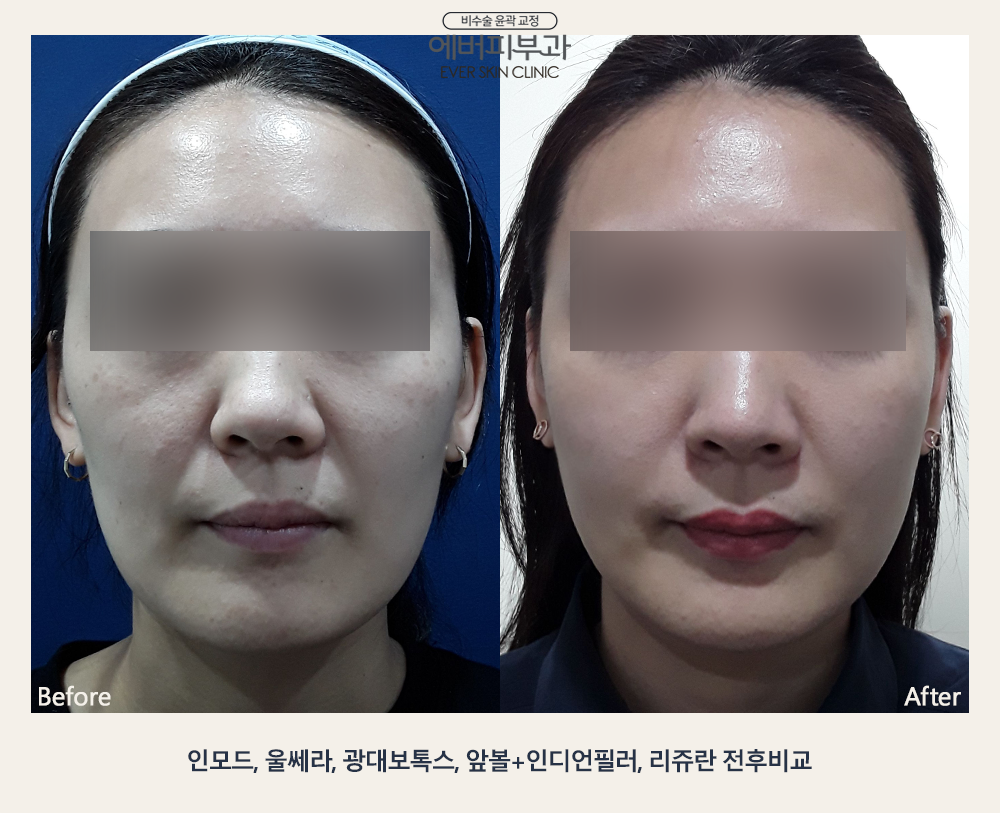
Real patient · before & after
An example of our non-surgical results
This case shows a combined lifting and skin program and is included only as an example of our non-surgical work; it is not a tattoo removal result.
Tattoo fading is gradual and depends heavily on the ink, so ask us for tattoo-specific cases and an estimate for your tattoo at consultation.
Photos are shared with the patient's consent and are not retouched apart from privacy blurring. Results differ from person to person and are not guaranteed.
See more before & after photosRecovery & safety
Recovery, side effects and aftercare
Redness, swelling and pinpoint bleeding are expected immediately; blisters and crusts may form and heal within about 1 to 2 weeks. Possible risks include lightening or darkening of the surrounding skin, incomplete removal, texture change and, rarely, scarring or allergic reactions to released ink, particularly red ink.
Tell your dermatologist if you are pregnant, have a history of keloids, take isotretinoin, gold therapy or photosensitising medicines, have tanned skin, or had a reaction to the tattoo ink.
Aftercare tips
- Keep the area clean and apply ointment as instructed
- Do not pop blisters or pick crusts
- Avoid swimming, saunas and hot baths until healed
- Protect the area from sun with clothing or SPF 50
- Allow full healing before the next session
Questions we hear every day
Tattoo Removal FAQ
Can a tattoo be removed completely?
Many tattoos fade substantially or become barely visible, but complete removal cannot be promised. Some colours, dense professional ink and certain cosmetic tattoos may leave a faint shadow. Your dermatologist will give a realistic estimate after assessing the tattoo.
Does tattoo removal hurt?
It feels like hot snapping against the skin, often compared with getting the tattoo. Numbing cream and cooling air make it more tolerable, and the laser itself takes only minutes for a small tattoo.
How many sessions will I need?
Most tattoos need about 6 to 10 or more sessions, 6 to 8 weeks apart, so a full course often takes a year or longer. Small, black or older amateur tattoos may need fewer.
Can I start tattoo removal while visiting Seoul?
Yes, a first session is common for visitors. Plan for 1 to 2 weeks of healing with a dressing and avoid swimming and sun on the area. Further sessions can continue on return visits or with a dermatologist at home.
Can laser remove eyebrow or lip tattoos?
Sometimes, but cosmetic inks can contain pigments that turn darker with laser. A small test area is treated first to see how the ink reacts. Treatment near the eyes requires extra protection and care.
Talk to a board-certified dermatologist in Apgujeong
Send us your skin concern and photos on WhatsApp. An English-speaking team member will reply and arrange your consultation.
Mon & Thu 10:00–19:00 · Tue & Fri 10:00–20:00 · Sat 10:00–16:00 · Closed Wed, Sun & holidays