
Melasma Treatment in Apgujeong, Gangnam Seoul
Board-Certified Dermatologist Top 2% in Korea 13+ Years
Melasma Treatment · quick answer
How melasma is treated, in one paragraph
Melasma is a chronic pigment condition that causes brown or grey-brown patches, usually on the cheeks, forehead and upper lip, driven by sun and visible light, hormones and genetics. It can be improved and controlled but tends to recur, so treatment is a long-term plan rather than a one-off fix. At Ever Skin Clinic, a board-certified dermatologist confirms the diagnosis, then combines strict sun protection, prescription topicals or oral tranexamic acid where suitable, and gentle low-energy laser toning, avoiding heat-heavy treatments that can make melasma worse.
Medically reviewed by Dr. Jieun Kim, M.D. Founder & Director, board-certified dermatologist. Dermatology residency at Hanyang University Hospital; adjunct professor, Hanyang University College of Medicine. Meet our dermatologists Last reviewed October 2026
- Approach
- Sun protection, topicals, oral medicine where suitable, laser toning
- Best for
- Hormonal and sun-triggered facial pigment patches
- Course
- Typically 5 to 10 toning sessions, 1 to 4 weeks apart
- Downtime
- Little to none for toning; mild redness for a few hours
- Results
- Gradual lightening; maintenance needed as melasma can recur
The condition
What is melasma and how do we treat it?
Melasma develops when pigment cells become overactive in response to UV and visible light, heat, and hormones such as those in pregnancy or the contraceptive pill. It is more common in women and in medium to darker skin types. Unlike a single sun spot, melasma involves a wide area of reactive skin and sometimes small blood vessels, which is why aggressive treatments often trigger rebound darkening.
Our main tools are low-fluence laser toning, sometimes with Pico toning, alongside prescription creams and careful peels. Heat-based light treatments such as IPL are generally avoided for melasma, or used only very cautiously when sun spots coexist.
Parts of a melasma plan
- Sun and visible-light protection : tinted broad-spectrum sunscreen every day
- Prescription topicals , for example hydroquinone-based or non-hydroquinone creams, used under supervision
- Oral tranexamic acid for selected patients after a health check
- Low-energy laser toning in repeated gentle sessions
- Gentle peels or boosters to support the skin barrier
Is it right for you?
Who is a good candidate?
Treatment suits adults with diagnosed melasma who are willing to commit to daily sun protection and a course of several months. Results are best when triggers are managed, for example by discussing hormonal medicines with your own doctor.
Melasma can look like other conditions such as Hori's naevus, sun spots or post-inflammatory pigmentation, and these are treated differently. Your dermatologist may use a skin imaging device to tell them apart before treatment.
Melasma treatment may suit you if you
- Have symmetrical brown patches on the cheeks, forehead or upper lip
- Noticed patches after pregnancy, hormonal medicines or strong sun
- Have tried creams alone without enough improvement
- Can protect your skin from sun and heat during treatment
- Understand that maintenance is part of long-term control
Your visit
What happens during treatment
A laser toning session takes about 15 to 20 minutes and can fit into a lunch break or a sightseeing day.
- Diagnosis A board-certified dermatologist examines your pigment, checks for mixed types and asks about hormones, medicines and sun exposure.
- Plan We agree topicals, any oral medicine and the laser schedule, based on your skin type and how long you are in Seoul.
- Laser toning Low-energy pulses are passed evenly over the face; most patients feel light warm snaps.
- Review We check your response at each visit and adjust settings to avoid irritation or rebound darkening.
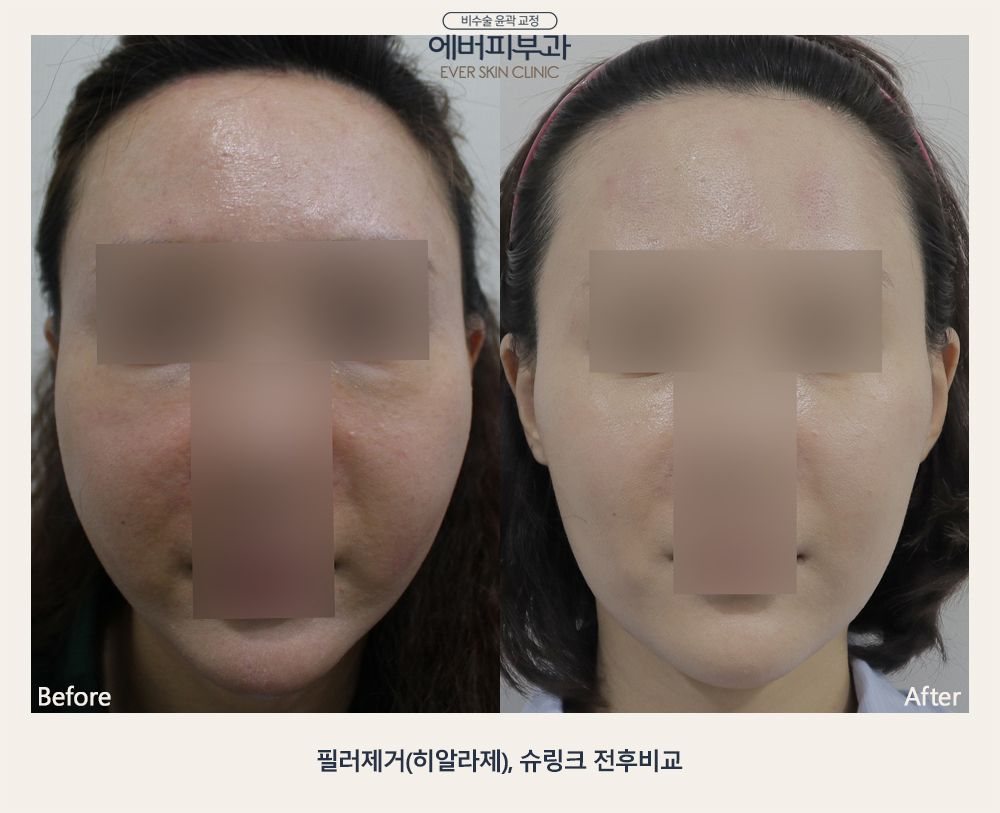
Real patient · before & after
Our non-surgical results
This case shows filler dissolving combined with HIFU lifting. It is shown as an example of our non-surgical work and is not a melasma result.
Ask us at consultation for melasma cases with a similar skin type and pattern to yours.
Photos are shared with the patient's consent and are not retouched apart from privacy blurring. Results differ from person to person and are not guaranteed.
See more before & after photosRecovery & safety
Recovery, side effects and safety
Laser toning usually causes only mild redness for a few hours. The main risks in melasma treatment are rebound darkening after irritation or too much heat, and, with repeated high-energy toning, patchy white spots (hypopigmentation). Prescription creams can cause dryness and irritation, and some should only be used for limited periods.
Tell your dermatologist if you are pregnant, planning pregnancy or breastfeeding, take hormonal medicines, or have a history of blood clots, as this affects whether oral tranexamic acid is safe for you.
Aftercare tips
- Apply tinted broad-spectrum sunscreen every morning and reapply outdoors
- Wear a hat and avoid saunas, hot yoga and other heat exposure
- Use gentle cleansers and avoid scrubs
- Apply prescription creams exactly as instructed
- Keep maintenance visits, because melasma can return
Questions we hear every day
Melasma Treatment FAQ
Can melasma be cured?
Melasma can usually be lightened and kept under control, but there is no permanent cure, and it can return with sun, heat or hormonal change. Most patients follow a treatment phase of a few months and then a maintenance routine of sunscreen, topicals and occasional toning.
How many laser toning sessions will I need?
Many patients need around five to ten sessions spaced one to four weeks apart, depending on skin type and response. Your dermatologist reviews progress at each visit and may slow down or pause if the skin becomes irritated.
Why do you avoid IPL and strong lasers for melasma?
Heat and inflammation can stimulate pigment cells and cause melasma to darken. Low-energy toning delivers small amounts of energy repeatedly to reduce pigment gently. IPL or stronger lasers may be used only cautiously for separate sun spots.
Is oral tranexamic acid safe?
For suitable patients at low doses, it can help melasma, but it is not for everyone. People with a history of blood clots, some heart conditions, smokers on hormonal contraception, and pregnant patients are generally not suitable. Your dermatologist will check your history first.
Can I start melasma treatment while visiting Seoul?
Yes. We can confirm the diagnosis, give you prescription topicals and start laser toning, then plan home care and follow-up with a local dermatologist. Because results need several months, a short trip is best used to start a plan.
Talk to a board-certified dermatologist in Apgujeong
Send us your skin concern and photos on WhatsApp. An English-speaking team member will reply and arrange your consultation.
Mon & Thu 10:00–19:00 · Tue & Fri 10:00–20:00 · Sat 10:00–16:00 · Closed Wed, Sun & holidays