Birthmark Removal in Apgujeong, Gangnam Seoul
Board-Certified Dermatologist Top 2% in Korea 13+ Years
Birthmark Removal · quick answer
How birthmark removal works, in one paragraph
Birthmark removal uses lasers matched to what the mark is made of. Pigmented birthmarks such as nevus of Ota or café-au-lait spots are treated with pigment lasers like Q-switched or pico lasers, which break melanin into particles the body clears, while red vascular marks such as port-wine stains need vascular lasers. Most marks lighten gradually over several sessions rather than disappearing at once. At Ever Skin Clinic in Apgujeong, a board-certified dermatologist first diagnoses the type of birthmark, then plans the laser and course with you.
Medically reviewed by Dr. Jieun Kim, M.D. Founder & Director, board-certified dermatologist. Dermatology residency at Hanyang University Hospital; adjunct professor, Hanyang University College of Medicine. Meet our dermatologists Last reviewed October 2026
- Technology
- Q-switched or pico lasers for pigment; vascular lasers for red marks
- Best for
- Nevus of Ota, Hori's nevus, café-au-lait spots, some pigmented and vascular birthmarks
- Sessions
- Often 3 to 10 or more, about 4 to 8 weeks apart
- Treatment time
- Usually 10 to 30 minutes
- Downtime
- Redness, swelling or fine crusts for about 3 to 7 days
The treatment
What is laser birthmark removal?
A birthmark is a patch of skin that differs in colour because of extra pigment cells or extra blood vessels. Pigment lasers such as the Q-switch laser deliver very short pulses that shatter melanin without cutting the skin; vascular lasers such as the V-beam laser heat blood vessels so that red marks fade.
Response varies a lot by type. Deep dermal pigment such as nevus of Ota often lightens well over a course, while café-au-lait spots respond unpredictably and can recur. Raised or changing moles are assessed differently and may need excision, covered under mole removal.
Birthmarks we commonly assess
- Nevus of Ota — blue-grey pigment around the eye and cheek
- Hori's nevus (ABNOM) — grey-brown spots on the cheeks that appear in adulthood
- Café-au-lait spots — flat light-brown patches
- Becker's nevus and other pigmented patches
- Port-wine stains and vascular marks — treated with vascular lasers
Is it right for you?
Who is a good candidate?
Good candidates have a flat birthmark that has been diagnosed by a dermatologist and are prepared for a gradual result over several sessions. Accurate diagnosis matters: melasma, freckles and birthmarks can look alike but need different settings, and some lesions should be biopsied rather than lasered.
Darker skin types can be treated with conservative settings, though the risk of temporary pigment change is higher, as explained on our skin discoloration page.
Laser may suit you if you
- Have a flat pigmented or vascular birthmark
- Want it lighter and less noticeable without surgery
- Can avoid tanning before and during treatment
- Accept that several sessions are usually needed
- Can plan follow-up sessions around trips to Seoul
Your visit
What happens during treatment
Most sessions take about 30 to 60 minutes in clinic, including numbing.
- Diagnosis A board-certified dermatologist examines the mark, sometimes with a dermatoscope, and confirms it is suitable for laser.
- Numbing Numbing cream is applied for about 30 minutes and the eyes are protected.
- Laser treatment The chosen laser is applied across the mark; you may feel snapping or warmth for a few minutes.
- Aftercare We cool and soothe the skin, explain wound care and schedule the next session about 4 to 8 weeks later.
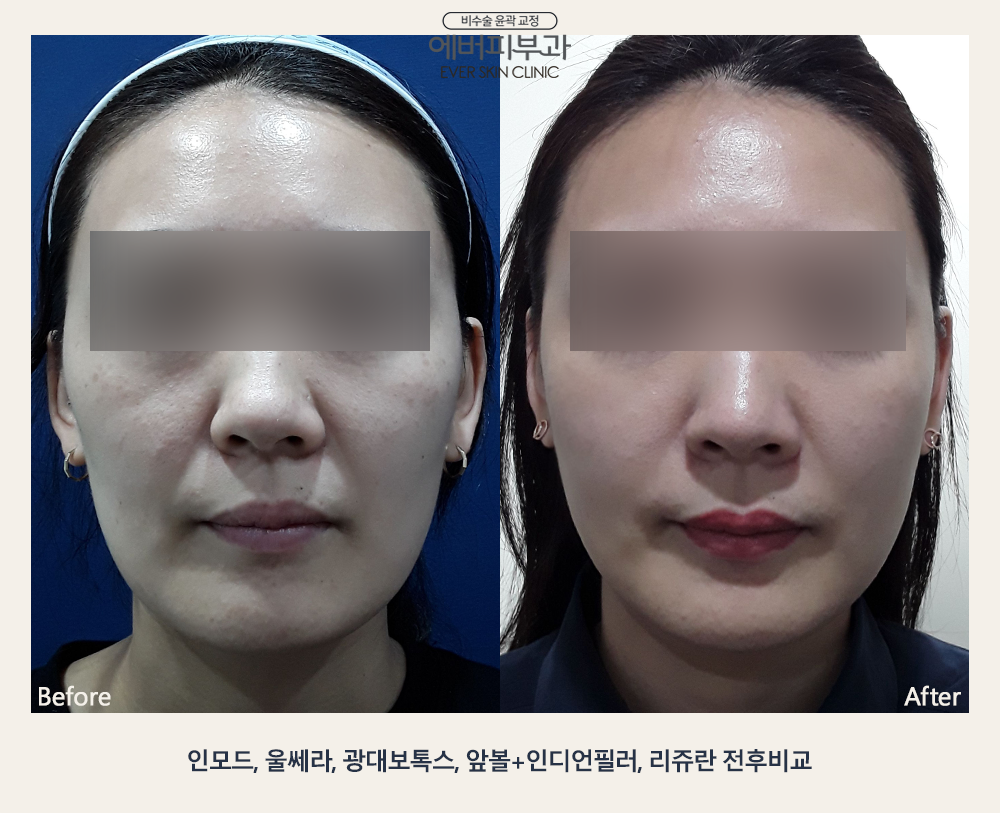
Real patient · before & after
An example of our non-surgical results
This case shows a combined lifting and skin program and is included only as an example of our non-surgical work; it is not a birthmark removal result.
Birthmark response depends heavily on the type of mark, so ask us for birthmark-specific cases and a realistic outlook for your skin at consultation.
Photos are shared with the patient's consent and are not retouched apart from privacy blurring. Results differ from person to person and are not guaranteed.
See more before & after photosRecovery & safety
Recovery, side effects and aftercare
Redness, swelling and a whitish or darkened appearance immediately after treatment are expected. Fine crusts may form and shed in about 5 to 7 days. Possible risks include temporary darkening (post-inflammatory hyperpigmentation), lightening, blistering, incomplete clearance, recurrence and, rarely, scarring.
Tell your dermatologist if a mark has changed in size, colour or shape, if you are pregnant, use isotretinoin or photosensitising medicines, have recently tanned, or have a history of keloids. Treatment of birthmarks in young children is usually referred to specialised paediatric settings.
Aftercare tips
- Apply the recommended ointment or moisturiser until crusts shed
- Use SPF 50 daily and avoid direct sun for several weeks
- Do not pick or scrub crusts
- Avoid retinoids and exfoliating acids for about a week
- Skip saunas and intense exercise for 1 to 2 days
Questions we hear every day
Birthmark Removal FAQ
Can a birthmark be removed completely?
Some birthmarks, such as nevus of Ota, can lighten very substantially over a course, while others like café-au-lait spots may only partly fade or return. Complete removal cannot be promised; your dermatologist will give a realistic outlook after diagnosing the type of mark.
Does birthmark laser treatment hurt?
It feels like quick snapping or flicking against the skin. Numbing cream is applied beforehand, and cooling is used during and after treatment. Sensitivity varies by area, with skin near the eyes and lips usually feeling more.
How many sessions will I need?
Commonly about 3 to 10 sessions, spaced 4 to 8 weeks apart, depending on the type, depth and size of the birthmark. Deeper pigment such as nevus of Ota often needs a longer course than superficial marks.
Can I have birthmark treatment while travelling?
Yes, but plan for about a week of redness or fine crusts and strict sun protection afterwards. Because a course takes months, many international patients start in Seoul and continue at home or on return visits.
Will a scar remain after laser?
Pigment lasers do not cut the skin, and scarring is uncommon when settings are appropriate and crusts are left to heal. Temporary darkening or lightening is more common and usually fades over months. Avoiding sun and picking reduces these risks.
Talk to a board-certified dermatologist in Apgujeong
Send us your skin concern and photos on WhatsApp. An English-speaking team member will reply and arrange your consultation.
Mon & Thu 10:00–19:00 · Tue & Fri 10:00–20:00 · Sat 10:00–16:00 · Closed Wed, Sun & holidays