
Sagging Skin Treatments in Apgujeong,
Gangnam, Seoul
Board-Certified Dermatologist Top 2% in Korea 13+ Years
Sagging Skin Treatments · quick answer
How sagging skin is treated, in one paragraph
Sagging skin happens when collagen and elastin decline, deeper support loosens and facial fat shrinks or descends, so the cheeks, jawline and neck lose definition. Non-surgical treatment matches the method to the degree and cause of sagging: focused ultrasound or radiofrequency to tighten, threads to reposition tissue, collagen stimulators or fillers to restore support, and boosters for skin quality. At Ever Skin Clinic, a board-certified dermatologist grades your laxity and explains which options are likely to help.
Medically reviewed by
Dr. Jieun Kim, M.D.
Founder & Director, Ever Skin Clinic · Board-certified dermatologist
- Adjunct Professor, Hanyang University College of Medicine
- Dermatology residency, Hanyang University Hospital
- Master’s degree in Dermatology, Hanyang University
- Regular Member, Korean Dermatological Association
- Regular Member, Korean Laser Medicine Association
- Member, World Congress of Dermatology
- Published in JAAD and Annals of Dermatology
- English-speaking consultations
Meet our dermatologists → Last reviewed October 2026
- Common causes
- Ageing, sun damage, weight loss, genetics, smoking
- Main options
- HIFU, RF, RF microneedling, threads, collagen stimulators, boosters
- Best for
- Mild to moderate laxity of cheeks, jowls, jawline and neck
- Downtime
- None for most devices; a few days for threads or injectables
- Results
- Build over about 2 to 3 months; maintenance usually needed
Understanding laxity
What causes sagging skin, and how is it treated?
Sagging is not one problem. Skin itself thins and loses elasticity; the SMAS layer and ligaments that hold tissue in place loosen; and volume loss in the midface and temples removes support, so tissue drops toward the jaw. Sun exposure, rapid weight loss and smoking speed this up. The right treatment depends on which of these dominates.
Early laxity often responds to energy devices such as HIFU or RF skin tightening. Moderate sagging may need threads or a combination, and advanced laxity with excess skin is usually better treated surgically.
Options by type of sagging
- Thin, crepey skin — RF, RF microneedling and skin boosters
- Deep laxity and jowls — focused ultrasound (Ultherapy, Shurink) targeting the SMAS
- Visible drop needing repositioning — dissolvable thread lifting
- Volume loss — collagen stimulators such as Sculptra or Radiesse, or HA filler
- Mixed causes — a layered non-surgical facelift plan
Is it right for you?
Who benefits from sagging skin treatment?
Non-surgical treatments suit adults with mild to moderate laxity who want natural, gradual improvement and are willing to maintain results. They are also used after weight loss or as prevention in people in their 30s and 40s.
When there is a lot of excess skin, heavy jowls or neck banding, non-surgical results are limited, and your dermatologist will discuss whether a surgical opinion would serve you better.
Treatment may help if you notice
- A softer, less defined jawline or early jowls
- Deepening folds from the nose to the mouth
- Loose or crepey skin on the neck
- Hooding or laxity around the eyes
- Hollows in the cheeks or temples making the face look tired

Your visit
How treatment is planned
Most patients start with one main lifting treatment, with others added in the same visit or later depending on time in Seoul.
- Laxity assessment A board-certified dermatologist grades sagging, skin thickness and volume loss while you sit upright.
- Personal plan The treatments, order and timing are agreed, with downtime matched to your schedule.
- Treatment Device sessions usually take about 30 to 90 minutes; threads or injectables are added as planned.
- Maintenance We review results over the following months and suggest a maintenance interval, often every 6 to 12 months.
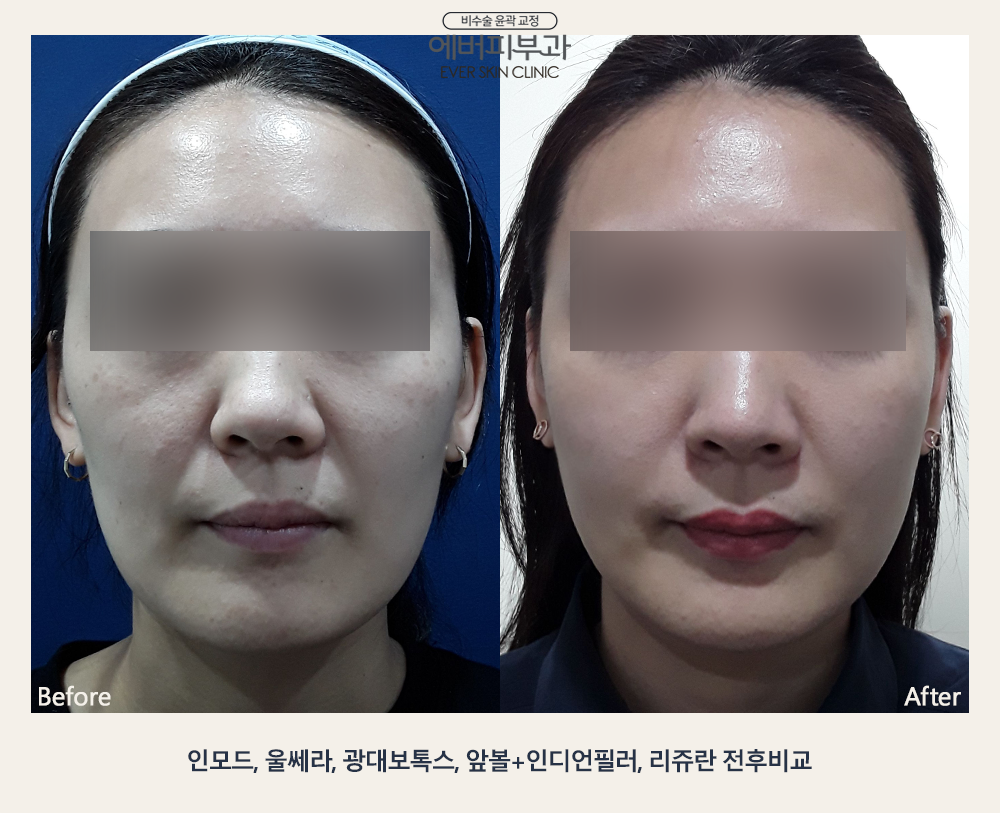
Real patient · before & after
Treating sagging in layers
This patient's plan combined InMode and Ulthera for lifting, zygoma Botox for contour, front-cheek and Indian-line filler for support and Rejuran for skin quality. The result shown is from the whole program.
Results depend on the degree of laxity and your skin, and your dermatologist will explain what is realistic for you.
Photos are shared with the patient's consent and are not retouched apart from privacy blurring. Results differ from person to person and are not guaranteed.
See more before & after photosRecovery & safety
Recovery, side effects and aftercare
Energy devices usually cause only mild redness, swelling or tenderness for a few days. Threads and injectables can cause swelling, bruising and tightness for about a week, with rare risks including asymmetry, nodules, infection or, with fillers, vascular complications.
Tell your dermatologist if you are pregnant or breastfeeding, have metal or electronic implants, take blood thinners, have an autoimmune condition, active skin infection or keloid tendency, or have had previous fillers or threads in the area.
Aftercare tips
- Apply sunscreen daily, since UV exposure accelerates sagging
- Avoid saunas and intense exercise for 1 to 2 days after devices
- Follow specific thread or injection instructions about massage and sleeping
- Keep a stable weight where possible to preserve results
- Plan maintenance before the effect fully fades

Questions we hear every day
Sagging Skin Treatments FAQ
What is the best treatment for sagging skin?
There is no single best option; it depends on whether sagging comes from thin skin, deep laxity, volume loss or excess skin. Your dermatologist will assess these and recommend one treatment or a combination suited to your face.
At what age should I start?
There is no fixed age. Many people begin with gentle tightening in their 30s or 40s when they first notice softening of the jawline. Starting earlier can help maintain firmness, but treatment should be based on your skin rather than age alone.
How long do results last?
Device results commonly last about six to twelve months, threads around one to two years, and collagen stimulators often longer. Ageing continues, so most patients plan regular maintenance.
Can sagging after weight loss be treated?
Mild to moderate laxity after weight loss can often be improved with RF, HIFU and collagen stimulators, sometimes combined with threads. Large amounts of loose skin usually need a surgical opinion.
Can I fit treatment into a short visit to Seoul?
Usually, yes. Most device treatments have little downtime. If threads or injectables are planned, allow several days for swelling to settle. Our team can help arrange sessions around your travel dates.
Talk to a board-certified dermatologist in Apgujeong
Send us your skin concern and photos on WhatsApp.
An English-speaking team member will reply and arrange your consultation.
Mon & Thu 10:00–19:00 · Tue & Fri 10:00–20:00 · Sat 10:00–16:00 · Closed Wed, Sun & holidays

