
RF Skin Tightening in Apgujeong,
Gangnam, Seoul
Board-Certified Dermatologist Top 2% in Korea 13+ Years
RF Skin Tightening · quick answer
What RF skin tightening does, in one paragraph
RF (radiofrequency) skin tightening uses electrical energy to heat the dermis and the fibrous tissue beneath it while the surface is cooled. The heat makes existing collagen contract and triggers new collagen and elastin over the following months, so skin becomes firmer, smoother and slightly lifted. It works especially well for thin or crepey skin and fine lines, and can be used on the face and body. At Ever Skin Clinic, a board-certified dermatologist chooses the RF device and settings for your skin.
Medically reviewed by
Dr. Jieun Kim, M.D.
Founder & Director, Ever Skin Clinic · Board-certified dermatologist
- Adjunct Professor, Hanyang University College of Medicine
- Dermatology residency, Hanyang University Hospital
- Master’s degree in Dermatology, Hanyang University
- Regular Member, Korean Dermatological Association
- Regular Member, Korean Laser Medicine Association
- Member, World Congress of Dermatology
- Published in JAAD and Annals of Dermatology
- English-speaking consultations
Meet our dermatologists → Last reviewed October 2026
- Technology
- Monopolar, bipolar or dual-frequency radiofrequency
- Best for
- Crepey or thin skin, mild laxity, fine lines, texture; face and body
- Treatment time
- About 30 to 90 minutes, depending on device and area
- Downtime
- Usually none; mild redness or swelling for a day or two
- Results
- Some tightening soon after; collagen effect builds over 2 to 6 months
How it works
What is RF skin tightening?
Radiofrequency heats tissue through electrical resistance rather than light, so it is not absorbed by pigment and can be used across skin tones. Monopolar RF such as Thermage and Oligio heats a broad volume of dermis, dual-frequency devices such as XERF reach more than one depth, and bipolar systems concentrate energy between electrodes for contouring.
RF is generally better at firming skin and improving texture than lifting deep tissue, so it is often paired with focused ultrasound (HIFU) that targets the SMAS layer. For RF delivered through needles to improve scars and pores as well, see RF microneedling.
RF devices and their typical uses
- Thermage — monopolar RF for firmness, crepey eyelids and texture
- Oligio — Korean monopolar RF for skin tightening
- XERF — dual-frequency RF reaching different depths
- InMode — bipolar RF platforms for contouring and skin quality
- RF microneedling — RF through fine needles for texture, pores and scars
Is it right for you?
Who is a good candidate?
RF tightening suits people with mild laxity, fine lines, crepey skin around the eyes or neck, enlarged pores or loose skin on the abdomen or arms after weight change. It is useful for those who want no downtime and gradual, natural improvement.
For marked sagging of the jowls, RF alone gives limited lift, and your dermatologist may combine it with HIFU or threads.
RF may suit you if you want to
- Firm thin or crepey skin
- Smooth fine lines and refine texture
- Tighten the eyelid and under-eye area
- Improve mild laxity on the abdomen, arms or thighs
- Maintain results with no downtime

Your visit
What happens during treatment
RF sessions need no recovery time, so they suit patients staying in Seoul for a short time.
- Consultation A board-certified dermatologist assesses skin thickness and laxity and chooses the device and settings.
- Preparation The skin is cleansed, a grid or gel may be applied, and numbing cream is used for some devices.
- RF treatment The handpiece delivers heat with surface cooling, usually over about 30 to 90 minutes depending on area.
- Aftercare The skin is soothed and we explain what to expect as collagen builds over the following months.
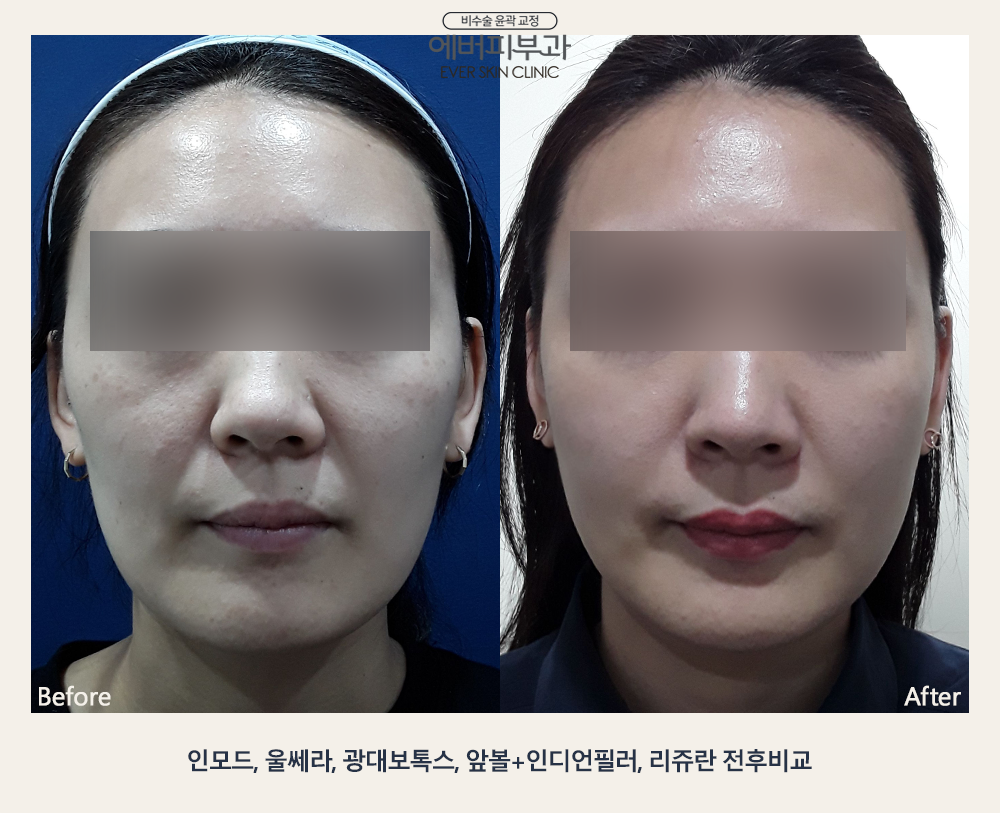
Real patient · before & after
RF as part of a full-face plan
This patient's program included InMode radiofrequency together with Ulthera lifting, zygoma Botox, front-cheek and Indian-line filler and Rejuran. The change shown reflects the whole program, not RF alone.
RF results are gradual and vary with skin quality. Your dermatologist will explain what is realistic for you.
Photos are shared with the patient's consent and are not retouched apart from privacy blurring. Results differ from person to person and are not guaranteed.
See more before & after photosRecovery & safety
Recovery, side effects and aftercare
Mild redness, warmth and slight swelling are common and usually settle within a day or two. Uncommon effects include small blisters, temporary bumps, or, rarely, burns or fat loss if energy is concentrated, which careful technique and cooling help prevent.
Tell your dermatologist if you have a pacemaker or other implanted electronic device, metal implants in the area, are pregnant, have an active skin infection, recent fillers or threads in the treatment zone, or a history of keloids.
Aftercare tips
- Use gentle skincare and moisturise well for a few days
- Apply sunscreen daily
- Avoid saunas and very hot baths for 1 to 2 days
- Skip strong exfoliants or retinoids for a few days
- Allow 2 to 6 months for collagen results to develop
Questions we hear every day
RF Skin Tightening FAQ
Does RF skin tightening hurt?
Most patients feel heat that builds and then fades with each pulse, along with surface cooling. Some devices use numbing cream. Energy can be adjusted to your comfort, so tell your dermatologist if any area feels too hot.
How long do RF results last?
Results commonly last around six to twelve months or longer, depending on the device, settings and your skin. Many patients repeat treatment once a year or combine it with other lifting for maintenance.
RF or HIFU: what is the difference?
RF heats a broad volume of dermis and is especially good for skin firmness and texture. HIFU focuses ultrasound at set depths, including the deeper SMAS, for lift. They complement each other and are often combined.
Is RF safe for darker skin?
RF is not absorbed by pigment, so it can generally be used across skin tones. Settings are still adjusted to your skin, and your dermatologist will check for any history of pigmentation after heat-based treatments.
Can I have RF before a flight?
Yes. There is usually no downtime, and mild redness typically settles within a day. RF suits short stays and pre-event care.
Talk to a board-certified dermatologist in Apgujeong
Send us your skin concern and photos on WhatsApp.
An English-speaking team member will reply and arrange your consultation.
Mon & Thu 10:00–19:00 · Tue & Fri 10:00–20:00 · Sat 10:00–16:00 · Closed Wed, Sun & holidays