
Thread Lifting Options in Apgujeong, Gangnam Seoul
Board-Certified Dermatologist Top 2% in Korea 13+ Years
Thread Lifting · quick answer
Thread lifting at Ever Skin Clinic, in one paragraph
Thread lifting uses medical-grade dissolvable threads, placed under the skin through fine needles or cannulas, to lift sagging tissue and stimulate collagen. Threads differ in material, such as PDO, PCL or PLLA, and in design, from smooth threads that support skin to cogged threads like MINT that anchor and lift. This guide groups our thread treatments by type and area. At Ever Skin Clinic, a board-certified dermatologist chooses the thread, vectors and depth for your face.
Medically reviewed by Dr. Jieun Kim, M.D. Founder & Director, board-certified dermatologist. Dermatology residency at Hanyang University Hospital; adjunct professor, Hanyang University College of Medicine. Meet our dermatologists Last reviewed October 2026
- Thread materials
- PDO (polydioxanone), PCL, PLLA; all dissolvable
- Thread designs
- Smooth (mono), screw, and cogged or barbed threads
- Areas
- Midface, jowls, jawline, under-chin, brows, nose, neck
- Downtime
- Typically about 3 to 7 days of swelling or bruising
- Results
- Immediate lift; commonly about 1 to 2 years depending on type
Thread types
Which threads do we use, and what do they do?
All the threads we use dissolve over time. Smooth threads placed in a mesh support the skin and stimulate collagen, which helps texture and firmness. Cogged threads have small barbs or cones that grip tissue, so they can lift and hold it in a new position, giving a visible lift immediately. Materials affect how long threads last: PDO dissolves faster, while PCL and PLLA tend to last longer.
For how a facial thread lift is performed, see thread lifting. To compare the two most common types, see PDO and MINT threads.
Our thread treatments
- PDO / MINT threads — comparing classic PDO with stronger cogged MINT threads
- MINT thread lift — cogged PDO threads for firmer anchoring in the midface and jawline
- PDO thread lift — smooth and cogged PDO threads for lift and skin support
- Area-specific lifts — nose, brows and under-chin
- Revision — assessing and correcting a previous thread lift
Is it right for you?
Who are threads for?
Threads suit people with mild to moderate sagging who want a more visible lift than energy devices give, without surgery. They work well alongside HIFU or RF for tightening, and alongside fillers where volume is lost, because threads reposition tissue but do not replace volume.
Very thin skin, heavy jowls or a lot of excess skin limit what threads can do, and your dermatologist will discuss alternatives.
Threads are often chosen to
- Lift the midface and soften nasolabial folds
- Define the jawline and reduce early jowls
- Raise the outer brows
- Firm the under-chin and neck
- Refine the nose bridge and tip without surgery
How we choose
How your dermatologist chooses threads
Thread choice depends on your anatomy, skin thickness and the lift you need, not on a fixed package.
- Assess sagging Laxity, skin thickness and volume are examined while you sit upright.
- Choose threads The material, design, length and number are selected for each area.
- Map vectors Entry points and lifting directions are marked to balance both sides of the face.
- Combine if needed Devices, fillers or Botox may be added so the result looks natural.
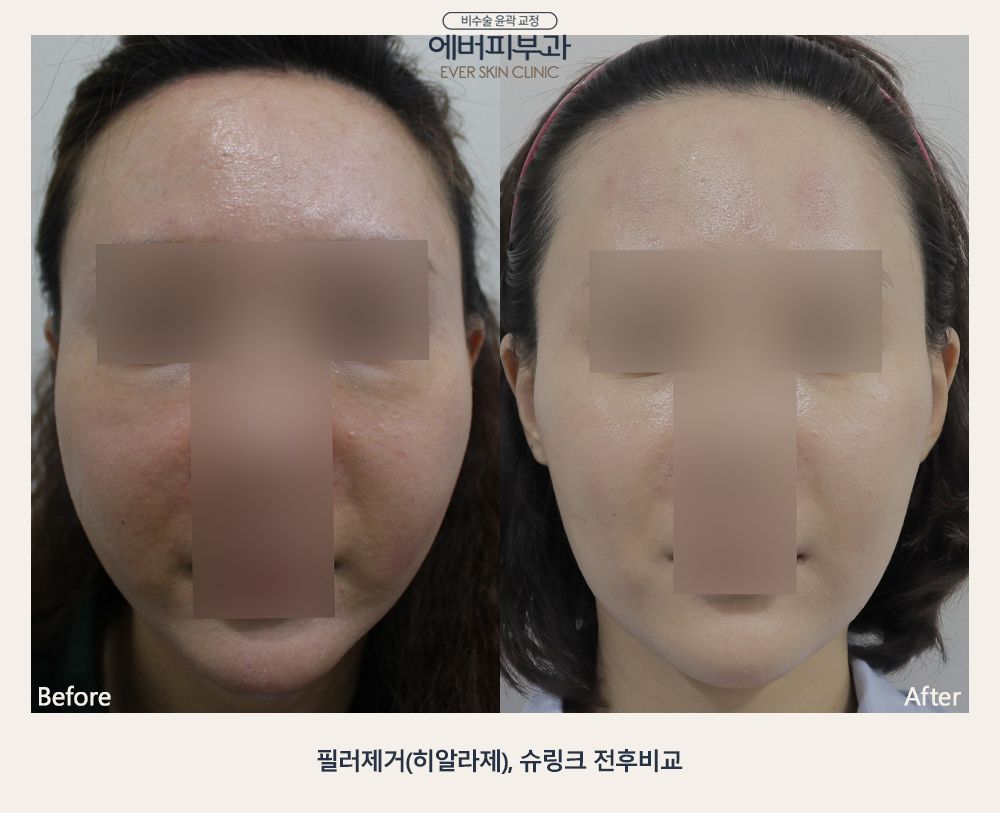
Real patient · before & after
An example of our non-surgical lifting results
This case shows filler dissolving followed by Shurink HIFU lifting and is shown as an example of non-surgical lifting at our clinic. No threads were used.
Ask us for thread-specific cases at consultation, where your dermatologist can show results for similar faces.
Photos are shared with the patient's consent and are not retouched apart from privacy blurring. Results differ from person to person and are not guaranteed.
See more before & after photosRecovery & safety
Recovery and safety with threads
Swelling, bruising, tenderness and a pulling feeling are common for about three to seven days. Small entry-point dimples usually settle within one to two weeks. Less common problems include asymmetry, a visible or palpable thread, infection or prolonged pain; most can be managed, and threads can sometimes be removed.
Tell your dermatologist if you take blood thinners, have a bleeding disorder, active skin infection, autoimmune condition, keloid tendency, permanent fillers in the area, or are pregnant or breastfeeding.
Aftercare tips
- Avoid wide mouth opening and hard chewing for about 2 weeks
- Sleep on your back for the first few nights
- Do not massage the face for about 2 to 4 weeks
- Skip saunas, intense exercise and alcohol for about a week
- Contact the clinic if pain or swelling increases
Questions we hear every day
Thread Lifting FAQ
Which thread type is best?
No single type suits everyone. Cogged threads such as MINT give stronger lift, smooth PDO threads support skin quality, and longer-lasting materials such as PCL or PLLA may extend results. Your dermatologist chooses based on your sagging and skin thickness.
How long do threads last?
The threads dissolve over months, but the lift and collagen effect commonly lasts around one to two years. Material, number of threads, skin quality and ageing all affect how long results last.
Does thread lifting hurt?
It is performed under local anaesthetic, so most people feel pressure and pulling rather than sharp pain. Soreness and tightness for several days afterwards are common and usually managed with simple painkillers.
Can threads be combined with other treatments?
Yes. Threads are often combined with HIFU or RF for tightening and with fillers or collagen stimulators for volume. Your dermatologist will plan the order and timing so treatments complement each other.
Are threads suitable for a short trip?
Often, yes, but allow about a week for swelling and bruising to settle before important events. Ideally stay a few days after treatment so your dermatologist can check you before you fly home.
Talk to a board-certified dermatologist in Apgujeong
Send us your skin concern and photos on WhatsApp. An English-speaking team member will reply and arrange your consultation.
Mon & Thu 10:00–19:00 · Tue & Fri 10:00–20:00 · Sat 10:00–16:00 · Closed Wed, Sun & holidays