
PDO & MINT Threads in Apgujeong, Gangnam Seoul
Board-Certified Dermatologist Top 2% in Korea 13+ Years
PDO / MINT Threads · quick answer
What PDO and MINT threads do, in one paragraph
PDO and MINT threads are dissolvable lifting threads made of polydioxanone (PDO), a suture material used in surgery for decades. Placed under the skin through a fine cannula, barbed threads hold sagging tissue in a lifted position, while the thread material triggers new collagen as it slowly dissolves. MINT is a PDO thread brand with moulded barbs designed for a firmer hold. At Ever Skin Clinic, a board-certified dermatologist chooses the thread type, number and lifting direction for your face.
Medically reviewed by Dr. Jieun Kim, M.D. Founder & Director, board-certified dermatologist. Dermatology residency at Hanyang University Hospital; adjunct professor, Hanyang University College of Medicine. Meet our dermatologists Last reviewed October 2026
- Material
- Polydioxanone (PDO), dissolves over about 6 to 8 months
- Best for
- Mild to moderate sagging of cheeks, jowls, jawline and neck
- Treatment time
- About 30 to 60 minutes including numbing
- Downtime
- Swelling, bruising and tightness for about 3 to 7 days
- Results
- Immediate lift, with effects often lasting about 6 to 12 months
The treatment
What are PDO and MINT threads?
Threads come in different designs. Smooth and twisted PDO threads are mainly used to stimulate collagen and firm the skin, while barbed or cogged threads grip the tissue to lift it. MINT threads have barbs moulded into the thread rather than cut into it, which is intended to give a stronger and more even hold for lifting heavier areas such as the jowls.
Our dermatologists often combine threads with energy-based lifting such as Ultherapy or Thermage, or with fillers when volume loss contributes to sagging. See our thread lifting overview for all thread options.
Thread types we choose between
- Mono (smooth) PDO threads for skin firmness and fine crepey texture
- Twisted PDO threads for slightly more volume and support
- Cog (barbed) PDO threads for lifting cheeks, jowls and jawline
- MINT threads with moulded barbs for a firmer, more stable lift
Is it right for you?
Who is a good candidate?
Threads work best for people with early to moderate sagging and reasonable skin thickness, typically from their mid-30s onward, who want a visible lift without surgery. They are less effective for heavy, very loose skin, where surgery may be more appropriate, and your dermatologist will tell you if that is the case.
For a first lift with minimal downtime, a device such as HIFU may be suggested before threads.
Threads may suit you if you
- Have early jowls or a softening jawline
- Notice sagging in the midface or deepening nasolabial folds
- Want a more lifted contour without incisions or general anaesthesia
- Can allow about a week for swelling and tightness
- Want to combine lifting with collagen stimulation
Your visit
What happens during treatment
A typical face thread lift takes about 30 to 60 minutes, including numbing, and you go home the same day.
- Design Your dermatologist assesses sagging while you sit upright and marks the entry points and lifting vectors.
- Anaesthesia Numbing cream and local anaesthetic are applied at the entry points and along the thread paths.
- Thread insertion Threads are placed with a fine blunt cannula, then the tissue is gently repositioned and the ends trimmed.
- Aftercare We check symmetry, explain aftercare and arrange a review at about 1 to 2 weeks if your stay allows.
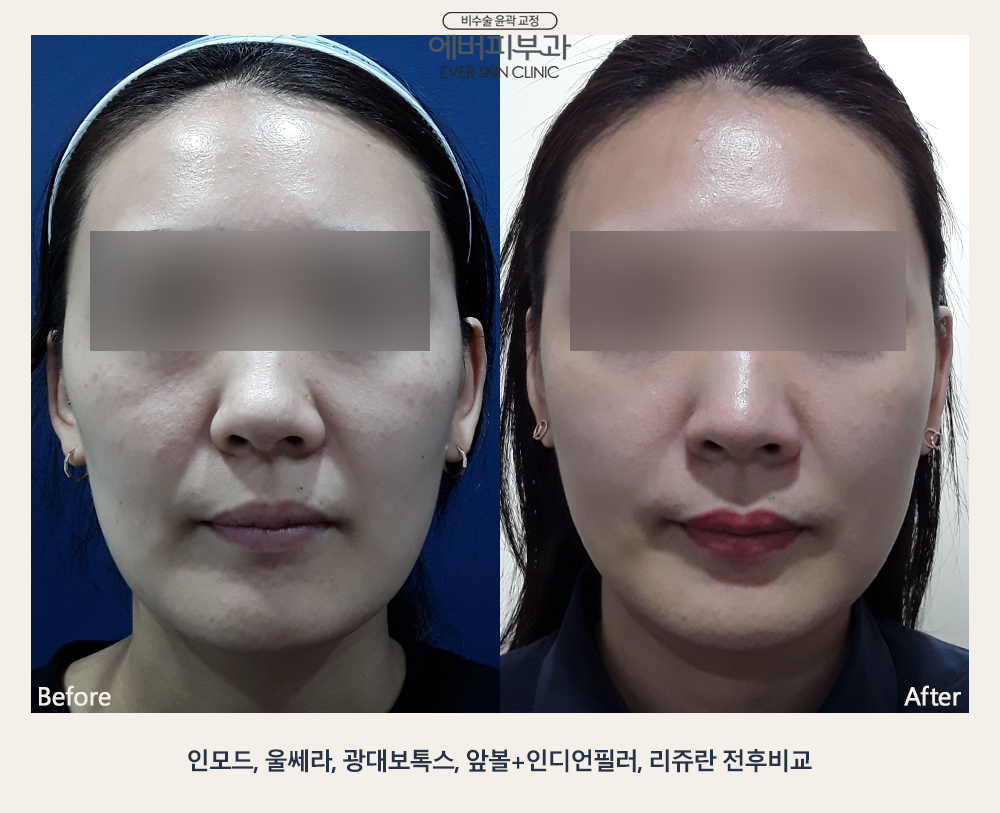
Real patient · before & after
Non-surgical lifting as a full-face plan
This case shows a combined lifting and contouring program, shown as an example of our non-surgical results. It does not include threads, so it is not a PDO or MINT thread result.
Many of our thread patients also receive device lifting or filler. Ask us for thread-specific cases at consultation, and we will explain what threads can realistically add for your face.
Photos are shared with the patient's consent and are not retouched apart from privacy blurring. Results differ from person to person and are not guaranteed.
See more before & after photosRecovery & safety
Recovery, side effects and aftercare
Swelling, bruising, tenderness and a feeling of tightness are common for about three to seven days. Small dimples or puckering at the entry points or along the threads can appear and usually settle within one to two weeks. Less common risks include visible or palpable threads, asymmetry, infection and thread extrusion, which your dermatologist can treat if they occur.
Tell your dermatologist if you take blood thinners, have an autoimmune or bleeding disorder, a history of keloids, active skin infection, or are pregnant or breastfeeding. Avoid booking a flight on the day of treatment.
Aftercare tips
- Avoid wide mouth opening, chewing hard foods and big facial expressions for about 1 to 2 weeks
- Sleep on your back with your head slightly raised
- Do not massage the face or have facials for about 2 to 4 weeks
- Skip saunas, intense exercise and alcohol for about a week
- Delay dental treatment for a few weeks if possible
Questions we hear every day
PDO / MINT Threads FAQ
Does a thread lift hurt?
Local anaesthetic is used along the thread paths, so most patients feel pressure and pulling rather than sharp pain. Soreness and tightness, especially when opening the mouth wide, are common for several days and usually ease within one to two weeks.
How long do PDO and MINT thread results last?
The threads dissolve over about six to eight months, but the lift and collagen effect often last around six to twelve months, sometimes longer. Duration depends on your skin, the degree of sagging and the threads used, and results vary.
What is the difference between PDO and MINT threads?
Both are made of polydioxanone. MINT is a branded PDO thread with barbs moulded into the thread, designed to hold tissue more firmly, while standard PDO threads have cut barbs or no barbs. Your dermatologist chooses based on how much lift you need.
Can threads be combined with other treatments?
Yes. Threads are often combined with ultrasound or radiofrequency lifting to tighten skin and with fillers to restore lost volume. Your dermatologist will plan the order and timing so each treatment supports the others safely.
Can I fly home after a thread lift in Seoul?
Most patients can fly after a few days, but we recommend avoiding a flight on the day of treatment and allowing about a week for swelling and puckering to settle. A review visit before you leave is ideal if your schedule allows.
Talk to a board-certified dermatologist in Apgujeong
Send us your skin concern and photos on WhatsApp. An English-speaking team member will reply and arrange your consultation.
Mon & Thu 10:00–19:00 · Tue & Fri 10:00–20:00 · Sat 10:00–16:00 · Closed Wed, Sun & holidays