Scar Revision in Apgujeong, Gangnam Seoul
Board-Certified Dermatologist Top 2% in Korea 13+ Years
Scar Revision · quick answer
What scar revision does, in one paragraph
Scar revision is treatment that makes an established scar from surgery, injury or a skin condition blend better with the surrounding skin by improving its colour, texture, height or contour. In dermatology this is mostly non-surgical, using fractional lasers, vascular lasers, subcision, steroid injections and fillers in a planned sequence. At Ever Skin Clinic in Apgujeong, a board-certified dermatologist assesses which feature makes the scar noticeable and targets that first.
Medically reviewed by Dr. Jieun Kim, M.D. Founder & Director, board-certified dermatologist. Dermatology residency at Hanyang University Hospital; adjunct professor, Hanyang University College of Medicine. Meet our dermatologists Last reviewed October 2026
- Treats
- Surgical, injury, burn and stretched scars; scars with colour or contour change
- Methods
- Fractional and vascular lasers, subcision, steroid injections, fillers, boosters
- Sessions
- Often 3 or more, about 4 to 6 weeks apart
- Downtime
- About 1 to 7 days depending on the method
- Results
- Gradual softening over months; scars improve but remain
The treatment
What is scar revision?
Every scar has features that draw the eye: redness, brown or white colour, a raised or sunken surface, a tight band or a shiny texture. Scar revision addresses these features one by one. Where acne scars are a focus of our scar removal page, this page is for scars after surgery, accidents, burns or previous procedures.
Very wide, tight or badly placed scars may need surgical revision by a plastic surgeon, and we will tell you if that is the better route. Thick or growing scars are treated as described on our keloid page.
Tools we use
- Fractional laser: remodels texture and blends edges
- Vascular laser: fades persistent redness in newer scars
- Subcision: releases scars tethered to deeper tissue
- Steroid injections: flatten raised or firm areas
- Fillers or boosters: lift sunken scars and support healing
Is it right for you?
Who is a good candidate?
Scar revision suits people whose scars have healed, usually from a few months after surgery or injury, and who want them to be less noticeable. Red, young scars often respond well to early laser, while older white or indented scars need collagen-building treatments.
Patients with darker skin can be treated with conservative settings to reduce the risk of pigment change.
Scar revision may suit you if you have
- A surgical scar that is red, raised or uneven
- An injury or burn scar with a different texture
- A scar that is sunken or pulled inwards
- A scar that is darker or lighter than nearby skin
- Realistic goals of improvement rather than removal
Your visit
What happens during treatment
Each session is planned around the scar's most visible feature; most take 20 to 60 minutes.
- Assessment A board-certified dermatologist examines the scar's colour, height, texture and tension and photographs it.
- Planning We agree a sequence, for example injections or subcision first, then laser to blend texture.
- Treatment After numbing, the planned methods are performed, often more than one per session.
- Review Aftercare is explained and progress is reviewed before each next session.
Real patient · before & after
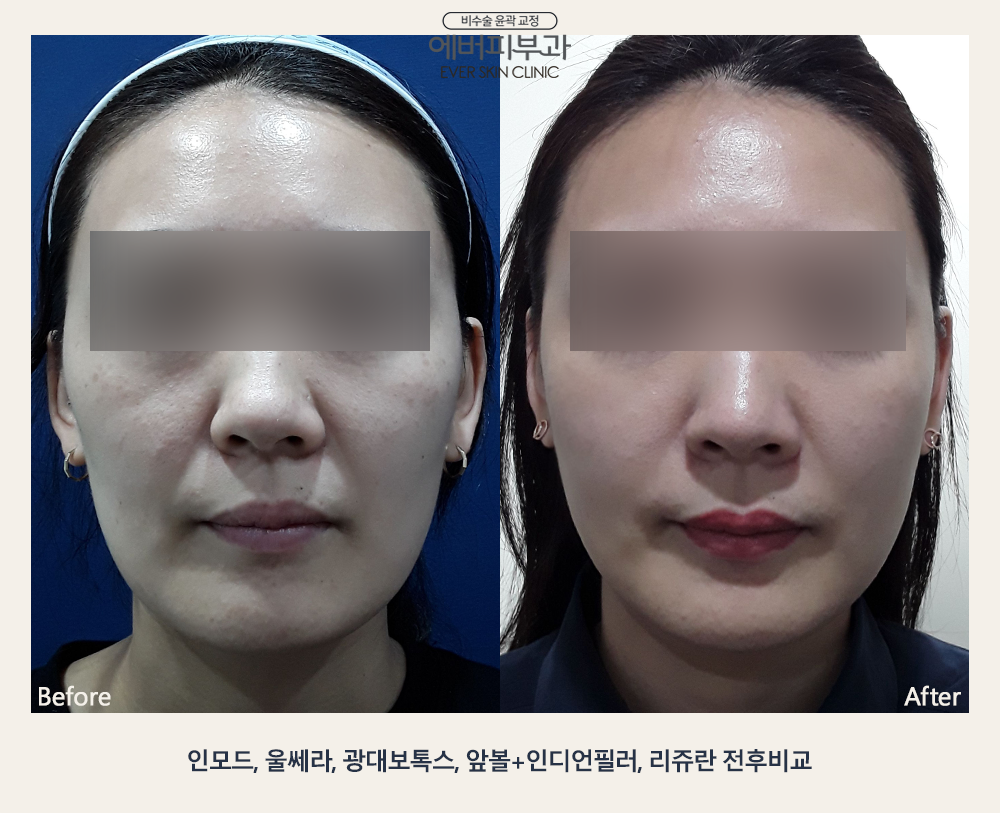
An example of our clinic's results
This case shows a combined lifting, contouring and skin-quality program, shown as an example of our non-surgical results. It is not a scar revision result.
Outcomes of scar revision depend on the condition and on each person's skin. Ask us for scar revision-specific examples and a realistic outlook at consultation.
Photos are shared with the patient's consent and are not retouched apart from privacy blurring. Results differ from person to person and are not guaranteed.
See more before & after photosRecovery & safety
Recovery, side effects and aftercare
Expect redness and swelling for a few days after laser, bruising for up to two weeks after subcision or fillers, and small marks at injection sites. Risks include temporary dark or light patches, skin thinning from steroid, infection and, rarely, worsening of a scar.
Tell your dermatologist if you have a history of keloids, took isotretinoin recently, have diabetes or slow healing, take blood thinners, or are pregnant. If your scar is from recent surgery, let your surgeon know you are planning treatment.
Aftercare tips
- Keep treated skin clean and moisturised
- Use sunscreen daily on the scar for months
- Avoid picking crusts or stretching the area
- Use silicone gel if advised
- Keep a photo record to see gradual change
Questions we hear every day
Scar Revision FAQ
How soon after surgery can I start scar revision?
Gentle laser for redness can sometimes start a few weeks after the wound has fully closed, while more intensive treatments usually wait a few months. Your dermatologist will advise based on how the scar is healing and your surgeon's guidance.
Can scar revision remove a scar completely?
No. The aim is to make the scar flatter, smoother and closer in colour to surrounding skin so it is less noticeable. How much improvement is possible depends on the scar's size, age, location and your skin.
Is it painful?
Numbing cream or local anaesthetic is used. Most patients feel heat or pressure during laser and brief stings with injections. Subcision can be more uncomfortable and may bruise for a week or two.
How is this different from surgical scar revision?
Surgical revision cuts out and re-closes the scar, which suits wide or badly placed scars. Our non-surgical approach reshapes the scar with lasers and injections, without new stitches. Sometimes both are combined, and we will refer if surgery suits you better.
Can visitors to Seoul have scar revision?
Yes. A single session can begin the improvement, but most scars benefit from several sessions over months. We can plan the most effective first treatment for your stay and advise on continuing care at home.
Talk to a board-certified dermatologist in Apgujeong
Send us your skin concern and photos on WhatsApp. An English-speaking team member will reply and arrange your consultation.
Mon & Thu 10:00–19:00 · Tue & Fri 10:00–20:00 · Sat 10:00–16:00 · Closed Wed, Sun & holidays