
Low-Level Laser Therapy in Apgujeong,
Gangnam, Seoul
Board-Certified Dermatologist Top 2% in Korea 13+ Years
Low-Level Laser Therapy (LLLT) · quick answer
What low-level laser therapy does, in one paragraph
Low-level laser therapy (LLLT), also called photobiomodulation, uses low-energy red light, typically around 630 to 680 nm, to stimulate cells in the hair follicle without heating or damaging the scalp. It is thought to boost cellular energy and blood flow and help follicles stay in the growth phase. Evidence supports a modest benefit in early to moderate pattern hair loss. At Ever Skin Clinic, a board-certified dermatologist confirms your diagnosis and usually combines LLLT with medication.
Medically reviewed by
Dr. Jieun Kim, M.D.
Founder & Director, Ever Skin Clinic · Board-certified dermatologist
- Adjunct Professor, Hanyang University College of Medicine
- Dermatology residency, Hanyang University Hospital
- Master’s degree in Dermatology, Hanyang University
- Regular Member, Korean Dermatological Association
- Regular Member, Korean Laser Medicine Association
- Member, World Congress of Dermatology
- Published in JAAD and Annals of Dermatology
- English-speaking consultations
Meet our dermatologists → Last reviewed October 2026
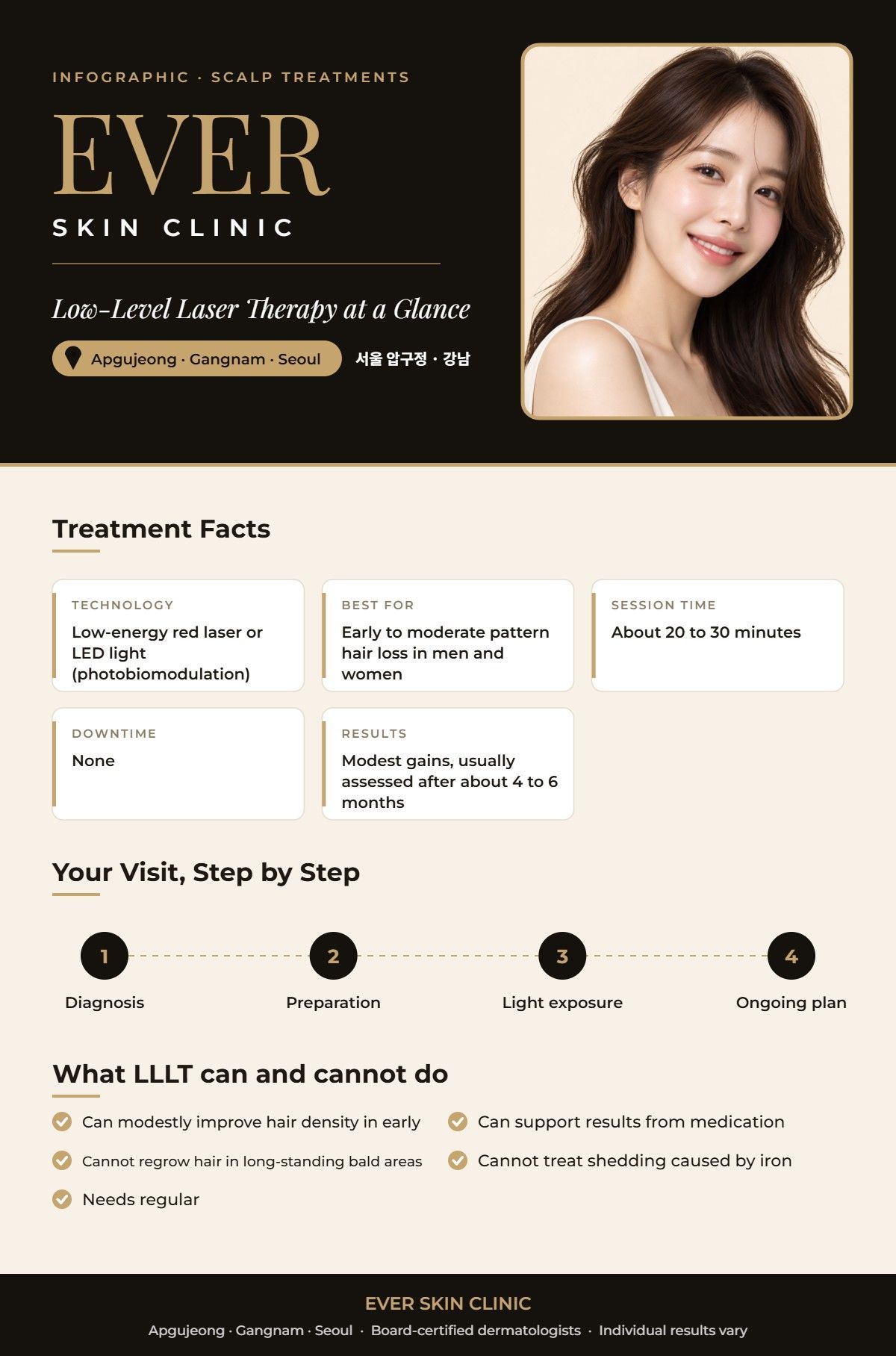
- Technology
- Low-energy red laser or LED light (photobiomodulation)
- Best for
- Early to moderate pattern hair loss in men and women
- Session time
- About 20 to 30 minutes
- Downtime
- None
- Results
- Modest gains, usually assessed after about 4 to 6 months
The treatment
What is low-level laser therapy?
Unlike lasers that cut or heat tissue, LLLT delivers light at an energy too low to cause damage. The light is absorbed by mitochondria in follicle cells, which is believed to increase energy production and reduce inflammation, supporting longer growth phases and thicker hair shafts. Several home and clinic devices are cleared by the US FDA for pattern hair loss, although results are generally modest.
LLLT works best as part of a plan. Our dermatologists usually pair it with minoxidil or PRP hair therapy. In-clinic sessions are described further on our laser scalp therapy page.
What LLLT can and cannot do
- Can modestly improve hair density in early pattern hair loss
- Can support results from medication or injections
- Cannot regrow hair in long-standing bald areas
- Cannot treat shedding caused by iron or thyroid problems on its own
- Needs regular, ongoing sessions to maintain any benefit
Is it right for you?
Who is a good candidate?
LLLT suits men and women with early to moderate thinning who want a needle-free, drug-free add-on, or who cannot use certain medications. It is less useful where follicles have been inactive for years.
Because it requires frequent sessions over months, your dermatologist may suggest a home device for continued use after your visit to Seoul.
LLLT may suit you if you
- Have early thinning at the crown or along the part
- Want a treatment without needles or medication
- Are already on minoxidil or finasteride and want extra support
- Have a sensitive scalp that dislikes injections
- Can commit to regular sessions over several months
Your visit
What happens during treatment
A session is quiet and simple, and you can return to your day immediately.
- Diagnosis A dermatologist confirms the type of hair loss and checks for scalp conditions or light sensitivity.
- Preparation The scalp is cleaned; no numbing is needed and hair does not need to be cut.
- Light exposure A device delivers low-level red light over the scalp for about 20 to 30 minutes.
- Ongoing plan We set a session schedule and advise on home devices and combination treatment.
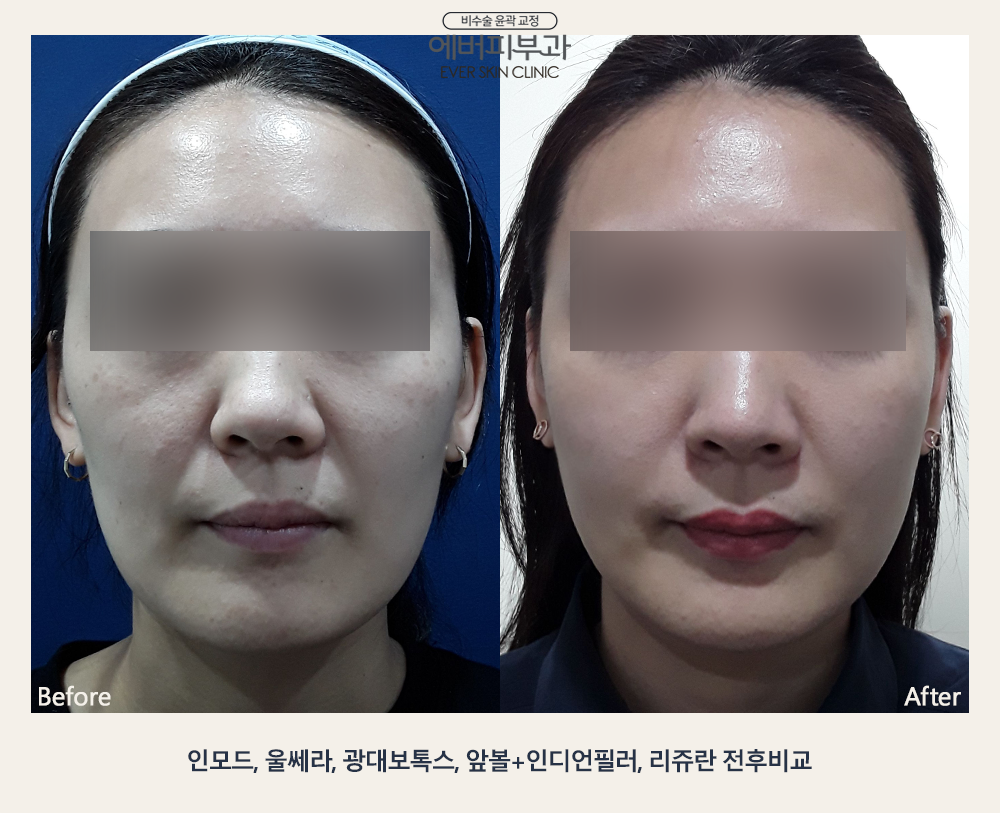
Real patient · before & after
About our before-and-after photos
This case shows a combined facial lifting and skin program, shared as an example of our non-surgical work. It is not an LLLT or hair result.
Ask us at consultation for hair-specific progress examples; we take baseline scalp photos so you can compare your own change over months.
Photos are shared with the patient's consent and are not retouched apart from privacy blurring. Results differ from person to person and are not guaranteed.
See more before & after photosRecovery & safety
Recovery, side effects and safety
LLLT is well tolerated. Some people feel mild warmth, scalp itch, dryness or a slight increase in shedding during the first weeks as resting hairs are replaced. Eye protection is used during treatment.
Tell your dermatologist if you have photosensitivity, take light-sensitising medication, have a history of skin cancer on the scalp, an active scalp infection, or are pregnant.
Aftercare tips
- No special recovery is needed after a session
- Keep up the session schedule; benefit fades if treatment stops
- Continue prescribed hair loss medication
- Protect a thinning scalp from strong sun
- Take monthly photos in the same light to track change
Questions we hear every day
Low-Level Laser Therapy (LLLT) FAQ
Is low-level laser therapy painful?
No numbing is needed. Most people feel nothing or only mild warmth during a session of about 20 to 30 minutes. Mild itch or dryness afterwards is occasional and usually settles quickly.
How many LLLT sessions do I need?
LLLT works through repeated exposure, often several times a week over months. Clinic sessions are usually combined with a home device for continuity. Your dermatologist will suggest a realistic schedule.
How long until I see results?
Changes are gradual. Most people need about four to six months of regular use before judging the effect, and gains are typically modest. Results vary and stop if treatment is discontinued.
Is LLLT better than minoxidil or PRP?
Evidence for LLLT is more modest than for medication. It is best seen as a supportive add-on to minoxidil, finasteride or PRP rather than a replacement, especially in pattern hair loss.
Can I continue LLLT after leaving Seoul?
Yes. Because frequency matters more than location, many patients continue with an approved home device. Your dermatologist can advise on use and on how to keep your medication plan going at home.
Talk to a board-certified dermatologist in Apgujeong
Send us your skin concern and photos on WhatsApp.
An English-speaking team member will reply and arrange your consultation.
Mon & Thu 10:00–19:00 · Tue & Fri 10:00–20:00 · Sat 10:00–16:00 · Closed Wed, Sun & holidays

