Laser Lifting in Apgujeong, Gangnam Seoul
Board-Certified Dermatologist Top 2% in Korea 13+ Years
Laser Lifting · quick answer
What laser lifting means, in one paragraph
Laser lifting is a common name for non-surgical treatments that use energy to heat the deeper layers of the skin so that it tightens and builds new collagen. Strictly, only some are lasers, such as the diode-laser Titanium lift; others use focused ultrasound (HIFU, such as Ultherapy or Shurink) or radiofrequency (such as Thermage or Oligio). At Ever Skin Clinic, a board-certified dermatologist matches the energy type, depth and areas to your degree of sagging and skin quality.
Medically reviewed by Dr. Jieun Kim, M.D. Founder & Director, board-certified dermatologist. Dermatology residency at Hanyang University Hospital; adjunct professor, Hanyang University College of Medicine. Meet our dermatologists Last reviewed October 2026
- Technologies
- Diode laser, focused ultrasound (HIFU) and radiofrequency
- Best for
- Mild to moderate sagging, jawline softening, early jowls, crepey skin
- Treatment time
- About 30 to 90 minutes depending on device and areas
- Downtime
- Usually minimal; temporary redness, swelling or tenderness
- Results
- Some tightening early, building over about 2 to 3 months
The treatment
What is laser lifting?
All energy-based lifting devices work on the same principle: controlled heat contracts existing collagen and starts a healing response that produces new collagen and elastin over the following months. What differs is the energy source and the depth it reaches, which is why one device rarely suits every concern.
Our dermatologists often layer devices, for example focused ultrasound for deeper support with radiofrequency for the skin surface, as part of a non-surgical facelift plan. For a true laser option, see Titanium lifting.
The main energy types
- Diode laser (Titanium): triple-wavelength laser heating for lifting with a skin-toning effect
- Focused ultrasound (HIFU): Ultherapy and Shurink reach the deeper SMAS layer
- Monopolar radiofrequency: Thermage and Oligio tighten the dermis evenly
- Microwave and RF contouring: Onda and InMode also address fat in heavy areas
Is it right for you?
Who is a good candidate?
Energy-based lifting suits adults with mild to moderate laxity who want gradual, natural-looking tightening with little downtime. It is also used for maintenance after a thread lift or to slow visible ageing. Very heavy sagging or loose skin usually responds better to surgery, and your dermatologist will say so.
If volume loss is the main cause of a tired look, lifting may be combined with fillers.
Laser lifting may suit you if you
- Notice a softer jawline or early jowls
- Have loosening skin on the cheeks, neck or around the eyes
- Want a lift without needles, incisions or long recovery
- Are travelling and need to return to normal activities quickly
- Want to maintain results from earlier lifting treatments
Your visit
What happens during treatment
Most sessions take about 30 to 90 minutes, depending on the device and how many areas are treated.
- Consultation A board-certified dermatologist assesses laxity, fat and skin thickness, then recommends a device or combination.
- Preparation The skin is cleansed and numbing cream or cooling is used as appropriate for the device.
- Energy delivery The handpiece is passed over a mapped grid, adjusting depth and energy area by area.
- Aftercare We cool and soothe the skin and explain how results develop over the coming weeks.
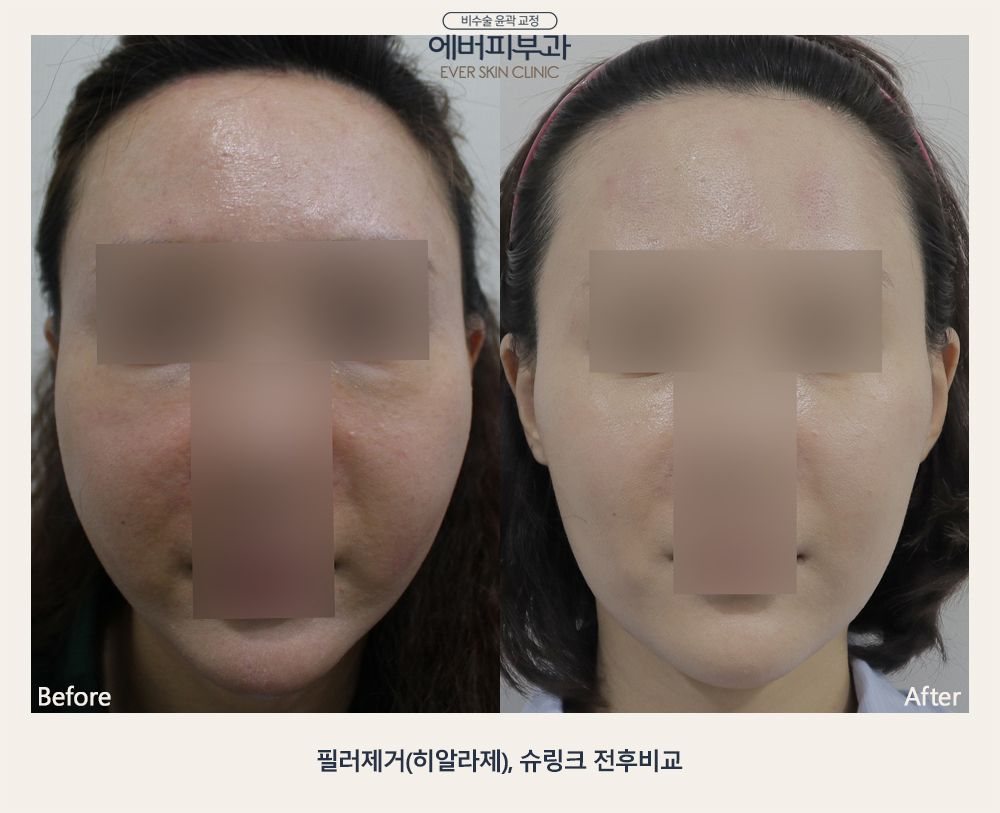
Real patient · before & after
Energy-based lifting in practice
This patient had old filler dissolved with hyaluronidase and then received Shurink focused-ultrasound lifting. The result reflects both steps, not lifting alone.
It illustrates how energy-based lifting is often one part of a plan. Your dermatologist will explain which device suits you and ask us for device-specific cases if you would like to compare.
Photos are shared with the patient's consent and are not retouched apart from privacy blurring. Results differ from person to person and are not guaranteed.
See more before & after photosRecovery & safety
Recovery, side effects and aftercare
Redness, mild swelling and tenderness are common and usually settle within hours to a few days. Less commonly, bruising, temporary numbness, nerve irritation, burns or fat loss leading to hollowing can occur, which is why energy settings are adjusted to your face rather than applied uniformly.
Tell your dermatologist if you have a pacemaker or metal implants in the area, active skin infection, recent isotretinoin use, a history of keloids, or are pregnant. Most international patients can resume sightseeing the same day.
Aftercare tips
- Use a gentle moisturiser and avoid harsh actives for a few days
- Apply broad-spectrum sunscreen daily
- Avoid saunas and very hot baths for 1 to 2 days
- Stay well hydrated and skip alcohol on the day of treatment
- Book maintenance as advised, often every 6 to 12 months
Questions we hear every day
Laser Lifting FAQ
Is laser lifting painful?
Sensation depends on the device. Focused ultrasound can feel like deep heat or brief aches over bone, while radiofrequency feels warm with cooling pulses. Numbing cream and energy adjustments help, so tell your dermatologist about your comfort during treatment.
How long do results last?
Results usually build over about two to three months and often last around six to twelve months, sometimes longer with devices that reach deeper layers. Ageing continues, so many patients choose maintenance sessions once or twice a year.
Which device is best for me?
It depends on where the laxity is and how thick your skin and fat layers are. Deeper sagging often suits focused ultrasound, while crepey surface laxity suits radiofrequency. Your dermatologist recommends a device or combination after examining you.
Is laser lifting safe for darker skin tones?
Ultrasound and radiofrequency devices do not target pigment, so they are generally suitable for many skin tones, although heat-related pigmentation is still possible. Your dermatologist adjusts settings and checks your skin type before any laser-based treatment.
Can I have laser lifting during a short trip?
Yes, most patients return to normal activities the same day, with only mild redness or swelling. Results develop gradually after you return home, so it fits short visits well. Avoid intense sun exposure for the first few days.
Talk to a board-certified dermatologist in Apgujeong
Send us your skin concern and photos on WhatsApp. An English-speaking team member will reply and arrange your consultation.
Mon & Thu 10:00–19:00 · Tue & Fri 10:00–20:00 · Sat 10:00–16:00 · Closed Wed, Sun & holidays