
Korean Skin Treatments in Apgujeong,
Gangnam, Seoul
Board-Certified Dermatologist Top 2% in Korea 13+ Years
Korean Skin Treatments · quick answer
Korean skin treatments, in one paragraph
Korean skin treatments are clinic procedures that aim to improve skin quality gradually with little downtime, rather than changing the face dramatically. Common examples include laser toning for pigmentation, skin boosters such as Rejuran for hydration and texture, Aqua Peel or HydraFacial-type cleansing facials, and fractional lasers for scars and fine lines. At Ever Skin Clinic in Apgujeong, board-certified dermatologists choose and combine these for your skin type and schedule.
Medically reviewed by
Dr. Jieun Kim, M.D.
Founder & Director, Ever Skin Clinic · Board-certified dermatologist
- Adjunct Professor, Hanyang University College of Medicine
- Dermatology residency, Hanyang University Hospital
- Master’s degree in Dermatology, Hanyang University
- Regular Member, Korean Dermatological Association
- Regular Member, Korean Laser Medicine Association
- Member, World Congress of Dermatology
- Published in JAAD and Annals of Dermatology
- English-speaking consultations
Meet our dermatologists → Last reviewed October 2026
- Popular options
- Laser toning, skin boosters, Aqua Peel, fractional laser
- Goal
- Healthier, clearer, more even skin over time
- Typical downtime
- None to several days, depending on treatment
- Course
- Often a series of sessions with maintenance
- Planning
- Board-certified dermatologists, Apgujeong
Popular treatments
What makes a treatment typically Korean?
Korean dermatology tends to favour regular, lower-downtime treatments that build results over several sessions, often combining a device with an injectable or facial. The focus is clear, hydrated, even-toned skin, sometimes called glass skin, and a natural look.
No single treatment suits everyone. Pigmentation, acne scars and sensitivity need different approaches, so a dermatologist should choose the combination. Explore our skin boosters and pigmentation treatments for more detail.
Common Korean skin treatments
- Laser toning (including pico toning): low-energy laser passes for uneven tone and pigmentation
- Skin boosters such as Rejuran: micro-injections for hydration, texture and fine lines
- Aqua Peel / HydraFacial-type facials : cleansing, exfoliation and hydration for congested pores
- Fractional laser : resurfacing for acne scars, texture and fine lines, with more downtime
- Gentle soothing therapies for sensitive or redness-prone skin
Who they suit
Who Korean skin treatments suit
They suit people who want gradual improvement in skin quality, including visitors who want to fit low-downtime treatments into a trip and residents who prefer regular maintenance.
Patients with darker skin tones or melasma need cautious settings, since aggressive lasers can trigger pigmentation; see our page on care for darker skin.
Concerns commonly treated
- Acne and post-acne marks or scars
- Melasma, freckles and uneven tone
- Enlarged pores and oily, congested skin
- Dehydrated or sensitive skin
- Fine lines and early signs of ageing

Your visit
How we plan Korean skin treatments
Many of these treatments take 30 to 60 minutes, so they fit easily into a city stay.
- Skin assessment A board-certified dermatologist examines your skin type, pigmentation tendency and sensitivity.
- Choosing a combination You agree which treatments to combine and in what order, given your goals and downtime.
- Treatment Treatment is performed with numbing or soothing steps where appropriate.
- Course planning We plan the number of sessions and intervals, or a shorter plan for your travel dates.
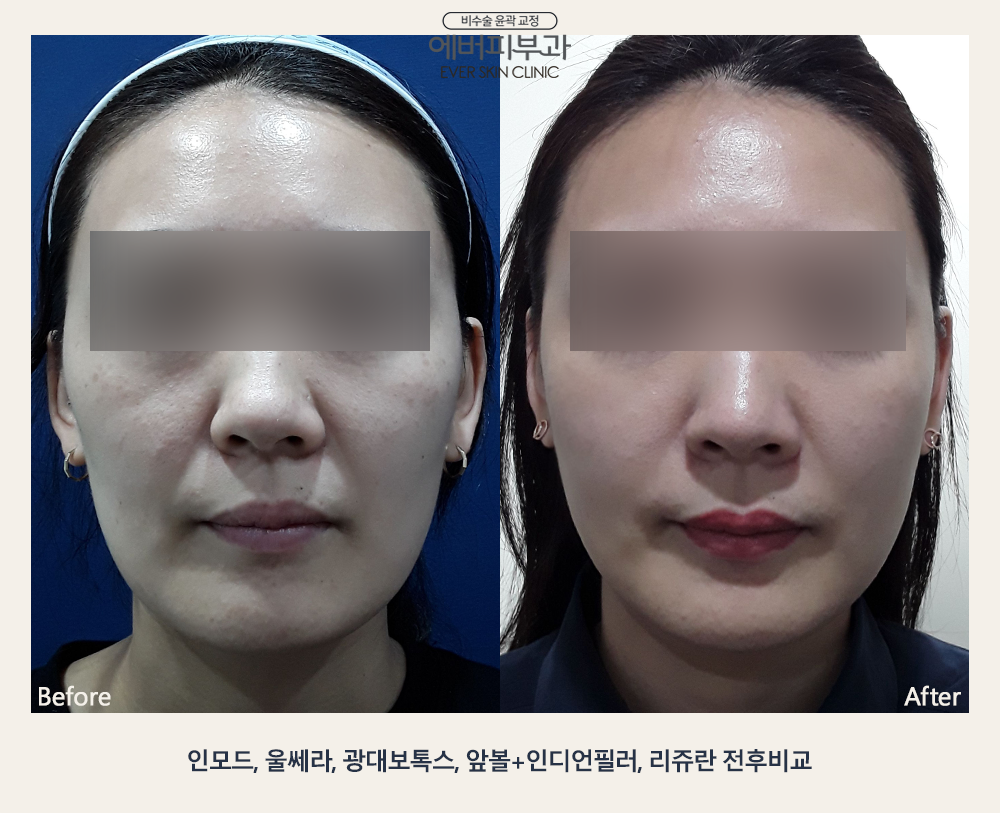
Real patient · before & after
Skin quality within a combined plan
This patient received a combined program including Rejuran, a Korean skin booster, alongside lifting, Botox and filler. The change reflects the whole plan, not skin treatments alone; it is not a laser toning or facial result.
Ask your dermatologist for examples specific to the treatments you are considering.
Photos are shared with the patient's consent and are not retouched apart from privacy blurring. Results differ from person to person and are not guaranteed.
See more before & after photosRecovery & safety
Recovery, side effects and aftercare
Most toning lasers, boosters and facials cause only mild redness or small bumps for hours to a few days. Fractional resurfacing can cause redness, swelling and peeling for about a week. Overly frequent or aggressive treatment can cause irritation or pigmentation, especially on darker skin.
Tell your dermatologist about active skin infections, cold sores, isotretinoin use, pregnancy or breastfeeding, and recent sun exposure or tanning.
Aftercare tips
- Use broad-spectrum sunscreen every day
- Keep the skin moisturised with a gentle, fragrance-free product
- Avoid scrubs and strong acids for a few days after lasers
- Skip saunas and intense exercise for the advised period
- Do not pick at peeling or crusting skin
Questions we hear every day
Korean Skin Treatments FAQ
What is the most popular Korean skin treatment?
Laser toning and skin boosters such as Rejuran are among the most requested in Seoul, often combined with a cleansing facial. The right choice depends on your concern, so a dermatologist should assess your skin before recommending one.
Can I get Korean skin treatments during a short trip?
Yes. Many toning lasers, boosters and facials have little downtime and take under an hour. Treatments with more recovery, such as fractional lasers, are best scheduled early in your stay. Tell us your dates so we can plan.
How many sessions do I need?
Skin quality treatments usually work best as a series, for example several laser toning sessions or around three booster sessions, followed by maintenance. A single session can help, but improvement is usually gradual.
What is glass skin?
Glass skin is a popular term for clear, smooth, hydrated skin with an even tone. Clinics may combine boosters, toning and facials to work toward it, but results depend on your skin type, consistency of care and sun protection.
Are Korean skin treatments safe for dark skin?
Many are, with appropriate settings. Darker skin is more prone to post-inflammatory pigmentation, so dermatologists use more cautious laser energies and intervals. Mention any past reactions so your plan can be adjusted.
Talk to a board-certified dermatologist in Apgujeong
Send us your skin concern and photos on WhatsApp.
An English-speaking team member will reply and arrange your consultation.
Mon & Thu 10:00–19:00 · Tue & Fri 10:00–20:00 · Sat 10:00–16:00 · Closed Wed, Sun & holidays

