
Stem Cell Skin Treatment in Apgujeong,
Gangnam, Seoul
Board-Certified Dermatologist Top 2% in Korea 13+ Years
Stem Cell Skin Treatment · quick answer
What stem cell skin treatment does, in one paragraph
Stem cell skin treatment is a regenerative approach that delivers stem cell-derived ingredients, such as growth factors and other signalling molecules from cultured cells, into the skin. The aim is to support the skin's natural repair, which may gradually improve hydration, dullness, fine lines and texture, and help recovery after lasers. It does not transplant living stem cells into your face. At Ever Skin Clinic, a board-certified dermatologist assesses your skin and decides on the delivery method and whether to combine it with other treatments.
Medically reviewed by
Dr. Jieun Kim, M.D.
Founder & Director, Ever Skin Clinic · Board-certified dermatologist
- Adjunct Professor, Hanyang University College of Medicine
- Dermatology residency, Hanyang University Hospital
- Master’s degree in Dermatology, Hanyang University
- Regular Member, Korean Dermatological Association
- Regular Member, Korean Laser Medicine Association
- Member, World Congress of Dermatology
- Published in JAAD and Annals of Dermatology
- English-speaking consultations
Meet our dermatologists → Last reviewed October 2026
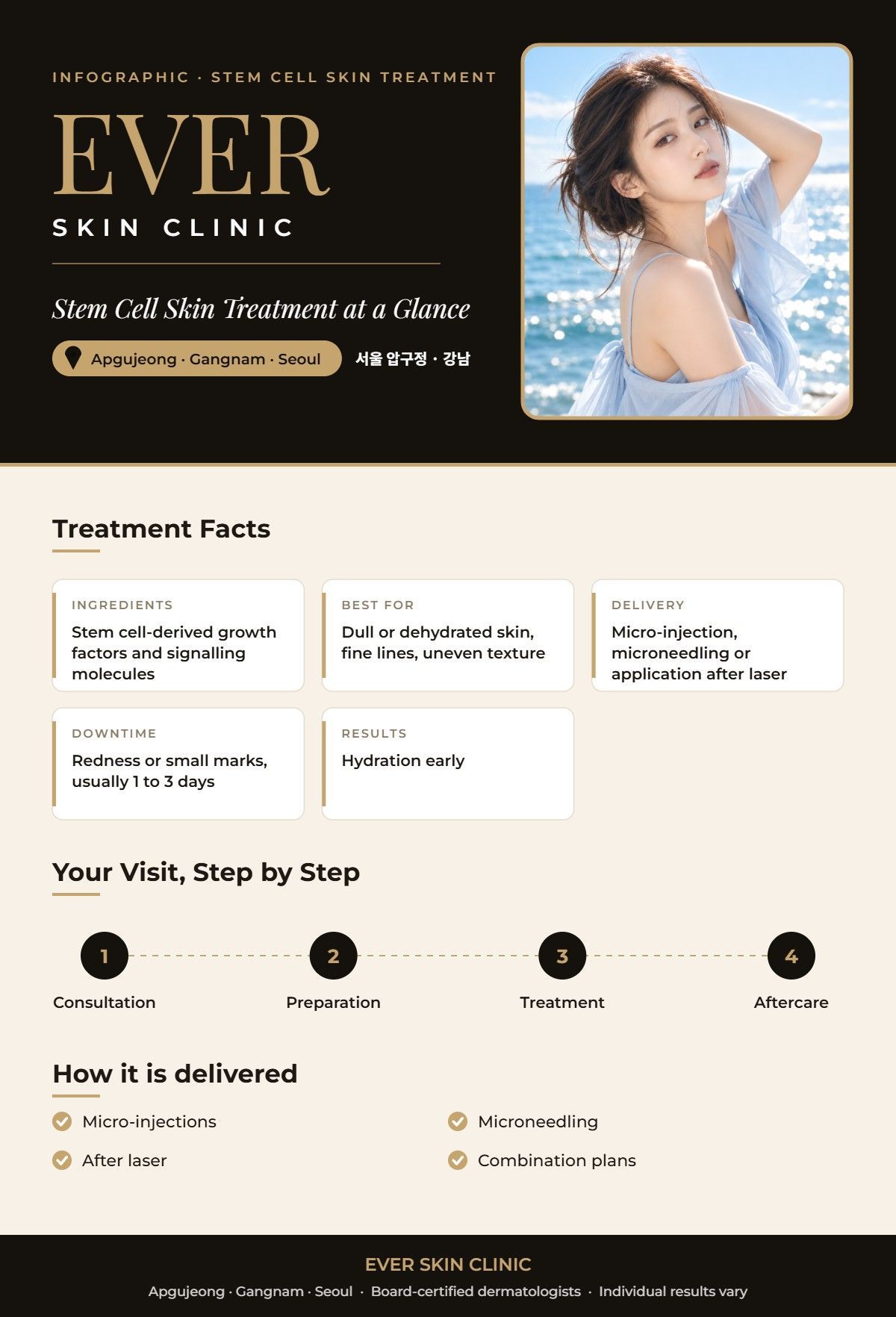
- Ingredients
- Stem cell-derived growth factors and signalling molecules
- Best for
- Dull or dehydrated skin, fine lines, uneven texture, post-laser recovery
- Delivery
- Micro-injection, microneedling or application after laser, depending on plan
- Downtime
- Redness or small marks, usually 1 to 3 days
- Results
- Hydration early; texture and elasticity build over several sessions
The treatment
What is stem cell skin treatment?
When stem cells are grown in a laboratory, they release growth factors, cytokines and tiny vesicles called exosomes. Aesthetic stem cell products use these derived ingredients rather than the cells themselves. Delivered into or onto the skin, they are intended to create a better environment for repair, so improvements in texture, glow and elasticity develop gradually.
The approach is closely related to exosome therapy and sits alongside other regenerative options such as PRP and Rejuran. Evidence for these treatments is still developing, so our dermatologists use them as part of a plan, not as a stand-alone cure.
How it is delivered
- Micro-injections : small amounts placed evenly into the skin
- Microneedling : applied through fine channels created by a device
- After laser : used to support recovery after resurfacing or toning
- Combination plans : paired with RF, boosters or lasers for several concerns
Is it right for you?
Who is a good candidate?
Stem cell skin treatment suits adults with dull, dehydrated or tired-looking skin, early fine lines, uneven texture or enlarged pores, and those who want support after laser procedures. It is about skin quality rather than lifting or volume.
Deep wrinkles, sagging and pigmentation usually need targeted treatments such as laser toning or lifting devices, and your dermatologist may combine these with regenerative care.
It may help if you want to
- Improve hydration and radiance in dull skin
- Refine uneven texture and enlarged pores
- Soften fine lines and early signs of ageing
- Recover more comfortably after lasers or microneedling
- Treat the neck, décolletage or hands as well as the face
Your visit
What happens during treatment
Treatment time varies with the delivery method and any combined procedure, usually about 30 to 60 minutes.
- Consultation A board-certified dermatologist examines your skin and previous treatments and explains the method, sessions and expected benefits.
- Preparation The skin is cleansed and numbing cream is applied if injections or microneedling are planned.
- Treatment The stem cell-derived product is delivered by micro-injection, microneedling or after a laser, as planned.
- Aftercare We calm the skin, explain home care and schedule further sessions if a course is recommended.
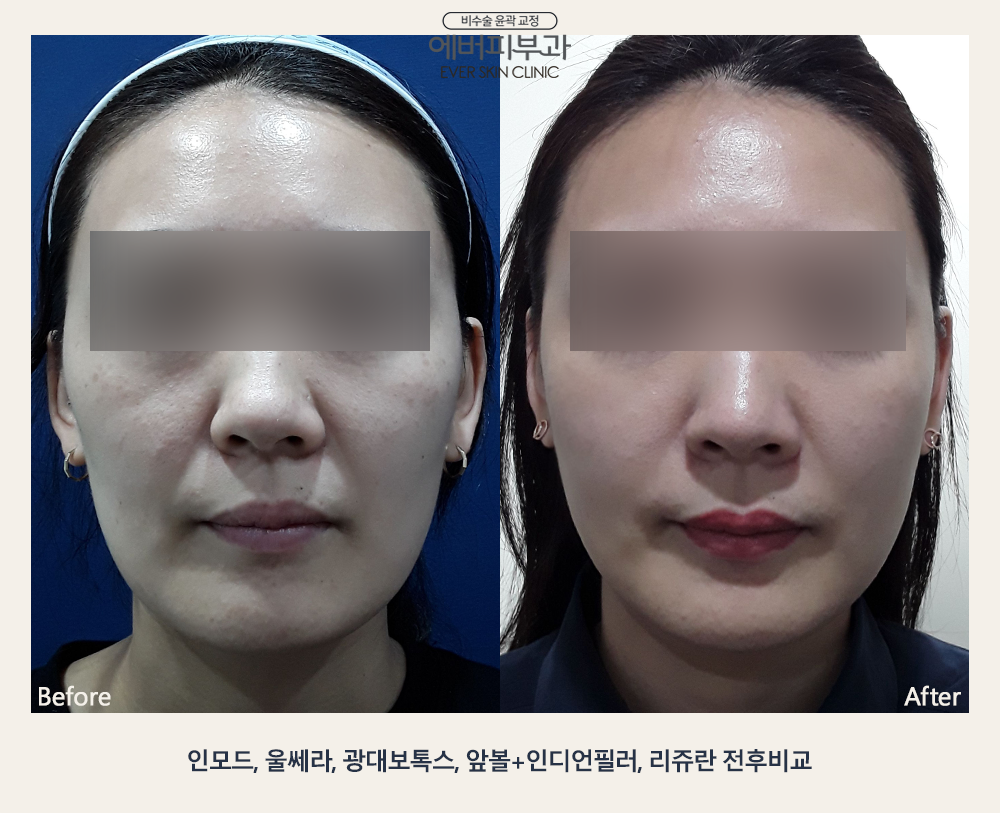
Real patient · before & after
Regenerative care within a full-face plan
This case shows a combined lifting and skin program, shown as an example of our non-surgical results; it is not a stem cell treatment result. Regenerative treatments are usually one part of a broader plan.
Ask us for stem cell treatment-specific cases at consultation, and your dermatologist will explain what is realistic for your skin.
Photos are shared with the patient's consent and are not retouched apart from privacy blurring. Results differ from person to person and are not guaranteed.
See more before & after photosRecovery & safety
Recovery, side effects and aftercare
Temporary redness, sensitivity, mild swelling or small injection marks are common and usually settle within one to three days. Rare risks include infection, irritation or allergic reaction.
Tell your dermatologist if you are pregnant or breastfeeding, have active skin infection or cold sores, an autoimmune condition, a history of skin cancer, or known allergies to any product ingredients.
Aftercare tips
- Avoid make-up for the rest of the day
- Skip saunas, hot baths and intense exercise for 1 to 2 days
- Pause exfoliating acids and retinoids for a few days
- Use a gentle moisturiser and daily sunscreen
- Message the clinic if redness or irritation increases
Questions we hear every day
Stem Cell Skin Treatment FAQ
Are real stem cells injected into my skin?
No. Aesthetic stem cell treatments use ingredients derived from cultured stem cells, such as growth factors and exosomes, not living cells transplanted into your face. Your dermatologist will explain the exact product used in your plan.
Does stem cell skin treatment hurt?
It depends on the delivery method. Micro-injections and microneedling are done after numbing cream, so most patients feel pressure and brief pinches. Application after laser is usually comfortable.
How many sessions will I need?
Some patients notice better hydration after one session, but texture and elasticity usually improve gradually over a course of several sessions a few weeks apart. Your dermatologist will suggest a number based on your skin and goals.
How is it different from exosome therapy or PRP?
Exosome therapy uses one specific component released by cells, while stem cell-derived products may include a broader mix of growth factors. PRP uses growth factors from your own blood. All aim to support repair, and your dermatologist can explain which suits you.
Can I have it during a short trip to Seoul?
Usually yes. Downtime is short, with redness or small marks typically settling in one to three days. We can adjust the plan to your travel schedule and combine it with other treatments in the same visit where appropriate.
Talk to a board-certified dermatologist in Apgujeong
Send us your skin concern and photos on WhatsApp.
An English-speaking team member will reply and arrange your consultation.
Mon & Thu 10:00–19:00 · Tue & Fri 10:00–20:00 · Sat 10:00–16:00 · Closed Wed, Sun & holidays