Laser Skin Resurfacing in Apgujeong, Gangnam Seoul
Board-Certified Dermatologist Top 2% in Korea 13+ Years
Laser Skin Resurfacing · quick answer
What laser skin resurfacing does, in one paragraph
Laser skin resurfacing uses laser light to create controlled micro-injuries in the skin, prompting it to replace damaged tissue with new skin and collagen. Most treatments today are fractional: the laser treats thousands of tiny columns while leaving skin between them intact, so healing is faster. Ablative lasers such as fractional CO2 are stronger with more downtime; non-ablative lasers are gentler. At Ever Skin Clinic, a board-certified dermatologist chooses the laser and depth for your skin type, concern and body area.
Medically reviewed by Dr. Jieun Kim, M.D. Founder & Director, board-certified dermatologist. Dermatology residency at Hanyang University Hospital; adjunct professor, Hanyang University College of Medicine. Meet our dermatologists Last reviewed October 2026
- Technology
- Fractional ablative (CO2) or non-ablative lasers
- Best for
- Scars, stretch marks, rough texture, sun damage, fine lines
- Course
- Usually 2 to 5 sessions, about 4 to 8 weeks apart
- Downtime
- About 2 to 7 days, depending on laser and depth
- Results
- Gradual over about 3 to 6 months
The treatment
What is laser skin resurfacing?
Ablative fractional lasers, such as fractional CO2, vaporise microscopic columns of skin, giving stronger remodelling for scars and deeper texture problems, with several days of crusting. Non-ablative fractional lasers heat the tissue without removing the surface, so recovery is quicker but more sessions are needed.
Body skin heals more slowly than the face and has fewer oil glands, so settings are usually more conservative. Resurfacing is part of our body skin rejuvenation options and is often combined with RF microneedling for stretch marks.
What resurfacing can help with
- Acne, surgical and injury scars
- Stretch marks , especially textured ones
- Rough texture and enlarged pores
- Sun damage and uneven tone
- Fine lines and crepey skin
Is it right for you?
Who is a good candidate?
Good candidates have scarring, texture or sun damage and can follow strict sun protection and aftercare. Darker skin types can be treated with careful settings, because the risk of post-inflammatory hyperpigmentation is higher. Resurfacing is usually postponed if you have recently taken isotretinoin, have a tan, or have active infection or cold sores in the area.
Resurfacing may suit you if you
- Have textured scars on the face or body
- Want to soften stretch marks
- Have sun-damaged or rough skin
- Can take a few days of visible recovery
- Can avoid sun exposure during healing
Your visit
What happens during treatment
Including numbing, a session usually takes about 60 to 90 minutes.
- Consultation Your dermatologist assesses skin type and concern and chooses the laser, depth and number of sessions.
- Numbing Numbing cream is applied for about 30 to 60 minutes; eyes are protected.
- Laser The laser passes over the area in a fractional pattern, usually 10 to 30 minutes depending on size.
- Cooling and care The skin is cooled and protected, and you receive written aftercare and a follow-up date.
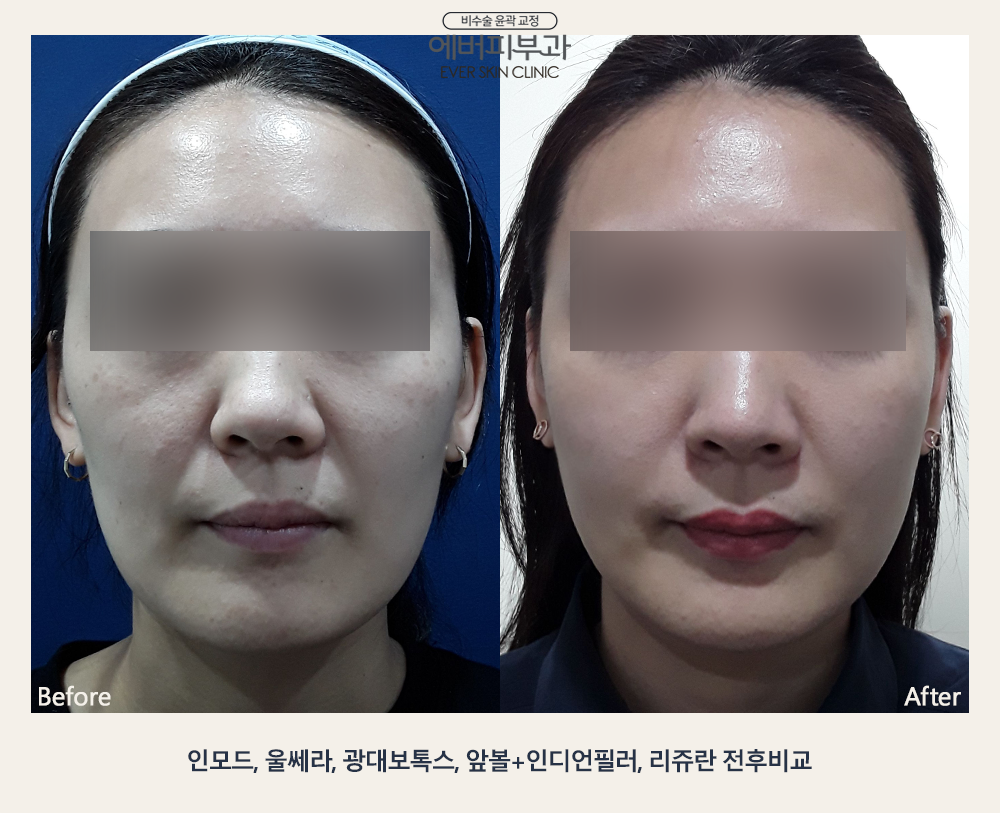
Real patient · before & after
Our non-surgical results, an example
This case shows a combined facial lifting and skin quality program. It is not a laser resurfacing result; we show it as an example of our non-surgical work only.
Resurfacing results vary with skin type, concern and depth. Ask us for laser-specific cases at consultation.
Photos are shared with the patient's consent and are not retouched apart from privacy blurring. Results differ from person to person and are not guaranteed.
See more before & after photosRecovery & safety
Recovery, side effects and aftercare
After ablative resurfacing, expect redness, swelling and fine crusting for about five to seven days, and pinkness that can last several weeks. Non-ablative treatments usually cause one to three days of redness. Risks include pigment change, infection, cold sore flare-ups and, rarely, scarring.
Tell your dermatologist if you have a history of cold sores, keloids, recent isotretinoin use, a tan, photosensitising medication, or are pregnant or breastfeeding.
Aftercare tips
- Keep the area clean and apply the recommended ointment or moisturiser
- Avoid sun and use broad-spectrum sunscreen once the skin has healed
- Do not pick crusts or scabs
- Avoid make-up, scrubs and active skincare until healed
- Skip swimming, saunas and hot springs until the skin has closed
Questions we hear every day
Laser Skin Resurfacing FAQ
Does laser resurfacing hurt?
Numbing cream is applied first, so most patients feel heat and prickling rather than sharp pain. Deeper ablative treatments are more intense. The skin may feel like a sunburn for a day or two afterwards.
How much downtime should I expect?
Non-ablative lasers usually cause one to three days of redness, while ablative fractional CO2 causes about five to seven days of crusting and swelling. Body areas can take a little longer to heal.
How many sessions will I need?
Many concerns need two to five sessions spaced about four to eight weeks apart. Deep scars may need more, sometimes combined with other treatments such as subcision or RF microneedling.
Can I have laser resurfacing on a holiday in Seoul?
Possibly, but plan carefully. You must avoid sun, swimming and hot springs while the skin heals, so it is better early in a long stay than before a beach trip. Your dermatologist can choose a gentler option for short visits.
Is laser resurfacing safe for darker skin?
It can be, with suitable laser choice and conservative settings. The main risk is temporary darkening of the skin. Your dermatologist may recommend pre-treatment skincare and longer gaps between sessions.
Talk to a board-certified dermatologist in Apgujeong
Send us your skin concern and photos on WhatsApp. An English-speaking team member will reply and arrange your consultation.
Mon & Thu 10:00–19:00 · Tue & Fri 10:00–20:00 · Sat 10:00–16:00 · Closed Wed, Sun & holidays