
Acne Laser Treatments in Apgujeong,
Gangnam, Seoul
Board-Certified Dermatologist Top 2% in Korea 13+ Years
Acne Laser Treatments · quick answer
What acne laser treatment does, in one paragraph
Acne laser treatments use light-based devices to reduce the causes of breakouts: overactive oil glands, acne bacteria and inflammation. At Ever Skin Clinic we use the Capri laser, Gold PTT (gold nanoparticles activated by laser) and PDT (photodynamic therapy), chosen by severity and skin type. These treatments can reduce active acne and recurrence, and are often combined with prescription medicines or used for patients who prefer to avoid them. A board-certified dermatologist in Apgujeong grades your acne first and builds a personalised plan.
Medically reviewed by
Dr. Jieun Kim, M.D.
Founder & Director, Ever Skin Clinic · Board-certified dermatologist
- Adjunct Professor, Hanyang University College of Medicine
- Dermatology residency, Hanyang University Hospital
- Master’s degree in Dermatology, Hanyang University
- Regular Member, Korean Dermatological Association
- Regular Member, Korean Laser Medicine Association
- Member, World Congress of Dermatology
- Published in JAAD and Annals of Dermatology
- English-speaking consultations
Meet our dermatologists → Last reviewed October 2026
- Technologies
- Capri laser, Gold PTT, PDT (photodynamic therapy)
- Best for
- Inflammatory, recurrent or treatment-resistant acne; oily skin
- Sessions
- Often 3 to 5, about 2 to 4 weeks apart
- Downtime
- None to a few days of redness, depending on the device
- Combined with
- Topical or oral medicines, extractions, peels when appropriate
The treatment
How lasers help control acne
Acne develops when oil glands produce excess sebum, pores clog and bacteria trigger inflammation. Laser and light treatments act on this chain at different points: some reduce sebaceous gland activity, some target bacteria, and most calm inflammation. Aim of treatment is to clear current breakouts and reduce how often they return.
Treatment is personalised. When appropriate, we combine devices with oral or topical medication, including isotretinoin for suitable patients, and for those who prefer to avoid medicines we focus on in-clinic procedures. Our acne treatments overview covers all options, and scars are treated separately once acne is controlled.
Devices we use for acne
- Capri laser — targets active acne and inflammation and helps reduce oil gland activity
- Gold PTT — gold nanoparticles placed in the oil glands are heated by laser for moderate to severe acne
- PDT — a light-sensitising solution activated by light to suppress oil glands
- Supporting care — extractions, gentle peels and soothing treatments
- Medical therapy — topical or oral treatment when appropriate
Is it right for you?
Who is a good candidate?
Acne laser treatment suits teenagers and adults with inflammatory papules and pustules, oily skin or acne that keeps coming back despite skincare and topical treatment. It can also help patients who cannot take, or do not want, oral medicines.
Very severe nodular or cystic acne usually needs medical treatment first. Once acne is under control, residual marks and scars can be addressed with Potenza or fractional CO2.
Acne lasers may suit you if you
- Have inflamed red spots or pustules
- Have very oily skin and enlarged pores
- Get recurring breakouts despite good skincare
- Prefer to limit or avoid oral medication
- Want a structured plan you can start during a stay in Seoul

Your visit
What happens during treatment
Most acne sessions take about 30 to 60 minutes; PDT needs extra time for the solution to absorb.
- Assessment A board-certified dermatologist grades your acne, checks skin type and medicines, and chooses device and medication plan.
- Preparation The skin is cleansed; extractions may be done, and for Gold PTT or PDT the solution is applied and absorbed.
- Light or laser treatment The chosen device is applied over the affected areas, usually in 10 to 20 minutes.
- Aftercare We soothe the skin, give home-care and sun advice, and book sessions about 2 to 4 weeks apart.
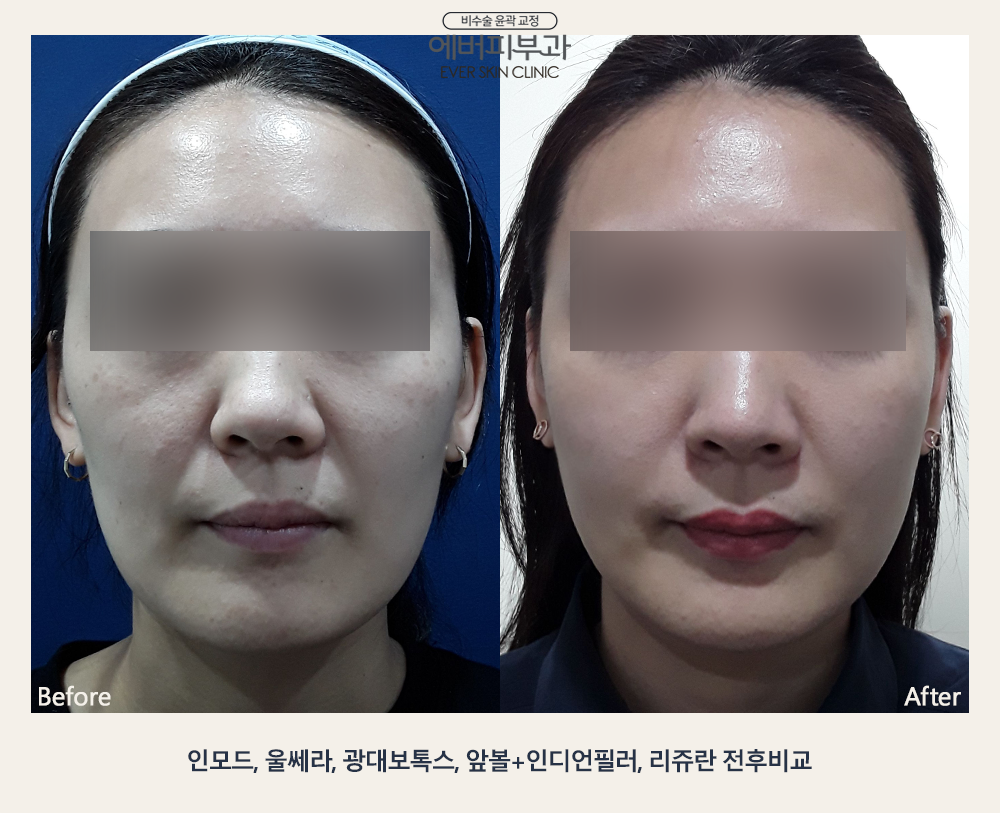
Real patient · before & after
An example of our non-surgical results
This case shows a combined lifting and skin program and is included only as an example of our non-surgical work; it is not an acne treatment result.
Acne response differs widely between patients, so ask us for acne-specific cases and a realistic plan at consultation.
Photos are shared with the patient's consent and are not retouched apart from privacy blurring. Results differ from person to person and are not guaranteed.
See more before & after photosRecovery & safety
Recovery, side effects and aftercare
Redness and mild swelling are common for a few hours to a day. After PDT, skin is sensitive to light for about 48 hours and may peel for several days. Some patients have a temporary flare of breakouts after the first session. Less common risks include crusting, temporary pigment change and irritation.
Tell your dermatologist if you take isotretinoin, antibiotics or other photosensitising medicines, are pregnant or breastfeeding, have a light-sensitive condition, or have a history of cold sores or keloids.
Aftercare tips
- Avoid sunlight and bright light for 48 hours after PDT
- Use non-comedogenic moisturiser and sunscreen
- Do not squeeze or pick spots
- Pause scrubs, retinoids and acids for a few days
- Continue any prescribed medicines as directed
Questions we hear every day
Acne Laser Treatments FAQ
Can lasers cure acne?
Lasers can reduce active acne and how often it returns, but acne is a chronic condition influenced by hormones, genetics and lifestyle. Most patients need a combined plan and some maintenance. Your dermatologist will set realistic expectations.
Do acne laser treatments hurt?
Most feel warm or prickly; Gold PTT and PDT may sting during light exposure. Cooling is used to keep sessions comfortable. Any discomfort usually settles soon after treatment.
How many sessions will I need?
Many patients have about 3 to 5 sessions spaced 2 to 4 weeks apart, sometimes with medication. Severe or long-standing acne may need more, and occasional maintenance helps prevent relapse.
Can I combine acne lasers with isotretinoin?
Some light treatments can be used alongside low-dose isotretinoin under careful supervision, while others, especially more aggressive procedures, are delayed. Always tell your dermatologist about every acne medicine you take.
Can I start acne laser treatment while visiting Seoul?
Yes. A consultation and first session fit easily into a short stay, and we provide a home-care plan. Avoid strong sun right after treatment, especially after PDT. Follow-up sessions can be scheduled on return visits.
Talk to a board-certified dermatologist in Apgujeong
Send us your skin concern and photos on WhatsApp.
An English-speaking team member will reply and arrange your consultation.
Mon & Thu 10:00–19:00 · Tue & Fri 10:00–20:00 · Sat 10:00–16:00 · Closed Wed, Sun & holidays

