
Fillers for Acne Scars in Apgujeong,
Gangnam, Seoul
Board-Certified Dermatologist Top 2% in Korea 13+ Years
Fillers for Acne Scars · quick answer
How filler helps acne scars, in one paragraph
Filler for acne scars lifts depressed (atrophic) scars from beneath by restoring lost volume, so the skin surface looks smoother. It works best for soft, rolling scars and broad depressions, often after subcision has released the bands tethering the scar down. Ice-pick and sharp boxcar scars respond better to other treatments. At Ever Skin Clinic in Apgujeong, a board-certified dermatologist maps your scar types and builds a combined plan, using filler where it adds most.
Medically reviewed by
Dr. Jieun Kim, M.D.
Founder & Director, Ever Skin Clinic · Board-certified dermatologist
- Adjunct Professor, Hanyang University College of Medicine
- Dermatology residency, Hanyang University Hospital
- Master’s degree in Dermatology, Hanyang University
- Regular Member, Korean Dermatological Association
- Regular Member, Korean Laser Medicine Association
- Member, World Congress of Dermatology
- Published in JAAD and Annals of Dermatology
- English-speaking consultations
Meet our dermatologists → Last reviewed October 2026
- Filler types
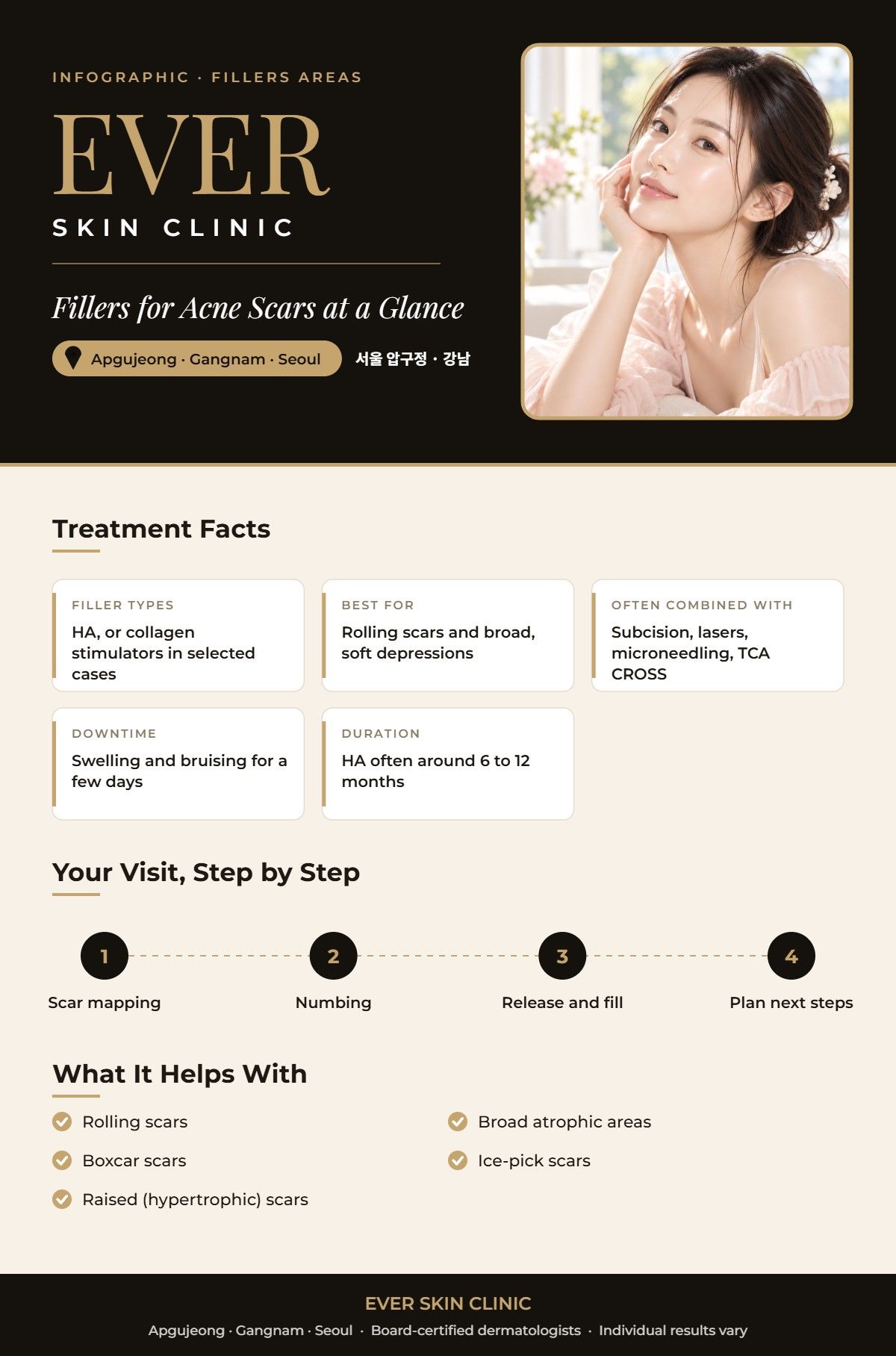
- HA, or collagen stimulators in selected cases
- Best for
- Rolling scars and broad, soft depressions
- Often combined with
- Subcision, lasers, microneedling, TCA CROSS
- Downtime
- Swelling and bruising for a few days
- Duration
- HA often around 6 to 12 months; varies
Know your scars
Which acne scars filler can help
Atrophic acne scars form when inflammation destroys collagen and fat, leaving a depression. Some are also pulled down by fibrous bands. Filler restores some of the missing volume, and when placed after subcision it can help keep the released scar from re-tethering. It does not resurface the skin, so most patients need it alongside texture treatments.
Filler is one tool within our wider approach to scars. For resurfacing, see fractional CO2 laser and microneedling for acne scars.
Scar types and how they usually respond
- Rolling scars — soft, wavy depressions; often respond well to subcision plus filler
- Broad atrophic areas — volume loss over cheeks or temples; filler or collagen stimulators help
- Boxcar scars — sharp-edged; better with lasers or TCA CROSS, filler only for shallow, soft ones
- Ice-pick scars — narrow and deep; TCA CROSS or punch techniques, not filler
- Raised (hypertrophic) scars — never treated with filler
Is it right for you?
Who is a good candidate?
Good candidates have rolling scars or soft depressions that improve when the skin is gently stretched, and acne that is under control. Filler gives an immediate improvement, which many patients appreciate while longer-term treatments build collagen.
Active acne should be treated first, as injecting through inflamed skin raises infection risk. Your dermatologist may start with acne treatment before scar work.
Filler may help your scars if you
- Have rolling or broad, soft depressed scars
- See scars soften when the skin is stretched
- Have acne that is currently well controlled
- Want visible improvement while lasers take effect
- Are open to a combined, staged plan

Your visit
What happens during treatment
A session usually takes about an hour, and is often combined with subcision on the same day.
- Scar mapping Your dermatologist examines your scars under angled light, classifies them and agrees a staged plan.
- Numbing Numbing cream and, where needed, local anaesthetic are applied.
- Release and fill Tethered scars may be released with subcision, then small amounts of filler are placed beneath each depression.
- Plan next steps We schedule lasers, microneedling or further sessions as your plan requires.
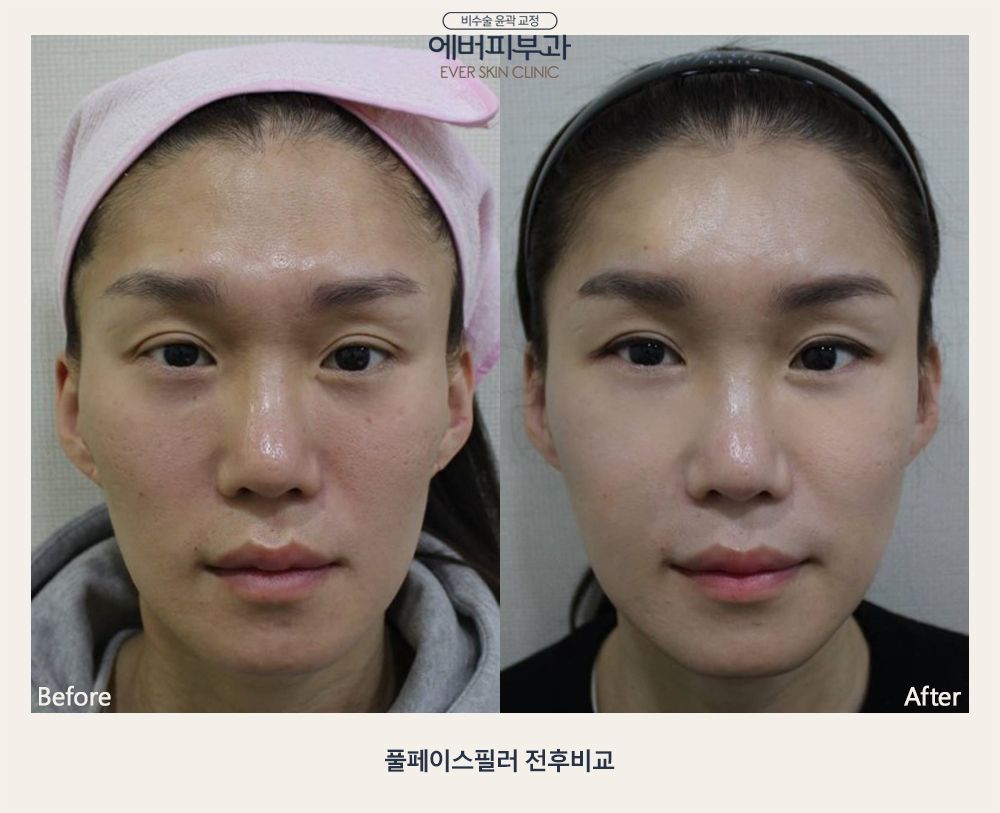
Real patient · before & after
Our filler work in context
This patient received full-face filler for volume, not for acne scars. We include it as an example of our filler technique, which also underpins how we place small amounts of filler beneath scars.
Ask us for acne scar cases at consultation, where your dermatologist can show results of combined scar programs similar to yours.
Photos are shared with the patient's consent and are not retouched apart from privacy blurring. Results differ from person to person and are not guaranteed.
See more before & after photosRecovery & safety
Recovery, side effects and aftercare
Swelling, tenderness and bruising are common for several days, especially when combined with subcision. Small lumps can occur and usually settle or can be adjusted; HA can be dissolved with hyaluronidase. Infection and vascular occlusion are rare but need prompt care. We do not use permanent fillers for acne scars.
Tell your dermatologist about current acne or isotretinoin use, cold sores, keloid tendency, previous fillers, allergies, blood thinners, or pregnancy or breastfeeding. Contact the clinic for increasing pain, redness or skin colour change.
Aftercare tips
- Avoid make-up on the treated area for the rest of the day
- Skip saunas, hot baths and intense exercise for 2 to 3 days
- Do not pick, press or massage the area unless advised
- Use a gentle cleanser, moisturiser and daily sunscreen
- Allow at least two weeks before laser or peel sessions unless your plan says otherwise
Questions we hear every day
Fillers for Acne Scars FAQ
Can filler get rid of acne scars permanently?
No. HA filler is gradually absorbed, so its lift lasts around six to twelve months. Combined with subcision and collagen-building treatments, though, some improvement can be longer lasting. Your dermatologist will explain how the plan builds lasting change.
Which acne scars respond best to filler?
Rolling scars and broad, soft depressions respond best, especially after subcision. Ice-pick and sharp boxcar scars usually do better with TCA CROSS, lasers or microneedling.
Does acne scar filler hurt?
Numbing cream and local anaesthetic are used, and most fillers contain lidocaine. Most people feel pressure and brief stinging. Subcision on the same day may cause more soreness for a few days.
Can I have filler while I still have acne?
Active acne should be controlled first, because injecting through inflamed skin raises the risk of infection. Your dermatologist may begin with acne treatment and start scar work once breakouts settle.
Can I treat acne scars on a trip to Seoul?
Yes, filler and subcision can be done in one visit, with swelling and bruising for several days. Full scar programs usually need several sessions, so our team can help you plan around return trips.
Talk to a board-certified dermatologist in Apgujeong
Send us your skin concern and photos on WhatsApp.
An English-speaking team member will reply and arrange your consultation.
Mon & Thu 10:00–19:00 · Tue & Fri 10:00–20:00 · Sat 10:00–16:00 · Closed Wed, Sun & holidays

