
Filler Dissolving (Hyaluronidase) in Apgujeong, Gangnam Seoul
Board-Certified Dermatologist Top 2% in Korea 13+ Years
Filler Dissolving · quick answer
What filler dissolving does, in one paragraph
Filler dissolving is an injection of hyaluronidase, an enzyme that breaks down hyaluronic acid (HA) filler so the body can absorb it, usually within a day or two. It is used to correct lumps, migration, puffiness, asymmetry or an overfilled look, and urgently if filler blocks a blood vessel. It does not dissolve non-HA fillers. At Ever Skin Clinic, board-certified dermatologists, who often see patients treated elsewhere, aim to dissolve only the problem filler and plan any re-treatment once the area settles.
Medically reviewed by Dr. Jieun Kim, M.D. Founder & Director, board-certified dermatologist. Dermatology residency at Hanyang University Hospital; adjunct professor, Hanyang University College of Medicine. Meet our dermatologists Last reviewed October 2026
- Agent
- Hyaluronidase enzyme
- Works on
- Hyaluronic acid fillers only
- Onset
- Begins within hours; most effect in 24 to 48 hours
- Downtime
- Swelling and redness for 1 to 3 days
- Re-treatment
- Usually after about 2 weeks, once settled
The treatment
What is hyaluronidase?
Hyaluronidase is an enzyme naturally present in the body that breaks the bonds holding hyaluronic acid together. Injected into an area of HA filler, it softens and dissolves the gel so it is absorbed. Because it also acts briefly on your own natural hyaluronic acid, which the skin replaces within days, careful dosing matters: too much can leave an area temporarily flatter than expected.
Our dermatologists aim to treat selectively, targeting only the misplaced or excess product. Many patients then have a planned re-injection, for example with Korean-style filler placement or under eye filler, once swelling has settled.
What filler dissolving can and cannot do
- Can dissolve HA filler that is lumpy, migrated or excessive
- Can reverse a bluish tint (Tyndall effect) under thin skin
- Can be used urgently when filler compromises blood flow
- Cannot dissolve Sculptra, Radiesse, Ellansé or permanent fillers
- Cannot always remove every trace in one session; some cases need two
When it is used
Who might need filler dissolving?
Most patients come to us because a previous filler looks heavy, uneven or puffy, has moved from where it was placed, or no longer suits their face. Common areas include the under-eyes, lips, nose, forehead and cheeks. Bring any records of the product used, as this helps confirm it is HA.
Dissolving can also be the first step before a better-planned treatment. If the underlying concern is laxity rather than volume, lifting such as Shurink HIFU may be part of the next plan.
Filler dissolving may help if you have
- Puffiness or lumps under the eyes after filler
- Filler that has migrated, for example above the lip border
- A face that looks heavy or overfilled
- Asymmetry or an unwanted shape after filler
- Blanching, pain or dusky skin after filler (an emergency)
Your visit
What happens during treatment
Most dissolving appointments take about 30 minutes. If you think you have a vascular complication, contact a clinic immediately rather than waiting for a routine appointment.
- Assessment Your dermatologist examines the area, confirms the filler is likely HA where possible, and maps exactly what needs dissolving.
- Allergy check A small skin test may be done if appropriate, as hyaluronidase can rarely cause allergy.
- Selective injection Measured amounts of hyaluronidase are injected precisely into the targeted filler.
- Review and plan We review at about one to two weeks and, if wanted, plan re-treatment once the area has settled.
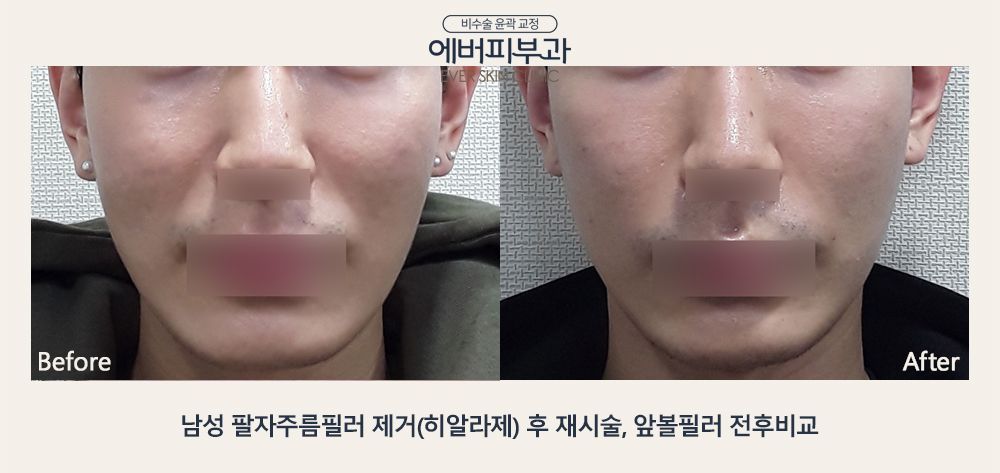
Real patient · before & after
Dissolve first, then re-plan
This patient came with nasolabial filler that no longer looked natural. It was dissolved with hyaluronidase, then the area was re-treated with a new plan that included front-cheek filler for support.
The final result reflects both dissolving and re-treatment. Your dermatologist will explain whether dissolving alone, or dissolving followed by re-injection, suits your situation.
Photos are shared with the patient's consent and are not retouched apart from privacy blurring. Results differ from person to person and are not guaranteed.
See more before & after photosRecovery & safety
Recovery, side effects and aftercare
Swelling, redness, itching and tenderness at the injection sites are common for one to three days. The area may look flatter than before the original filler for a short time, as natural hyaluronic acid is also briefly affected and then restored. Allergic reactions are uncommon but can occur, particularly in people with bee or wasp sting allergies.
Tell your dermatologist about insect sting or other allergies, the product and date of your previous filler if known, current infections near the area, and pregnancy or breastfeeding. Seek urgent help for spreading swelling, hives or difficulty breathing.
Aftercare tips
- Avoid massaging the area unless your dermatologist advises it
- Use a cool compress gently for swelling
- Skip saunas, alcohol and intense exercise for a day or two
- Wait about two weeks before judging the result or re-treating
- Keep a record of what was dissolved for future treatments
Questions we hear every day
Filler Dissolving FAQ
How quickly does hyaluronidase work?
It starts working within hours, and most of the effect is visible within 24 to 48 hours once swelling settles. Dense or older filler can need a second session. Your dermatologist will review the result before deciding.
Will dissolving remove all my filler?
It can, but we usually aim to dissolve only the problem areas. Because results depend on the product and how long it has been in place, complete removal sometimes needs more than one session.
Can all fillers be dissolved?
No. Only hyaluronic acid fillers respond. Sculptra, Radiesse, Ellansé and permanent fillers cannot be dissolved with hyaluronidase, so it helps to bring any records of the product you received.
Does filler dissolving hurt?
Most patients feel stinging for a few seconds per injection, and the area may itch or swell afterwards. Ice or numbing cream can be used. Discomfort usually settles within a day.
When can I get filler again after dissolving?
We usually wait about two weeks, so the enzyme has cleared and swelling has settled, before re-injecting. If you are travelling, our team can help plan dissolving early in your stay and re-treatment on a later visit.
Talk to a board-certified dermatologist in Apgujeong
Send us your skin concern and photos on WhatsApp. An English-speaking team member will reply and arrange your consultation.
Mon & Thu 10:00–19:00 · Tue & Fri 10:00–20:00 · Sat 10:00–16:00 · Closed Wed, Sun & holidays