
Dark Circle Treatment in Apgujeong,
Gangnam, Seoul
Board-Certified Dermatologist Top 2% in Korea 13+ Years
Dark Circle Treatment · quick answer
How dark circles are treated, in one paragraph
Dark circles are not one condition: they can come from pigmentation, hollow tear troughs that cast a shadow, thin skin showing blood vessels, or a mix of these. Treatment therefore depends on the cause, using pigment lasers for brown discoloration, hyaluronic acid filler for hollows, and skin boosters such as Rejuran i for thin, crepey skin. At Ever Skin Clinic, a board-certified dermatologist first identifies which types you have, then plans one treatment or a combination.
Medically reviewed by
Dr. Jieun Kim, M.D.
Founder & Director, Ever Skin Clinic · Board-certified dermatologist
- Adjunct Professor, Hanyang University College of Medicine
- Dermatology residency, Hanyang University Hospital
- Master’s degree in Dermatology, Hanyang University
- Regular Member, Korean Dermatological Association
- Regular Member, Korean Laser Medicine Association
- Member, World Congress of Dermatology
- Published in JAAD and Annals of Dermatology
- English-speaking consultations
Meet our dermatologists → Last reviewed October 2026
- Causes treated
- Pigmentation, tear-trough hollows, thin skin and visible vessels
- Main options
- Pigment lasers, under-eye filler, Rejuran i, PRP
- Sessions
- Filler often 1; lasers and boosters usually a course of several
- Downtime
- From none to a few days of swelling or bruising
- Results
- Vary by cause; filler is visible soon, lasers and boosters build gradually
Causes and options
What causes dark circles, and what helps?
Brown circles usually come from pigmentation, which is more common in medium and darker skin tones and worsened by sun and rubbing. Blue or purple circles often reflect thin skin over the veins and muscle. Shadowed circles come from a tear-trough hollow or under-eye bags that catch the light. Many people have more than one type, which is why creams alone rarely solve the problem.
For hollows, our dermatologists may recommend under-eye fillers; for pigment, gentle lasers such as Pico laser are used at conservative settings.
Options by cause
- Pigmented circles: low-energy pigment lasers, topical brighteners and sun protection
- Hollow tear troughs: soft hyaluronic acid filler placed carefully
- Thin, crepey skin: Rejuran i or other skin boosters
- Vascular, bluish tone: skin-thickening boosters and selected lasers
- Puffy bags: assessed separately; some need surgical opinion
Is it right for you?
Who is a good candidate?
Anyone bothered by persistent dark circles that do not improve with sleep and skincare can benefit from an assessment. Lifestyle factors such as sleep, allergies and rubbing still matter, and your dermatologist will discuss them.
Prominent fat bags under the eyes are not well treated by filler, so in those cases we explain the limits honestly and may suggest a surgical opinion.
Treatment may suit you if you
- Look tired even after a good night's sleep
- Have brown pigmentation under the eyes
- Have a visible groove or hollow between the lower lid and cheek
- Have thin, crepey under-eye skin
- Want a refreshed look without surgery

Your visit
What happens during treatment
Your visit starts with diagnosis, because the right treatment depends on the cause.
- Diagnosis A board-certified dermatologist examines the under-eye area in different lighting and positions to identify pigment, hollowness or thin skin.
- Plan We agree whether you need one treatment or a combination, and the number of sessions.
- Treatment Depending on the plan, filler, skin booster injections or laser are performed with numbing for comfort.
- Follow-up We review the result and plan any further sessions, timed around your travel if needed.
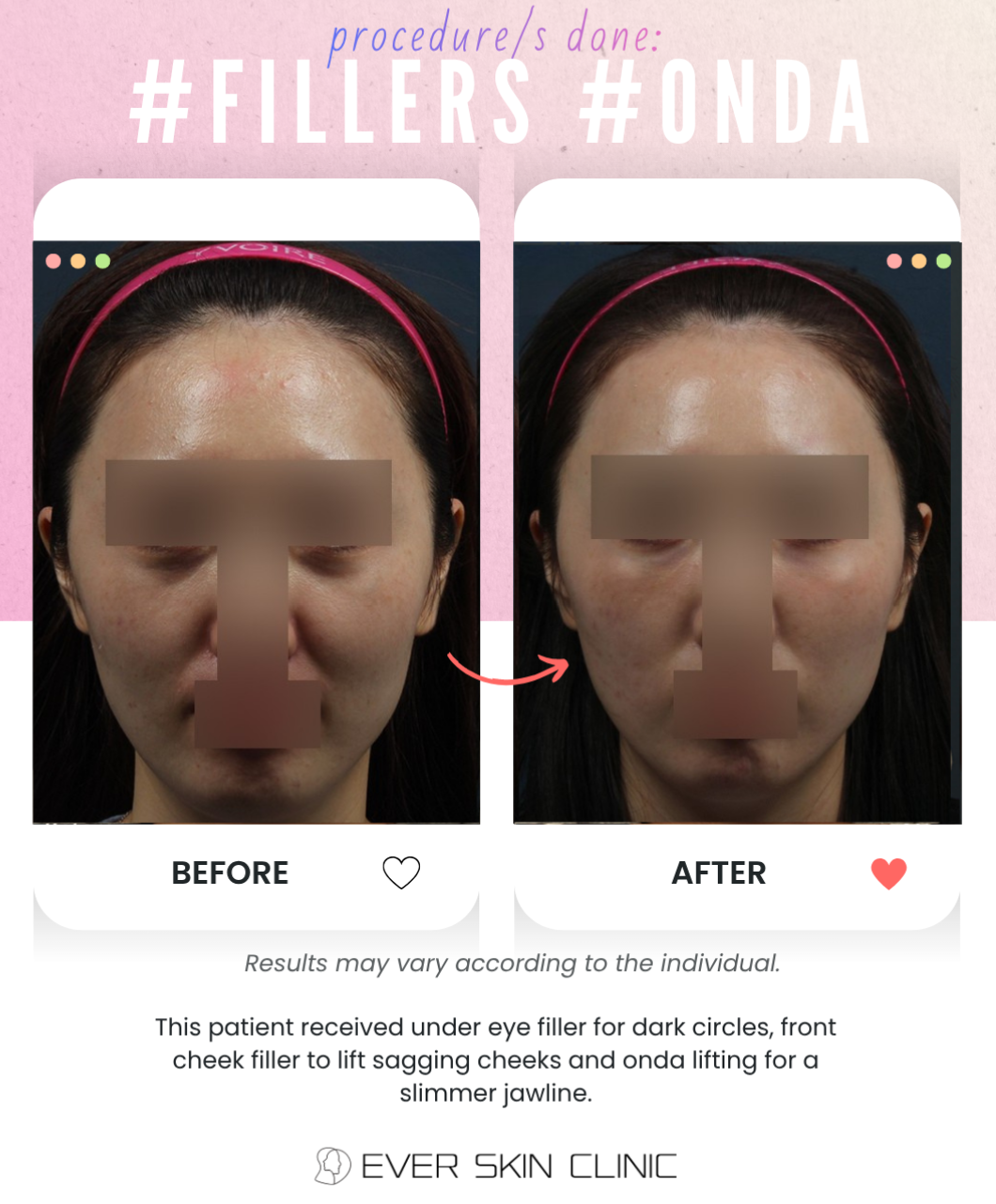
This patient had under-eye filler for dark circles and hollowness, with front-cheek filler to support the midface and Onda lifting for the jawline. The change shown reflects the whole plan, not one treatment alone.
Softer dark circles as part of a balanced plan
Dark circles can come from hollowness, pigment, thin skin or visible vessels, so your dermatologist first identifies the cause and then explains what is realistic for you.
Under-eye changes are best judged in close-up photos. Ask us for under-eye and dark circle cases at consultation.
Photos are shared with the patient's consent and are not retouched apart from privacy blurring. Results differ from person to person and are not guaranteed.
See more before & after photosRecovery & safety
Recovery, side effects and aftercare
Under-eye filler can cause swelling and bruising for several days; boosters leave small bumps for one to three days; lasers may cause mild redness. Risks of filler in this area include lumps, a bluish tinge if placed too superficially, prolonged swelling and, rarely, vascular complications, so technique and product choice matter.
Tell your dermatologist if you have had previous under-eye filler or surgery, take blood thinners, have a fish allergy (relevant to Rejuran), active eye or skin infection, or are pregnant.
Aftercare tips
- Avoid rubbing the eyes
- Sleep with your head slightly raised for a couple of nights after filler
- Skip saunas, alcohol and intense exercise for 1 to 2 days
- Use sunscreen and sunglasses to protect against pigment
- Use cold compresses gently if swollen
Questions we hear every day
Dark Circle Treatment FAQ
Can dark circles be completely removed?
Many dark circles can be improved noticeably, but complete removal is not always possible, particularly when genetics, skin thinness or bone structure play a role. Your dermatologist will explain what is realistic after identifying the cause.
Is under-eye filler safe?
In experienced hands with soft fillers and careful technique, it is a common treatment, but the area is delicate. Possible issues include swelling, lumps, a bluish tinge and rare vascular complications. Hyaluronic acid filler can be dissolved if needed.
How many sessions will I need?
Filler for hollows often needs one session, sometimes with a small top-up. Laser and skin booster treatments usually need a course of several sessions a few weeks apart. Your plan depends on the cause and your schedule.
Do eye creams work for dark circles?
Creams with ingredients such as vitamin C or retinoids may help mild pigmentation and texture, and sunscreen prevents worsening. They cannot correct hollows or significantly thicken skin, which is why in-clinic treatment is often combined with home care.
Can I treat dark circles during a short trip?
Yes, depending on the treatment. Boosters and lasers have short downtime, while filler may cause a few days of swelling or bruising, so schedule it early in your stay. We can plan a combination that fits your travel dates.
Talk to a board-certified dermatologist in Apgujeong
Send us your skin concern and photos on WhatsApp.
An English-speaking team member will reply and arrange your consultation.
Mon & Thu 10:00–19:00 · Tue & Fri 10:00–20:00 · Sat 10:00–16:00 · Closed Wed, Sun & holidays

