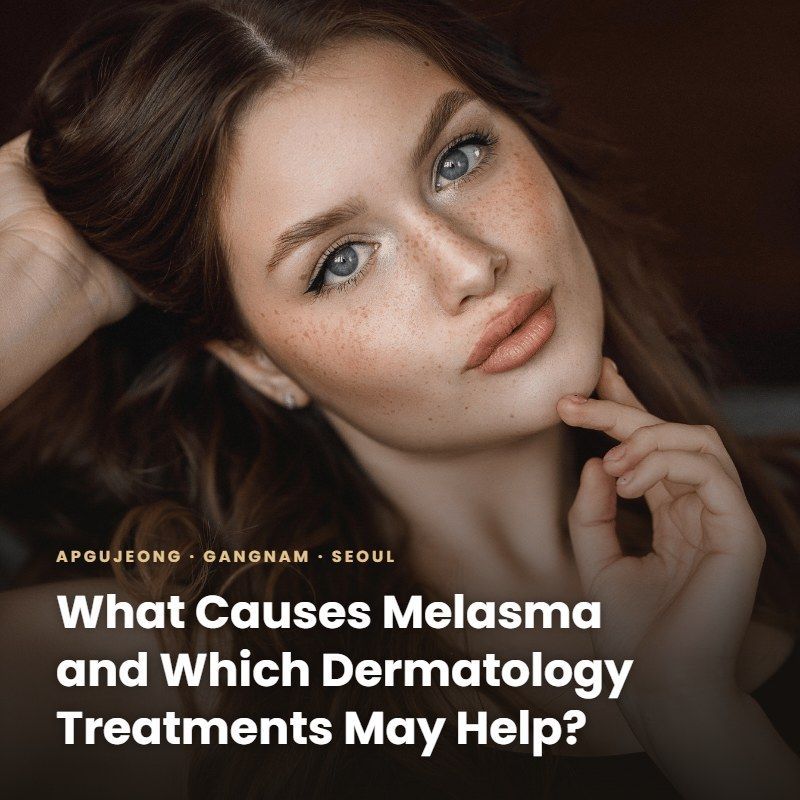
Melasma is a common pigment condition that causes brown or grey-brown patches, usually on the cheeks, forehead and upper lip. It is linked to sunlight, visible light, hormones and genetics. There is no permanent cure, but daily sun protection, prescription creams, oral medication and gentle laser treatment can lighten it and keep it under control.
What Is Melasma and What Causes It?
Melasma is a long-term pigment condition in which the skin makes too much melanin in certain areas. It appears as flat brown or grey-brown patches, usually on both sides of the face. It is far more common in women than in men, and it often starts between the ages of 20 and 40. It is especially common in people with medium skin tones, including many people of Asian, Hispanic and Middle Eastern background.
| Trigger | How it affects melasma |
|---|---|
| Ultraviolet light | The strongest trigger; it stimulates pigment cells |
| Visible light | Light from the sun and bright sources can darken melasma, especially in darker skin |
| Hormones | Pregnancy, birth control pills and hormone therapy can start or worsen it |
| Genetics | Melasma often runs in families |
| Heat | Heat exposure may make patches darker |
| Irritation | Harsh skincare or aggressive treatment can worsen it |
Where Melasma Usually Appears
Melasma typically forms symmetrical patches in three patterns. The centrofacial pattern affects the forehead, cheeks, nose and upper lip. The malar pattern affects the cheeks and nose. The mandibular pattern affects the jawline. Less often, it appears on the forearms or neck.
Melasma During Pregnancy
Melasma that appears during pregnancy is sometimes called the mask of pregnancy. It may fade after childbirth, but it often stays or returns with sun exposure. Many treatments are not suitable during pregnancy or breastfeeding, so sun protection is the main approach at that time.
How Is Melasma Different From Other Dark Spots?
Melasma is often confused with sun spots, freckles and marks left after acne. The difference matters, because treatments that work well for sun spots can make melasma darker.
Signs that suggest melasma
- Patches on both cheeks in a similar shape
- Blurry edges rather than sharp ones
- Darker in summer or after hormone changes
Signs that suggest another cause
- Single spots with sharp edges
- Marks only where acne used to be
- A spot that is changing, raised or bleeding
How a Dermatologist Confirms Melasma
The doctor looks at the pattern of the patches and may use a magnifying lamp or skin imaging to see how deep the pigment sits. They also ask about pregnancy, hormonal medication, sun habits and family history. If the diagnosis is unclear, other conditions are ruled out before treatment begins. To compare melasma with other causes of discoloration, read how to improve uneven skin tone and facial discoloration.
Which Dermatology Treatments May Help Melasma?
Melasma is usually treated with a combination of approaches. No single treatment works for everyone, and dermatologists often start gently to avoid making it worse.
| Treatment | How it works | Notes |
|---|---|---|
| Sun protection | Prevents new pigment from forming | Needed every day, with every other treatment |
| Topical creams | Ingredients such as hydroquinone, retinoids and azelaic acid reduce pigment | Prescription strength needs a doctor's guidance |
| Tranexamic acid | Reduces pigment production; used as cream or as oral medication | Oral use needs a doctor's assessment of clot risk |
| Chemical peels | Remove pigmented surface cells | Mild peels are preferred to avoid irritation |
| Laser toning | Low-energy laser breaks up pigment gradually | Usually done as a series of sessions |
You can see the options available in Seoul in skin whitening and brightening treatments and radiant skin treatments.
Why Strong Lasers Can Make Melasma Worse
High-energy lasers and intense heat can inflame the skin. In melasma, this inflammation can trigger more pigment and leave the area darker than before, a reaction called rebound hyperpigmentation. This is why low-energy laser toning, with sessions spaced over weeks, is a common choice.
How Oral Tranexamic Acid Is Used
Oral tranexamic acid has been studied as a treatment for moderate to severe melasma. Because it affects blood clotting, a doctor checks your medical history first. It is not suitable for people with a history of blood clots, certain heart conditions, or during pregnancy. Always take it only as prescribed.
What Does a Melasma Treatment Plan Look Like?
The dermatologist confirms melasma and checks your skin type and triggers.
You start daily broad-spectrum, tinted sunscreen and protective habits.
A prescription or skincare routine is set to reduce pigment.
Laser toning or mild peels are added if needed, spaced over several weeks.
The plan continues at a lower intensity to keep melasma under control.
How Long Treatment Takes
Most people notice gradual lightening over two to three months. Deeper pigment can take longer. Because melasma tends to return with sun exposure and hormonal changes, maintenance care continues even after the patches fade.
How Can You Prevent Melasma From Coming Back?
Prevention depends mostly on daily habits. Melasma is easily triggered again, so consistent care is more important than any single treatment.
- Use broad-spectrum sunscreen of SPF 30 or higher every day, including cloudy days.
- Choose a tinted sunscreen with iron oxides to help block visible light.
- Reapply every two hours outdoors and wear a wide-brimmed hat.
- Avoid harsh scrubs, strong peels at home and irritating products.
- Talk to your doctor if hormonal medication may be a trigger.
Skincare Ingredients That May Help
| Ingredient | Role in melasma care |
|---|---|
| Azelaic acid | Reduces pigment and calms redness; often well tolerated |
| Niacinamide | Helps reduce the transfer of pigment to skin cells |
| Vitamin C | Antioxidant that can brighten skin over time |
| Tranexamic acid | Available in some creams and serums for pigment |
| Retinoids | Speed up skin renewal, but can irritate if overused |
Introduce one product at a time and stop if your skin becomes red or stings for more than a day. Stronger ingredients such as hydroquinone are usually used for limited periods under a doctor's supervision, because long-term unsupervised use can cause side effects.
Daily Habits That Support Treatment
Avoid long periods in strong sun during the middle of the day, and be careful with heat sources such as saunas and hot yoga, which some patients notice darken their melasma. Keep your skincare simple, because irritation from many active products can worsen pigment. It also helps to know possible side effects before starting, as explained in what you should know about treatment consent and possible side effects.
When Should You See a Dermatologist About Melasma?
See a dermatologist if patches are spreading, if over-the-counter products have not helped after about three months, or if you are unsure whether the spots are melasma. Prompt review is also important if a spot looks different from the others, grows quickly or bleeds, because these changes need to be checked for other conditions.
Key Takeaways
- Melasma causes brown or grey-brown patches, usually on both cheeks.
- Sunlight, visible light, hormones and genetics are the main triggers.
- Strong heat-based lasers can make melasma darker.
- Treatment combines sun protection, creams, oral medication and gentle laser toning.
- Melasma often returns, so maintenance care is part of the plan.
FAQ
What is the main cause of melasma?
Melasma is caused by overactive pigment cells. The most important triggers are ultraviolet and visible light, hormones such as those in pregnancy or birth control pills, and genetics.
Can melasma go away on its own?
Melasma that starts during pregnancy or with birth control pills may fade after the trigger ends, but it often stays. Most people need ongoing sun protection and treatment.
Is melasma permanent?
Melasma is a long-term condition. It can be lightened and controlled, but it can return with sun exposure or hormonal changes.
What is the best treatment for melasma?
There is no single best treatment. Dermatologists usually combine daily sun protection, topical creams, and sometimes oral tranexamic acid, mild peels or laser toning.
Does laser treatment work for melasma?
Low-energy laser toning can help lighten melasma over several sessions. Strong heat-based lasers can make it worse, so the type of laser and settings matter.
How many laser toning sessions are needed for melasma?
It varies, but a series of sessions spaced over several weeks is common. The dermatologist adjusts the plan based on how your skin responds.
Can men get melasma?
Yes. Melasma is more common in women, but men can develop it too, and treatment follows the same principles.
Which sunscreen is best for melasma?
A broad-spectrum sunscreen with SPF 30 or higher is recommended. Tinted sunscreens with iron oxides also help protect against visible light.
APGUJEONG · GANGNAM · SEOUL
Book Your Skin Consultation
A personal skin assessment and treatment plan for your stay in Seoul.
Book via WhatsApp English support availableReferences
- American Academy of Dermatology — Melasma: diagnosis and treatment.
- Korean Dermatological Association (대한피부과학회) — patient information on melasma.
- British Association of Dermatologists — Melasma patient information leaflet.
This article is for general information only and is not a substitute for a medical consultation. Results and suitability vary by individual.