
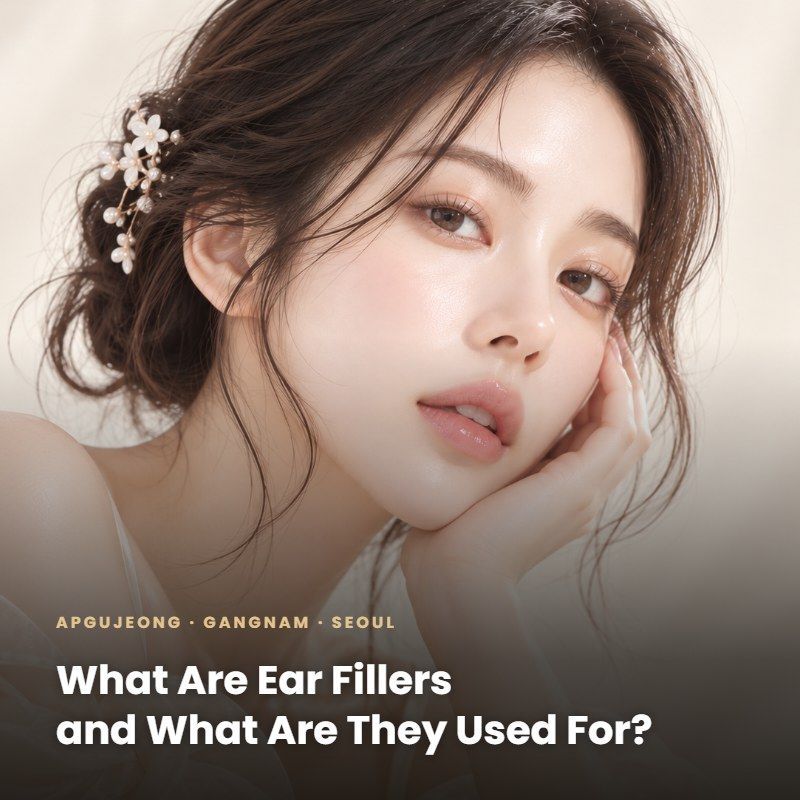
Ear fillers use a small amount of hyaluronic acid filler to reshape the ear without surgery. There are two main types: fairy or elf ear filler, which adds definition to the upper rim of the ear so it shows slightly from the front, and earlobe filler, which plumps thin, flat or wrinkled earlobes. Treatment takes only minutes, downtime is minimal, and results often last around a year or longer.
What Are Ear Fillers?
Ears are rarely the first feature people notice, but they frame the face. Ear fillers are a small, non-surgical treatment that changes how the ears look from the front or improves the appearance of aging earlobes. They are often included in Korean-style filler plans or non-surgical contouring.
| Type | Where filler goes | Main goal |
|---|---|---|
| Fairy (elf) ear filler | The upper rim of the ear, called the helix | Makes the ear rim softly visible from the front |
| Earlobe filler | The soft earlobe | Plumps thin, flat or wrinkled lobes |
| Stretched lobe support | Around a stretched piercing hole | Improves the look of lobes stretched by heavy earrings |
Why Fairy Ear Filler Is Popular in Korea
In Korea, a softly visible ear rim from the front is often seen as making the face look smaller and more balanced. When ears sit flat against the head, the side of the face can look wider. Adding a little definition to the helix creates a gentle outline that frames the face. This is a cosmetic preference and is not right for everyone.
Why Earlobes Age
Earlobes lose fat and collagen with age, just like the face. Years of heavy earrings can also stretch the lobes and the piercing holes. Thin, wrinkled or droopy lobes can make the ears look older than the face, and earlobe filler restores a fuller, smoother shape.
How Can Ear Filler Change the Look of the Face?
From the front, the ears form part of the outline of the head. When they are hidden flat against the head, attention goes to the width of the cheeks and jaw. When the upper rims are softly visible, they create a frame that can make the face look narrower and more delicate by comparison. This is an optical effect rather than a change in face size, and it works best when combined with a balanced overall plan.
Planning for Balance
The doctor looks at the ears together with your hairstyle, face width and the height of your cheekbones. Ears that are already slightly visible may need very little or no filler, while very flat ears may benefit more. Both ears are treated to look similar, although most people have small natural differences between their ears, and these are respected rather than forced to match exactly.
Who Is a Good Candidate?
Ear filler may suit you if
- Your ears sit very flat and you want them softly visible
- Your earlobes look thin, flat or wrinkled
- Heavy earrings have caused droopy lobes
- You want a quick, non-surgical change
Other options may be better if
- Your ears already stick out noticeably
- You have a large tear in the earlobe
- You want a major change in ear shape
- You have an infection or inflamed piercing
When Surgery Is Needed
Earlobe filler can improve stretched holes and support earrings, but a fully torn earlobe usually needs a small surgical repair. Major changes to ear shape or prominent ears are also surgical procedures. A doctor will explain which option suits your situation.
What Happens During Treatment?
The doctor assesses the shape of your ears from the front and side and discusses your goals.
The amount and placement are chosen for each ear to keep them balanced.
Numbing cream or ice may be used.
A small amount of hyaluronic acid is placed in the helix or earlobe, usually in about five minutes.
The shape is checked, and a follow-up is planned.
Why Minimal Volume Is Used
The ear has cartilage and thin skin, so only small amounts of filler are needed. Too much can create lumps or an unnatural outline. Doctors prefer to start conservatively and add a little more later if needed. Soft, smooth fillers are usually chosen so the ear feels natural to the touch and does not look ridged.
What Results Can You Expect?
The change is visible right away. Mild swelling and tenderness may last a few days. Because the ear moves very little, ear filler often lasts around a year or longer, though this varies.
| Timeline | What usually happens |
|---|---|
| Same day | Visible change with mild swelling |
| First few days | Tenderness when lying on the ear |
| One to two weeks | Final shape |
| About a year or longer | Gradual softening |
Combining Ear Filler With Facial Contouring
Ear filler is often part of a broader plan that includes temple, forehead or chin filler and Botox for a balanced, smaller-looking face. For an overview of how fillers shape the face, read what are dermal fillers and how are they used for facial contouring. For temples, see what is temple filler and how can it restore facial volume.
What Are the Possible Side Effects?
- Mild swelling, redness and tenderness for a few days.
- Bruising at injection points.
- Lumps or uneven contour, which can usually be corrected or dissolved.
- Rarely, infection or reduced blood flow to the skin.
- Discomfort when sleeping on the treated side for a few nights.
Aftercare Tips
- Avoid sleeping on the treated ear for a few nights if possible.
- Avoid heavy earrings for about a week after earlobe filler.
- Avoid pressing or massaging the ear unless advised.
- Avoid saunas and intense exercise for about a day.
- Contact the clinic if you notice increasing pain, redness or skin color changes.
Who Should Delay Treatment
Treatment is usually postponed if you have an ear infection, an inflamed or new piercing, skin conditions on the ear, or are pregnant or breastfeeding. Tell your doctor about previous ear filler or ear surgery.
Are Ear Fillers Right for You?
If you want your ears to frame your face more softly, or if your earlobes look thin or stretched, ear filler offers a quick, reversible option. A doctor will assess your ear shape and recommend a natural result. Learn more on our ear fillers page and our derma fillers overview.
Key Takeaways
- Ear fillers use small amounts of hyaluronic acid to reshape the ear without surgery.
- Fairy ear filler makes the ear rim softly visible from the front.
- Earlobe filler plumps thin, flat or wrinkled lobes.
- Treatment takes minutes, and results often last around a year or longer.
- Torn earlobes and major shape changes usually need surgery.
FAQ
What is fairy ear filler?
Fairy or elf ear filler adds a small amount of filler to the upper rim of the ear so it shows slightly from the front, which can make the face look smaller. It is a popular cosmetic choice in Korea.
What is earlobe filler?
Earlobe filler plumps thin, flat or wrinkled earlobes and can support lobes stretched by heavy earrings. It can make the ears look younger and fuller.
How long does ear filler last?
Ear filler often lasts around a year or longer because the ear moves very little, but results vary between people. Small top-ups can maintain the shape.
Is ear filler painful?
Most people feel brief discomfort. Numbing cream or ice can be used, and the injection takes only a few minutes. You can return to normal activities right away.
Can earlobe filler fix a torn earlobe?
Filler can improve stretched holes, but a fully torn earlobe usually needs a small surgical repair. A doctor will advise which option suits you.
Can ear filler be dissolved?
Yes. Hyaluronic acid ear filler can be dissolved with hyaluronidase if needed. This makes it a flexible option to try.
Is there downtime after ear filler?
Downtime is minimal. Mild swelling and tenderness may last a few days, especially when lying on the treated ear. Avoid sleeping on the treated side for a few nights.
Can I wear earrings after earlobe filler?
It is best to avoid heavy earrings for about a week. Your doctor will advise when to start again. This helps the filler settle in the lobe.
APGUJEONG · GANGNAM · SEOUL
Book Your Skin Consultation
A personal skin assessment and treatment plan for your stay in Seoul.
Book via WhatsApp English support availableReferences
- American Society for Dermatologic Surgery — Dermal fillers: what to know.
- American Academy of Dermatology — Fillers: safety and expectations.
- Korean Dermatological Association (대한피부과학회) — patient information on fillers.
This article is for general information only and is not a substitute for a medical consultation. Results and suitability vary by individual.











